
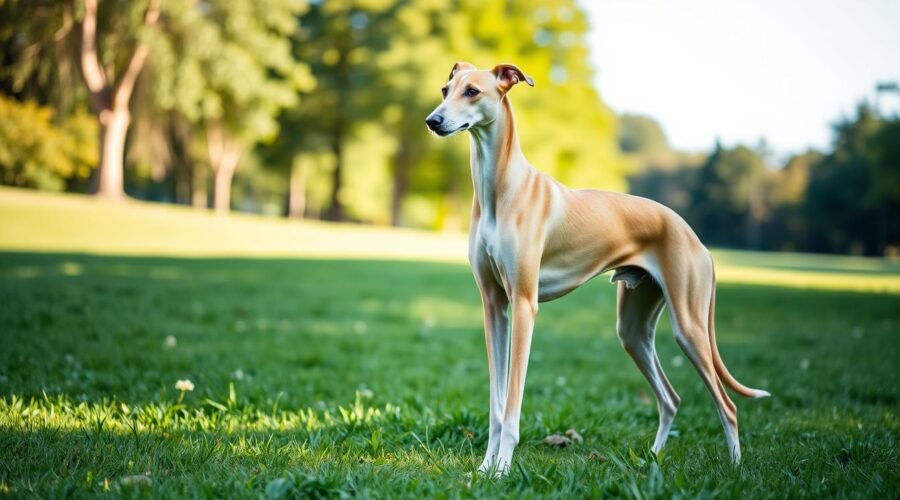
Are you looking for a pet that’s both fast and calm? The Greyhound dog is a perfect match. Known as a “40-mph couch potato,” they are ancient dogs with a gentle side. They love to relax indoors.
Greyhounds fit well in big houses or small apartments. They are sensitive and lively, needing a gentle hand. This guide will help you see if a Greyhound is right for you.
Key Takeaways
- This breed is famous for being a calm, low-energy housemate despite its racing history.
- They are highly sensitive animals that thrive on gentle, positive reinforcement.
- Their short coats require minimal grooming, making them easy to maintain.
- These pets are generally quiet and rarely bark, which is ideal for apartment living.
- Prospective owners should be prepared for their strong prey drive when outdoors.
Introduction to the Greyhound Dog
Many people are surprised to learn that the fastest dog on earth is also very relaxed. They were once used for speed and hunting but now make great family pets. If you want a pet that loves to sleep as much as run, the Greyhound breed is perfect for you.
Overview of the Breed
The Greyhound is an ancient dog known for its speed and loyal heart. They are tall and heavy but quiet and easy to live with indoors. They love to relax and often spend their days sleeping.
Greyhounds are sweet-tempered and very sensitive. They live for 10 to 14 years with the right care. Their short coat is easy to keep clean, making them a great choice for many.
Who is the Greyhound Suitable For?
Greyhounds can fit into many living situations, including apartments, as long as they have a safe place to run. They don’t need to run all day but enjoy short sprints followed by rest.
They are perfect for those who want a calm, easy-to-care-for pet. Here’s a quick guide to see if they’re right for you:
| Feature | Typical Range | Requirement |
|---|---|---|
| Average Weight | 60 – 70 lbs | Balanced Diet |
| Energy Level | Low to Moderate | Daily Walks |
| Grooming Needs | Minimal | Occasional Brushing |
| Temperament | Gentle & Calm | Socialization |
Choosing a dog is a big decision. Knowing about Greyhound traits can help you decide. They can be a great fit for any home, whether it’s in the city or suburbs.
Origin and History
The Greyhound breed has a long journey from ancient times to today’s homes. Knowing their Greyhound history helps us see their unique traits and grace.
Ancestry of the Greyhound
These dogs were bred for thousands of years to be top hunters. Their bodies were made for short, intense bursts of speed. This allowed them to catch fast game like hares and deer.
Your dog might have a strong prey drive outside. This is a natural instinct passed down through generations. It makes them the efficient athletes they are today.
Role in Ancient Civilizations
The Greyhound breed is honored in human history, seen in ancient Egyptian art. They were loved by royalty for their hunting skills and loyalty.
They were also symbols of status and elegance in early societies. This connection to humans has given them a gentle and affectionate temperament. This makes them great pets today.
Size and Weight
When you see a Greyhound, you notice their elegant and athletic build right away. They are known for their lean, aerodynamic shape. This shape is perfect for speed and agility. Their muscles are visible under their short, smooth coat because they have very little body fat.
Knowing their size and weight is important when planning your living space or traveling. It helps ensure your home can fit their long limbs and graceful stature.
Average Height
Greyhounds are a large breed, known for their impressive height. Males are usually 28 to 30 inches tall at the shoulder. Females are a bit smaller, measuring 26 to 28 inches.
They have a commanding presence but are gentle in their movements. Their long legs make them the fastest sprinters in the dog world.
Standard Weight Range
Despite their tall frame, Greyhounds are surprisingly light. A healthy male weighs 65 to 70 pounds. Females weigh 60 to 65 pounds.
“The Greyhound is a masterpiece of functional design, where every line serves the purpose of speed and grace.”
Remember, these are just averages. Dogs can vary based on their lineage and activity levels. Keeping your dog at a healthy weight is crucial for their joint health and overall well-being.
Lifespan and Health
Welcoming a dog into your home means understanding their health is key. Greyhounds are strong and active, but they need care. Knowing about Greyhound health helps you give them the best life.
Typical Lifespan
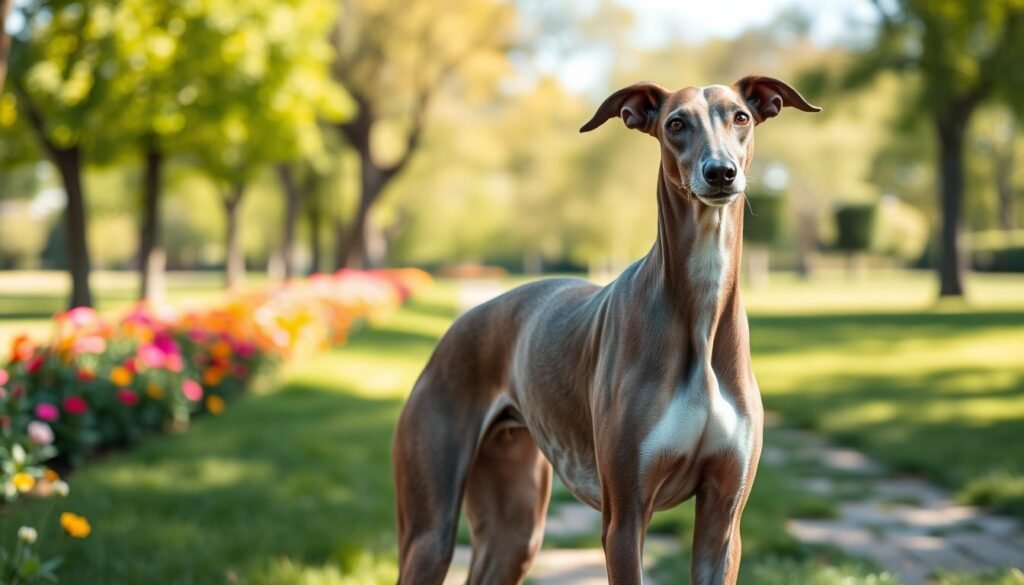
Greyhounds live a long time for their size. They usually live between 10 and 14 years. With the right food, exercise, and vet visits, they can live up to 14 years.
Keeping them in a stable home and at a healthy weight helps them live longer. Consistency is key for their daily care and health.
Common Health Issues
Even though they’re strong, some health issues are common in Greyhounds. Knowing about these helps you take care of their health.
- Dental Disease: They can get tartar buildup. Brushing their teeth and getting professional cleanings is important.
- Bone Cancer: This is serious. Watch for limping or swelling, and see a vet right away.
- Anesthesia Sensitivity: They process meds differently because of low body fat. Make sure your vet knows about sighthounds before any surgery.
Regular vet visits are the best way to manage these risks. Early detection can greatly improve treatment. By staying informed and working with your vet, you can help your dog live a long, happy life.
Temperament and Energy Level
Greyhounds are a mix of independence and deep affection. They are quiet and reserved indoors, despite their speed. These Greyhound characteristics make them great companions for many homes.
Personality Traits
At their heart, Greyhounds are gentle souls who love human connection. They are sensitive, preferring calm voices and positive reinforcement over harsh training.
They have a quiet dignity, making them excellent housemates. Here are some traits you can expect:
- Affectionate: They enjoy leaning against their favorite people for comfort.
- Independent: They’re happy to spend time alone without constant attention.
- Reserved: They may be shy with strangers but are deeply loyal to their families.
Activity Level
Many call them “45-mph couch potatoes.” They love short, intense movements followed by long rests.
They don’t need constant activity to be happy and healthy. They love lounging on soft beds most of the day. When they run, they show incredible grace and power. But they always want to go back to their favorite sofa spot.
Family and Children Compatibility
Thinking about getting a Greyhound? They are remarkably gentle and can form deep bonds with people. They’re not high-energy, but their calm nature makes them great for many homes.
Greyhounds need a safe and respectful place to live. Knowing their needs helps create a peaceful home for them.
Are Greyhounds Good with Kids?
Greyhounds can be great with kids if handled carefully. They’re patient, but their fragile build means they’re best with older or calm kids. Kids should learn to be gentle with them.
Teach kids to respect the dog’s space, like when it’s resting. Greyhounds can get scared by loud noises or sudden movements. A quiet and predictable environment is key for their comfort.
Family Dynamics
Adding a Greyhound to your family takes patience and early socialization. They usually get along with other pets, but their prey drive is strong. Proper introductions are essential for everyone’s safety and comfort.
Having a consistent daily routine helps the dog adjust to your home. A stable environment makes them loyal and loving family members.
| Trait | Compatibility Level | Key Consideration |
|---|---|---|
| Young Children | Moderate | Requires supervision and gentle play |
| Older Children | High | Excellent for calm, respectful interaction |
| Other Pets | Moderate | Needs careful, supervised introduction |
| Quiet Households | Very High | Ideal for their sensitive temperament |
Living Situations
Finding the right home for your new pet is key in the Greyhound adoption process. Many worry that these dogs need lots of space. But, their needs are simpler than you might think.
Best Homes for Greyhounds
A great home for them is one that’s comfortable and secure. They love soft places to lie down, like plush dog beds or rugs. Make sure your home has a safe, fenced area for them to run around.
Here are key things to make your home Greyhound-friendly:
- Soft bedding: Give them cozy spots to nap all day.
- Climate control: Keep your home at a comfy temperature. They get cold or hot easily.
- Secure fencing: Use a tall, strong fence outside. This stops them from chasing small animals.
Do They Adapt Well to Apartments?
These dogs are surprisingly good for apartment living. They love to sleep and rest a lot. They don’t need a big backyard to be happy.
If you’re thinking about Greyhound adoption for your apartment, make sure to exercise them regularly. They’re calm indoors but need daily walks. With proper care, they can be great, quiet roommates for city folks.
Pros and Cons of Owning a Greyhound
Knowing the Greyhound characteristics is key to a happy life together. These dogs are fast, but they’re also calm at home. It’s important to consider both the good and the bad of owning this elegant breed.
Advantages of the Breed
One great thing about Greyhound characteristics is their gentle and quiet nature. They are often called “45-mile-per-hour couch potatoes” because they love to relax. They are polite indoors and rarely bark unless it’s for a reason.
Their short, fine coat is a big plus for busy owners. They need very little grooming, saving you time and money. Plus, they are very affectionate, making them great companions for those who want a calm pet.
Disadvantages to Consider
While they are wonderful pets, there are some Greyhound characteristics to think about. They can get anxious if left alone for too long. They love to be with their family and don’t like being left by themselves.
They also have a strong prey drive. This means they might chase small animals if not trained or leashed. Their thin skin and lack of fat make them sensitive to cold, so they need extra care in winter.
| Feature | Advantage | Challenge |
|---|---|---|
| Energy Level | Low indoors | Needs space to sprint |
| Grooming | Very minimal | Sensitive skin |
| Social Needs | Highly affectionate | Separation anxiety |
| Temperament | Quiet and calm | High prey drive |
By considering these points, you can see if a Greyhound fits your lifestyle. Understanding these traits helps you and your future pet build a strong bond based on respect and care.
Grooming Needs and Maintenance
Looking for a pet that doesn’t need a lot of salon time? The Greyhound care is perfect for you. These dogs have short, fine coats that are easy to keep clean. You can groom them at home without spending a lot on professional services.
Coat Care
Greyhounds don’t need a lot of brushing because their hair is short. A simple brush once a week is enough. This keeps their coat shiny and healthy and strengthens your bond with them.
They don’t shed much, but you might see more hair during seasonal changes. If you want to compare, the Italian Greyhound has similar coat needs. Regular grooming keeps them comfortable all year.
Bathing Routine
Greyhounds don’t need to be bathed often because they are naturally clean. A bath every few months is usually enough. Use a mild dog shampoo to protect their skin.
Make sure to rinse them well to avoid skin irritation. If you’re interested in other active breeds, check out the American Foxhound. Consistent, gentle care is key to keeping your Greyhound looking great with little effort.
Exercise Requirements
Greyhounds are surprisingly laid-back at home. Despite their speed, they are often called “45-mph couch potatoes.” Taking care of a Greyhound means knowing their needs are not too demanding.
Daily Activity Levels
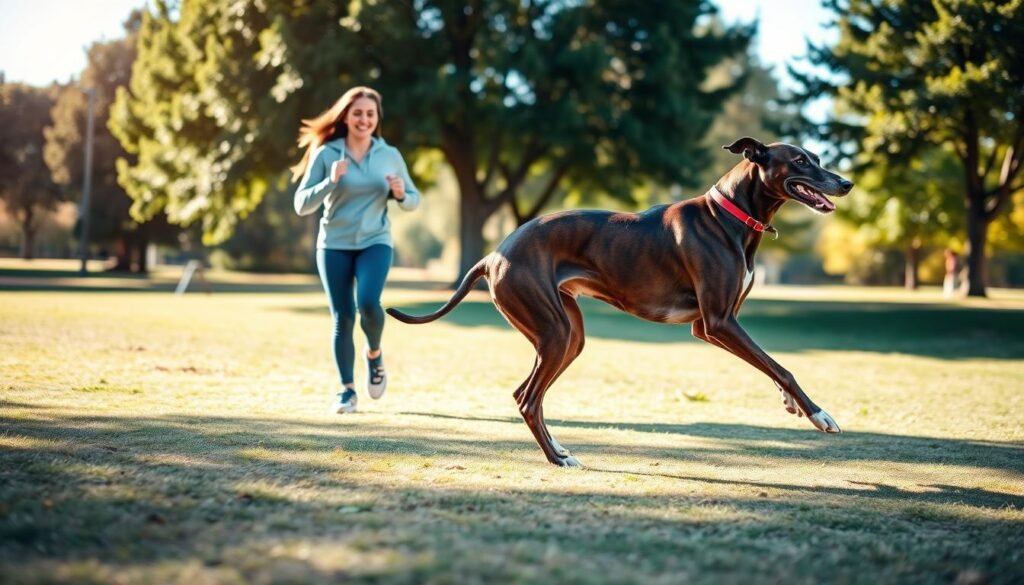
These dogs don’t need long, intense workouts to stay healthy. A few quick walks a day are enough. They like moving at a steady pace but also love to relax on a soft bed.
Keeping a regular routine is important. Adding a few light activities to your day helps your dog stay fit. This balanced approach is key to good Greyhound care.
Recommended Exercise Types
Walking on a leash is the best way to exercise your dog. It’s important to keep them on a strong leash in public. This stops them from chasing small animals.
If you have a fenced area, let them run there. But always watch them. Make sure the fence is high to stop them from jumping. Giving them these chances to move helps them stay active and happy.
Training and Social Behavior
Training a Greyhound needs a special touch because of their sensitive nature. They are smart but can be quite independent. This makes traditional training seem boring to them.
Patience and consistency are key when teaching your Greyhound. These traits will help you connect with your dog better.
Training Difficulty Level
Training a Greyhound is all about keeping it short and fun. They love positive reinforcement like treats and praise. Avoid harsh corrections as they can get distracted easily.
Short, frequent training sessions work best. This keeps your dog interested and eager to learn more.
Building trust is important. If your dog seems uninterested, it’s okay to pause and try again later. Keep the training sessions light and enjoyable to keep your dog excited about learning.
Interaction with Other Pets
It’s important to understand your dog’s social nature. Greyhounds have a naturally high prey drive. This means they might chase small animals if they see them as prey.
Introducing your dog to other pets needs careful planning. Always supervise their interactions, at least during the first few meetings. With patience and a calm environment, your dog can learn to live peacefully with other pets. Remember, safety and supervision are essential for a happy multi-pet home.
Health Considerations
Knowing what your dog needs for health is key to good Greyhound care. These dogs are usually healthy but have special needs. Working with your vet helps keep them healthy for a long time.
Preventive Health Measures
Greyhounds are very sensitive to anesthesia. Their low body fat means standard doses can be too much. Always make sure your vet uses safe doses for sighthounds during surgeries.
Dental care is also very important. Greyhounds can get periodontal disease easily. This can harm their health if not treated. Brushing their teeth and regular vet visits are a must to keep their teeth and health in check.
Going to the vet often is the best way to keep your dog healthy and happy for years.
Common Issues in Older Greyhounds
As your dog gets older, they might start to show signs of arthritis. Keeping them at a healthy weight helps their joints. This reduces pain and keeps them moving better.
Watch for any changes in how they move or act. If they have trouble climbing stairs or seem hesitant, talk to your vet. Early treatment can really help their quality of life.
Here’s a table with important things to watch for to keep your Greyhound health in top shape:
| Health Area | Action Required | Frequency |
|---|---|---|
| Dental Care | Brush teeth | Daily |
| Weight Control | Body condition check | Monthly |
| Joint Mobility | Observe gait | Weekly |
| Anesthesia | Discuss protocols | Before surgery |
Consistency is your best tool for managing these needs. By being observant and keeping up with vet visits, you help your dog age well and comfortably.
Alternatives to the Greyhound Dog
The Greyhound Dog is a great choice, but other sighthounds are worth looking at too. If you’re not sure yet, exploring similar breeds can help. These dogs often have the same gentle nature and sleek look that make the Greyhound Dog so loved.
Similar Breeds to Consider
Looking for a dog that looks or acts like a Greyhound Dog? You have some excellent options. Each of these breeds adds a unique touch to the sighthound family:
- Whippet: Known as the “poor man’s racehorse,” this breed is smaller and very loving. They’re great if you want a compact version of a bigger sighthound.
- Saluki: These dogs are known for their grace and independence. They’re a bit more reserved than the typical Greyhound Dog. Their stunning, elegant coat needs a bit more care.
- Italian Greyhound: Perfect for small spaces, this tiny dog has the same sensitive nature but in a smaller body.
Comparing Energy Levels and Temperament
Knowing how these breeds differ in daily life can help you make a better choice. While all sighthounds love to run, their energy levels indoors vary. Here’s how these breeds compare to the Greyhound Dog in important areas.
| Breed | Energy Level | Temperament | Size |
|---|---|---|---|
| Greyhound Dog | Low (Indoor) | Gentle/Quiet | Large |
| Whippet | Moderate | Playful/Affectionate | Medium |
| Saluki | Moderate | Independent/Reserved | Large |
| Italian Greyhound | Moderate | Sensitive/Clingy | Small |
Finding the right pet is a personal journey. By comparing these alternatives, you can find the best fit for your home and lifestyle. Whether you choose the classic Greyhound Dog or a smaller relative, you’re on the path to finding a loyal friend.
Conclusion and Next Steps
Choosing a pet is a big decision that needs careful thought. You now know a lot about the Greyhound Dog, from their history to their daily needs.
Thinking about the Greyhound’s unique traits helps you see if your home fits their personality. You’re ready to find a loyal friend with confidence.
Deepening Your Knowledge
Learning about the Greyhound’s history can be fascinating. It shows the legacy of these gentle sprinters. Knowing about Greyhound health is also key for their long, happy life.
Look for local breed clubs or online resources to learn more. These groups share important insights into the Greyhound’s temperament.
Taking the Next Step
Think about contacting reputable rescue groups for Greyhound adoption. They offer support for new owners, making the transition easier.
If you’re ready, start by visiting a shelter or a trusted breeder. Good training and socialization are important for a rewarding relationship. Your perfect canine partner is waiting for you.




💬 Leave a Comment