
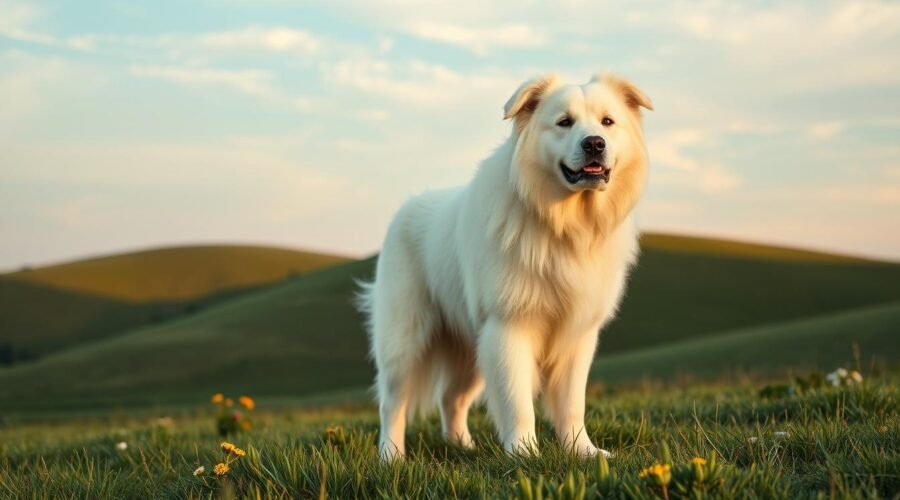
If you’re looking for a loyal and gentle guardian, the Great Pyrenees might be perfect. This white fluffy dog is known for its calm and protective nature. Originally, they guarded livestock, but now they’re cherished family pets.
Choosing the right dog breed is a big decision. It depends on your lifestyle and home. These dogs are devoted, but they have special traits. We’ll help you see if they’re right for your family.
Key Takeaways
- This breed is a giant guardian originally developed to protect livestock.
- They are famous for their calm, patient, and protective nature with families.
- The thick coat requires regular grooming to maintain its health and appearance.
- Prospective owners should be prepared for their independent and sometimes stubborn personality.
- These dogs thrive in environments where they have space to roam and watch over their territory.
Introduction to the Great Pyrenees
Known as the Pyrenean Mountain Dog, this breed is a mix of love and protection. They are calm and steady, making them a favorite in many homes. They can be both guardians and loyal friends, with traits that make them stand out.
What is the Great Pyrenees?
The Great Pyrenees is a big dog bred to guard sheep in mountains. Despite their size, they are gentle and patient with their families. They have a thick coat and a calm nature, showing their independent spirit.
They are not too energetic but love walks. They also enjoy relaxing with their family. This dog breed is smart but can be stubborn, needing patient training.
Ideal Owners and Living Situations
Finding the right home is key for a Pyrenean Mountain Dog. They need lots of space because of their size and guarding history. They don’t do well in small apartments where they can’t move around.
The best owner is someone who wants a loyal, independent dog. They need to be ready for grooming and to include their dog in daily life. If you want a calm dog and have enough space, the Great Pyrenees might be perfect for you.
| Characteristic | Description | Requirement |
|---|---|---|
| Size | Large/Giant | Spacious home |
| Temperament | Calm and Loyal | Consistent training |
| Energy Level | Moderate | Daily walks |
| Grooming | High | Weekly brushing |
Origin of the Great Pyrenees
The Great Pyrenees story starts in the Pyrenees Mountains. This mountain range is between France and Spain. It was the perfect place for these dogs to grow strong.
Historical Background
Originally called the Pyrenean Mountain Dog, they were key for shepherds. They faced tough weather and terrain. Their thick coats and strong bodies helped them survive.
Living far from people, they learned to rely on themselves. This is why today’s Great Pyrenees are calm, independent, and thoughtful.
Breeding Purpose
Their main job was to guard sheep from wolves and bears. They had to be alert and protective. This made them great at their work:
- Natural Alertness: They always watch their surroundings.
- Protective Instincts: They guard their family and territory fiercely.
- Independent Thinking: They make quick decisions on their own.
As livestock guardians, they showed strength and loyalty. This heritage explains why they watch the yard or stay alert at night. They’re just following their instincts.
Size and Weight of the Great Pyrenees
Welcoming a large breed dog into your home means getting ready for their big size. It’s important to make sure your home fits their needs.
The Great Pyrenees stands out with its tall and impressive look. Before getting one, think about the space and care they need to be happy.
Average Height
These dogs are tall, with an average height of 25 to 32 inches at the shoulder. They are truly impressive.
Because of their height, they need lots of room to move. Make sure your home can handle a dog of this size.
Average Weight
These dogs are not only tall but also strong and muscular. This makes them heavy, which is why they were great guardians.
Most adults weigh over 85 pounds, with males often being even heavier. Proper nutrition and regular exercise are key to keeping them healthy.
Lifespan and Health
Caring for a large breed dog means being proactive about their health and daily habits. These majestic animals are generally strong. But knowing their health needs helps you care for them better throughout their life.
Average Lifespan
The Great Pyrenees usually lives between 10 to 12 years. A balanced diet, regular exercise, and vet visits can help them live longer. Enjoying every year with your loyal friend is very rewarding.
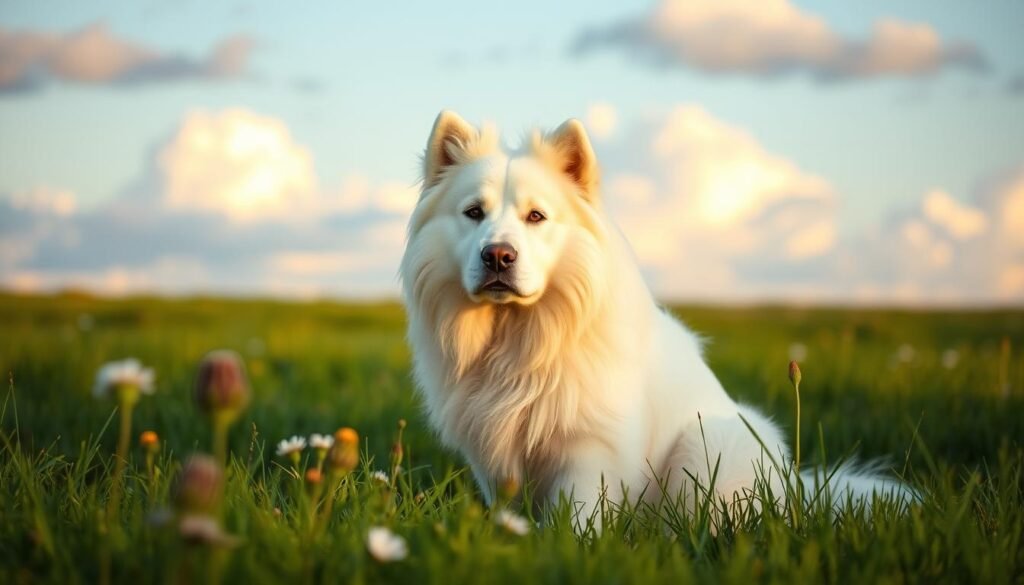
Common Health Issues
The Great Pyrenees may face some health issues due to their size. Knowing these can help you and your vet manage or prevent problems.
Two common issues are:
- Hip Dysplasia: This is when the hip socket doesn’t fit right with the thigh bone. Keeping your dog at a healthy weight is key to easing joint stress.
- Bloat: A serious condition where the stomach fills with gas and twists. Feeding smaller, more frequent meals can help prevent it.
Watch your pet for any sudden changes in behavior or appetite. Catching problems early is the best way to keep your dog happy and healthy for years.
Temperament and Personality Traits
The Great Pyrenees is known for its calm and alert nature. When you bring one home, you get a steady and composed friend. They stay relaxed but always watch what’s going on.
General Temperament
These dogs are independent thinkers. They love their families but don’t always want to be the focus. They’re happy to just watch and relax nearby.
The Great Pyrenees is not usually hyperactive. They are calm and dignified, making great indoor pets. Their calm nature makes them fit into many lifestyles.
Common Behavior Traits
They are called a gentle giant because of their patience and kindness. They protect their family but are soft and gentle with them. This mix makes them a unique and special breed.
Thanks to their history as guardians, they are naturally watchful. They might patrol the yard or watch the front door. It’s not from aggression, but a need to protect their territory.
The gentle giant personality of the Great Pyrenees is rewarding for the right owner. They offer security and quiet companionship. Understanding these traits helps you appreciate your Great Pyrenees‘ loyal spirit.
Energy Level and Activity Needs
The Great Pyrenees is surprisingly low-energy. Despite their size, they were bred to save energy for guarding. They love to relax at home most of the day.
Exercise Requirements
They don’t need intense training. A gentle daily walk is enough to keep them healthy. But, they need a safe, fenced area to play.
The Great Pyrenees has a strong instinct to patrol. A fence is essential for their safety. They might wander off without one. Keeping them mentally active is as important as physical exercise.
Suitable Activities
Choose low-impact activities that respect their calm nature. Short walks let them sniff and explore, which is great for their mind. Light play in the backyard is also good for them without harming their joints.
Compared to high-energy dogs like the Australian Shepherd, the Great Pyrenees has different needs. The table below shows how they compare to other breeds in terms of activity.
| Breed | Energy Level | Daily Exercise Needs |
|---|---|---|
| Great Pyrenees | Low | 30-45 Minutes |
| Australian Shepherd | High | 90+ Minutes |
| Golden Retriever | Moderate | 60 Minutes |
Suitability for Families
Thinking about getting a big, fluffy dog? The Great Pyrenees might be a good choice. They are calm and protective, making them great for some families. But, their size and independent nature might not fit every home.
Great Pyrenees and Children
The Great Pyrenees can be very loyal and gentle with kids. They often become patient protectors of the young. But, their big size can sometimes accidentally bump into smaller kids.
It’s best for them to be in homes with older kids who know how to play with a big dog. Always watch when kids and dogs play together. Consistent training helps manage their size and energy.
Living Arrangements (House vs. Apartment)
Space is key when deciding where your Great Pyrenees will live. They don’t need a lot of activity indoors but need room to stretch. A house with a yard is best for them to patrol and relax.
Apartment living is not recommended unless you’re ready for daily walks. They can be loud, which is hard in small spaces. Here’s a comparison to see if your home is right for them:
| Feature | House with Yard | Apartment Living |
|---|---|---|
| Space Needs | Excellent | Poor |
| Exercise Access | High | Low |
| Noise Sensitivity | Manageable | Difficult |
| Overall Suitability | Recommended | Not Ideal |
The Great Pyrenees does best with a job and space to roam. If you have enough room and time, they can be a loving family member.
Pros of Owning a Great Pyrenees
Bringing a Great Pyrenees into your home offers many benefits. They are highly valued for their calm demeanor and strong bonds with their families. If you want a pet that’s both loving and protective, this breed is perfect.
Loyal Companionship
At their heart, these dogs are truly loyal companions. They form deep bonds with their owners, always wanting to be near them. Despite their size, they are a gentle giant, showing patience and kindness to those they love.
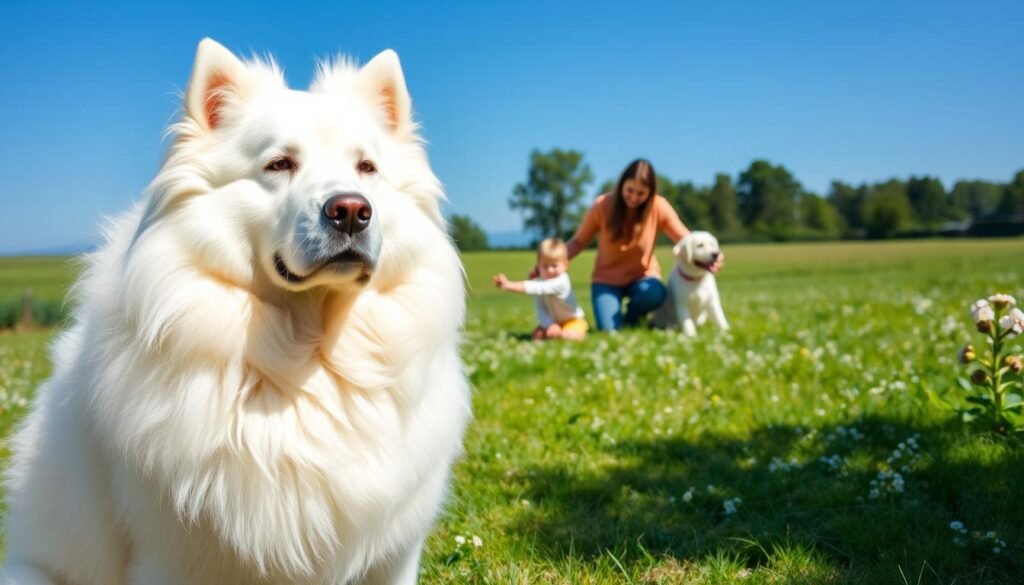
This breed loves to be part of the family. Their presence is comforting and steady, providing quiet companionship that’s unmatched. They are great for relaxing at home, thanks to their gentle nature.
Natural Guarding Instincts
The Great Pyrenees also has a strong instinct to protect. Bred as a livestock guardian, they watch their surroundings carefully. This means they naturally protect your home and family.
You don’t need to teach them to be protective; it’s in their nature. Their inherent sense of duty gives owners peace of mind. They are calm and reliable protectors.
Cons of Owning a Great Pyrenees
Before getting a Great Pyrenees, consider the challenges they bring. They are great companions but not for every home. Knowing these challenges helps you decide if you’re ready for the commitment.
Grooming Needs
Managing their thick coat is a big part of caring for a Great Pyrenees. They shed a lot, more so during seasonal changes. Brushing them often is key to prevent matting and control shedding.
Grooming is not just for looks; it’s essential for their health. If you don’t like a lot of hair, a Great Pyrenees might be too much. Regular grooming keeps their coat healthy and your home tidy.
Space Requirements
Great Pyrenees need lots of space due to their size and guarding history. They don’t fit well in small apartments or homes without a big yard. They need room to move and patrol, as they are naturally active.
If you’re a first-time owner, check if a Great Pyrenees is right for you. They need enough space for their mental health. Without it, they might get restless or develop bad habits.
Training Difficulties and Social Behavior
Getting to know a guardian breed’s mind is key to a good partnership. These dogs were bred to work alone. This makes them seem stubborn, but it’s really their independence.
Training Challenges
The Great Pyrenees was made to protect without needing humans. Their independence is great for guarding, but it makes training hard.
They might not listen right away. They think before acting. Use positive reinforcement and be consistent to train them well.
Building a bond of respect is important. Treat training as a game to keep your dog interested.
Interaction with Other Pets
Socializing your dog early is key for a peaceful home. They are gentle but need clear rules with new pets.
They usually get along with other pets if raised together. But, they value their space and might get upset if others bother them too much.
Give them a quiet spot to retreat to. This helps them feel safe and reduces fights with other pets.
| Breed Trait | Great Pyrenees | American Pit Bull Terrier |
|---|---|---|
| Primary Motivation | Independent Protection | Human Pleasing |
| Training Style | Patience & Consistency | Active Engagement |
| Social Tendency | Reserved/Watchful | Affectionate/Social |
| Best Environment | Spacious & Quiet | Active & Involved |
Want to learn more about different temperaments? Check out the American Pit Bull Terrier. Every dog is unique, and knowing this helps you care for them better.
Grooming and Basic Care
Caring for a large breed dog is more than just love. You need a routine for their physical needs. This keeps them healthy and happy every day.
Grooming Requirements
The Great Pyrenees has a thick coat that’s weather-resistant. But, it needs regular care to avoid matting and keep the skin healthy.
- Weekly brushing removes loose fur and debris.
- More grooming is needed during shedding seasons.
- Regular nail trimming and ear cleaning are key for hygiene.
Regular grooming keeps your white fluffy dog looking and feeling great. It’s also a chance to check for skin issues or lumps.
Nutrition Needs
Feeding a large breed dog needs careful planning. It’s important for their bone health and energy. Choosing the right diet is crucial for their long-term health.
Here are some tips for their diet:
- Portion control prevents obesity and joint strain.
- Look for formulas with glucosamine and chondroitin for joint health.
- Avoid overfeeding in puppyhood for healthy growth.
Always talk to your vet about the best diet for your Great Pyrenees. A balanced diet and regular exercise are key for a happy life.
Conclusion and Next Steps
Bringing a Great Pyrenees into your home is a big decision. This breed combines independence with loyalty, changing your daily life. You’ll get a faithful friend who protects your family quietly.
Think carefully about whether this breed fits your lifestyle. Consider the space, time, and patience needed to care for a Pyrenean Mountain Dog. Your dedication will make sure both you and your pet are happy.
Researching Similar Breeds
If you’re unsure, compare the Great Pyrenees with other breeds. Look at the Newfoundland or Bernese Mountain Dog. They share some qualities but offer different experiences.
Deepening Your Knowledge
Keep learning by reading books from experts like the American Kennel Club. Learn about training methods for large guardian breeds. Knowing a lot will prepare you for the journey ahead. Also, join local breed clubs to meet owners and see these dogs up close.


💬 Leave a Comment