
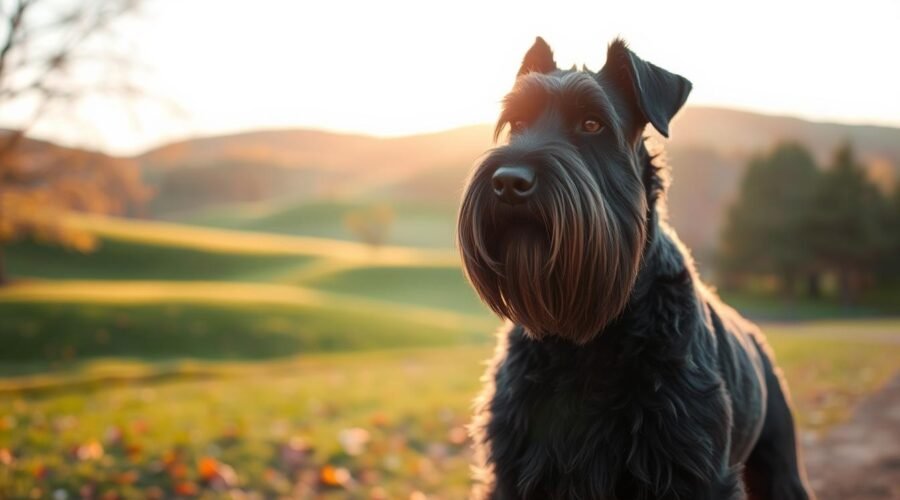
The Giant Schnauzer is a strong, hardworking, and fearless dog. They were once key farm workers in Germany. Now, they’re loved by active owners who value their smarts and strength.
If you love an active lifestyle, a Giant Schnauzer might be perfect for you. They love to work and are very loyal to their families. This guide will help you see if they’re right for you and your lifestyle.
Key Takeaways
- This breed is known for being highly intelligent and protective.
- They require significant daily exercise to stay happy and healthy.
- Their historical background is rooted in German working farm life.
- These dogs are best suited for active, experienced owners.
- Consistent training is essential for a well-behaved canine companion.
Introduction to the Giant Schnauzer
Looking for a dog that’s smart and strong? The Giant Schnauzer might be perfect for you. This breed is known for its striking looks and deep loyalty. It makes a great companion for the right person.
Overview of the Breed
The Giant Schnauzer has an interesting history. It comes from a mix of strong working dogs, like the Great Dane and the Bouvier des Flandres. This mix gave the breed its impressive strength and alert nature.
As working dogs, they are naturally protective and watchful. A Giant Schnauzer does best when it has a job to do. This shows their versatility and hard work.
Who Should Consider This Breed?
This breed is best for experienced owners who can lead well and keep them active. First-time owners might find their energy and independence hard to handle.
Think about getting one if you’re active and can spend time on training and mental games. They are truly rewarding companions for those who can give them the structure and engagement they need. Knowing their history helps you understand their unique traits.
Origin and History
The Giant Schnauzer’s story starts in 19th-century Germany. These dogs were not bred for pets but as essential partners for farmers and merchants in Bavaria.
They had to drive cattle to market. This job needed a dog with lots of stamina and a sharp mind to manage the animals over long distances.
Historical Background
At first, they were called the Munchener or Russian Bear Schnauzer. Their main job was to protect property and guide herds through tough terrain.
Thanks to their versatility, they caught the eye of authorities. By the early 20th century, they moved from farms to police and military, showing off their smarts.
The breed’s history is marked by key moments that shaped it into what we know today:
- Cattle Driving: They were reliable workers for Bavarian farmers.
- Guard Duty: They protected breweries and stockyards from thieves.
- Police and Military Service: They proved their worth as elite working dogs in World War I.
Development of the Breed
To make a bigger, stronger dog, breeders mixed the Standard Schnauzer with larger breeds like the Great Dane and Bouvier des Flandres.
This breeding aimed to mix the Schnauzer’s resilience with the power of bigger working dogs. The outcome was a tough dog that could handle tough weather and hard work.
Today, your Giant Schnauzer is driven and capable because of their ancestors. These dogs were picked for their smart thinking and quick actions. These traits are part of their personality today.
Size and Weight
When you hear “giant,” you might think of a huge animal. But the giant schnauzer size is actually well-balanced and athletic. They are big dogs, but they can move with grace and purpose.
Knowing their size helps you get your home ready. You might compare them to breeds like the American Pit Bull Terrier. Their size is for endurance and work, not just being big.
Typical Size Range
Their height is a key feature that makes them stand out. Males are usually 25.5 to 27.5 inches tall. Females are a bit shorter, from 23.5 to 25.5 inches.
This height means they need some space to move. They can reach high places if not trained. Remembering their height helps you arrange your home better.
Weight Categories
Weight also defines their size. Healthy adults weigh 55 to 95 pounds, depending on gender and build. Males tend to be heavier, while females are lighter.
It’s key to watch their weight to keep them healthy. Too much weight can harm their joints. A balanced diet and exercise help them stay fit.
Lifespan and Health
Every dog owner wants their pet to live a long, happy life. The best care starts with knowing your dog’s needs. Learning aboutgiant schnauzer health issues helps keep your dog happy and active for years.
Average Lifespan
TheGiant Schnauzeris a strong and energetic breed. They live 12 to 15 years with the right care. Regular exercise, good food, and vet visits are key to their long life.
Consistent attentionto their needs helps them live well.
Common Health Concerns
Even though they’re tough, Giant Schnauzers face some health issues. Knowing thesegiant schnauzer health issueshelps you catch problems early. Watch for joint problems and thyroid issues.

Regular vet visits are key to managing these risks. Your vet can spot health changes early. Keeping your dog at a healthy weight helps prevent joint problems and supports their health.
| Health Category | Focus Area | Proactive Action |
|---|---|---|
| Joint Support | Hip and Elbow Health | Maintain healthy weight |
| Endocrine System | Thyroid Function | Annual blood screenings |
| General Wellness | Preventive Care | Regular vet check-ups |
By focusing on these health habits, you create a great home for your pet. Early detection is key to managinggiant schnauzer health issues. With your care and love, your dog will thrive and be a beloved family member for many years.
Temperament and Personality Traits
The Giant Schnauzer is a dog with many layers. They show deep loyalty and a bold, independent spirit. Knowing the giant schnauzer personality is key for a strong bond with your dog.
General Behavior
These dogs are remarkably intelligent and independent. They are not just followers. They have a natural drive to work and solve problems on their own.
They are excellent guard dogs because of their protective instincts. But, they can be headstrong if not guided firmly by their owners.
Social Interaction with People and Pets
Early socialization is key for the giant schnauzer temperament. Introduce them to various environments and people early. This helps them become well-adjusted and confident.
At home, they are deeply devoted to their family. They form a tight bond with their primary caregivers. They tend to be wary of strangers, showing their protective side.
With other pets, their giant schnauzer personality can be assertive. They can live with other animals, but they like to be the leader. So, introduce them to other pets early.
The giant schnauzer temperament does well with clear structure and mental stimulation. With the right approach, they become loyal, courageous, and loving companions for life.
Energy Level and Exercise Requirements
The Giant Schnauzer’s athletic build shows their need for vigorous daily activity. They come from a working background that requires both physical and mental effort. Without enough exercise, they might get restless or develop bad habits.
Daily Exercise Needs
Plan for at least 60 to 90 minutes of active exercise each day. A simple walk is not enough for them. They need a routine that tests their endurance and keeps them sharp.
Being consistent is essential for a happy Giant Schnauzer. Daily exercise keeps them from getting bored and misbehaving. A tired dog is usually a well-behaved one.
Recommended Activities
Activities that challenge their intelligence and strength are great. Hiking on rugged trails is excellent for burning energy and exploring new smells and sights. They often do well in dog sports like agility or obedience trials.
For simpler fun, try long fetch sessions or brisk jogs. Scent work or hide-and-seek games also keep their minds sharp. These activities keep your dog healthy, fit, and close to you.
Grooming Needs and Maintenance
Keeping up with a routine is key for this impressive breed. Their looks are striking, but giant schnauzer care is more than looks. A regular schedule keeps your dog comfy, healthy, and joyful all year.
Coat Care and Grooming Schedule
Their dense, wiry coat needs special care to avoid painful mats. If you know about the standard schnauzer, you’ll see similar needs. But, the bigger your dog, the more work it is. Brushing at least twice a week is a must to keep hair and dirt out.
Every six to eight weeks, professional grooming is a good idea. This keeps their look sharp. Consistency is key to avoid tangles. You can learn to do it yourself or get a pro to help.
Bathing and Brushing
Good giant schnauzer grooming is more than just coat care. It includes a full hygiene routine. Here are the must-do tasks:
- Ear Cleaning: Check ears weekly for wax buildup or signs of irritation to prevent infections.
- Dental Care: Brush their teeth regularly to maintain oral health and fresh breath.
- Nail Trimming: Keep nails at a comfortable length to ensure proper posture and movement.
- Bathing: Bathe your dog only when necessary, using high-quality shampoos that protect the natural oils of their wiry coat.
Make these sessions positive by using treats and lots of praise. With patience, these tasks become a valuable bonding opportunity. Your dog will look forward to it, making everything easier for both of you.
Suitability for Families and Children
Bringing a Giant Schnauzer into a home with children needs careful thought. These dogs are deeply loyal, but their size and energy can be a challenge. Knowing their personality is key to a good relationship.
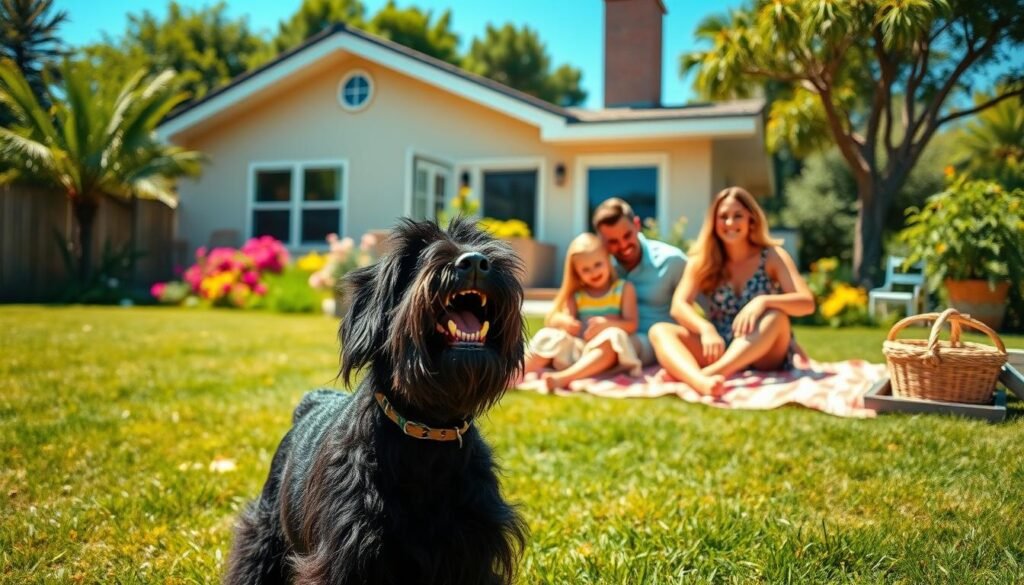
Interaction with Kids
The Giant Schnauzer is great for families with older, more respectful children. Their size can accidentally knock over toddlers. Always watch to keep everyone safe.
These dogs have a strong protective instinct. This is good for family safety, but they might get too protective. Teach your kids to play calmly with the dog to avoid problems.
Family Life Adaptability
Adapting to family life is easy for this breed if you set clear expectations. They love to join in daily activities and feel part of the family. Their watchful nature makes them great for active families who love the outdoors.
Be ready to train and socialize them for a busy family home. With the right training, they become devoted and affectionate protectors. Respect their need for space and activity for a happy home.
Apartment Living and Space Considerations
Living in an apartment with a Giant Schnauzer can be challenging. These dogs are loyal and smart but need lots of space and exercise. Their size and energy can be hard to manage in a small home.
Think if your lifestyle fits the daily needs of this breed. Without a yard, you’ll need to find ways to keep your dog active outside.
Space Requirements
Giant Schnauzers need room to move and stretch. In a small apartment, their size can limit both you and the dog.
These dogs need a lot of mental and physical activity. A house with a yard is best for them. It lets them exercise and use their guarding instincts safely.
Pros and Cons of Apartment Living
Choosing to live with a Giant Schnauzer in an apartment is a big decision. It requires understanding your daily life. Here are things to consider:
- Pros: Apartment living can make you more active with your dog. You’ll spend quality time together.
- Cons: No yard means harder bathroom breaks at odd hours.
- Cons: Their high energy levels can lead to boredom and damage if not exercised enough.
- Cons: Large, loud dogs can upset neighbors, causing tension in shared spaces.
If you live in an apartment, be ready to spend hours each day on training and exercise. If you can’t meet these needs, think about a different breed that fits your home better.
Training and Behavior Challenges
Learning to train a giant schnauzer is key to their full growth. These dogs are smart and independent. They need a handler who guides them clearly and consistently.
Building a strong bond through positive reinforcement is best. Patience and calmness in training lead to a well-behaved dog.
Training Difficulty Level
Training a giant schnauzer can be challenging for new owners. They learn fast but can be stubborn if they don’t see the point.
Early socialization is key to manage their protective instincts. Introduce them to people, places, and animals early. Consistent boundaries help them understand their place in the family.
Tips for Successful Training
For the best giant schnauzer training, keep sessions short and fun. Use treats and praise to keep them motivated. They love working towards goals.
Being a confident leader is essential. Be firm but kind. Avoid harsh methods that hurt trust. Here are some tips for success:
- Consistency is key: Use the same commands and rules every day.
- Mental stimulation: Use puzzle toys and scent games to challenge their minds.
- Patience pays off: End on a positive note if a session doesn’t go well. Try again later.
With ongoing education and clear communication, you’ll build a strong bond. Your dedication will be rewarded with a confident, well-adjusted dog. They will be a joy to have at home.
Pros and Cons of Owning a Giant Schnauzer
Thinking about getting a Giant Schnauzer? It’s good to know the good and bad sides of this breed. They look amazing and have a bold personality. But, they might not fit every home. Knowing their loving side and their need for care will help you decide if they’re right for you.
Advantages of This Breed
The Giant Schnauzer is very smart and loyal. They make great watchdogs because they’re cautious of strangers but love their family. Their playful nature can bring lots of happiness to a home, if they’re socialized well.
They’re so smart, they do well in training and sports. If you love being active, they’ll enjoy long walks or runs with you. Their versatility as a working dog is impressive, and they bond strongly with their owners. If you’re interested in other working breeds, check out pit bull breeders for comparison.
Disadvantages to Consider
Being smart can be a challenge for first-time owners. A bored Giant Schnauzer might get destructive. So, you need to keep them mentally active every day.
Grooming is also a big deal. Their coat needs regular brushing and clipping to avoid mats and keep them comfy. If you’re not ready for the grooming time and cost, this breed might be hard to handle. Plus, their size and strength mean they need early training to behave well in public.
| Feature | Benefit | Challenge |
|---|---|---|
| Intelligence | Highly trainable | Needs constant mental work |
| Temperament | Loyal and protective | Can be stubborn or aloof |
| Maintenance | Low shedding | High grooming requirements |
| Activity | Great for active owners | Requires daily vigorous exercise |
Comparisons to Similar Breeds
Thinking about getting a dog? It’s good to compare different breeds to find the best fit for you. Taking the time to compare traits helps you make a choice you’ll be happy with.
Comparable Breeds
Some breeds are similar to the Giant Schnauzer in size and smarts. The Black Russian Terrier is a good match because of its size and protective nature. The Bouvier des Flandres also has a strong work ethic and a coat that needs regular care.
If you like the Schnauzer look but want a smaller dog, the Standard Schnauzer is a great choice. It’s smaller but has the same bold and spirited personality. These dogs are perfect for people who love active, working dogs.
“The choice of a dog is a reflection of your own lifestyle and the companionship you seek to build.”
Alternative Dog Options
Maybe you want a dog that’s less energetic or more laid-back. If a Giant Schnauzer’s energy is too much, look at breeds that are naturally more relaxed. This way, you can find a dog that fits your lifestyle better.
| Breed | Energy Level | Grooming Needs | Best For |
|---|---|---|---|
| Giant Schnauzer | Very High | High | Active Families |
| Standard Schnauzer | High | Moderate | Active Individuals |
| Bouvier des Flandres | Moderate | High | Working Roles |
| Black Russian Terrier | Moderate | High | Guard/Protection |
Finding the right dog means finding one that fits well in your home. Whether you want a high-energy dog or a mellow companion, the most important thing is to match their needs with yours. Spend time with different breeds to see which one feels right for your family.
Conclusion: Is the Giant Schnauzer Right for You?
Thinking about getting a dog means considering your daily life and future plans. The Giant Schnauzer is loyal and smart, perfect for those who want an active friend. Make sure you can give the structure and exercise this dog needs.
Caring for a Giant Schnauzer is a big job that lasts for years. This hard work creates a strong bond, unlike any other. You’ll get a loyal and protective friend if you meet their needs.
Taking the Next Steps
Begin by finding good giant schnauzer breeders. They can tell you about their puppies’ personalities. Ask about health checks and socialization to start right.
Exploring Similar Breeds
Other working dogs might fit your life better. Look into the Standard Schnauzer or Bouvier des Flandres for a similar look but different energy. Comparing breeds helps you choose the best one for you.

💬 Leave a Comment