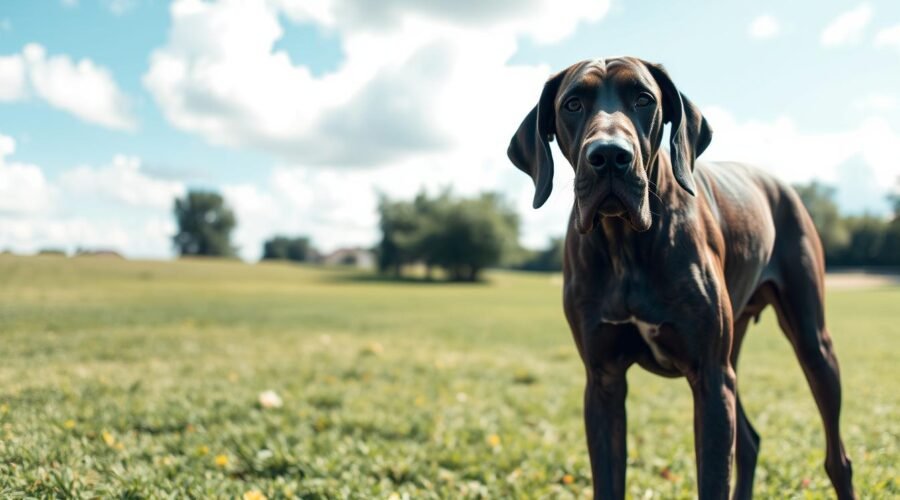
When you think of a majestic companion, a gentle giant often comes to mind. This animal is one of the most popular pet breeds. It needs a lot of space because of its huge size.
These impressive animals are calm and very loyal to their families. Despite their size, they act like lap dogs. They love to get affection and comfort from their owners. If you want a steady, quiet friend at home, a Great Dane might be right for you.
Getting a Great Dane means you must commit to training and care. Knowing what they need ensures a happy and healthy relationship for many years.
Key Takeaways
- These dogs are famous for their gentle and patient temperament.
- They require significant living space due to their large physical stature.
- Consistent training is essential for managing their size and strength.
- They thrive on human companionship and dislike being left alone for long periods.
- Prospective owners should prepare for the costs associated with feeding and veterinary care for a giant breed.
Introduction to the Great Dane
When you enter the world of large breed dogs, the Great Dane stands out. These dogs have changed from fierce hunters to beloved canine companions. They are truly special.
Great Danes are known for their height and calm nature. Understanding this breed is key to a fulfilling relationship. They mix history, strength, and love in a unique way.
What Is a Great Dane?
Great Danes are called gentle giants for their size and sweet nature. Originally used for hunting, today they are devoted family members. They love being around people.
Despite their noble look, they are playful and sensitive. Bringing a Great Dane home means gaining a loyal friend. They value comfort and company above all.
Who Is This Breed Suitable For?
Getting a Great Dane needs careful thought about your lifestyle and space. They need lots of room and consistent training. They are best for those who can give them the time and space they need.
These canine companions are perfect for those who have time for them. If you’re ready to give lots of love and structure, they’ll be incredibly loyal. They are great for those who want a calm and steady friend in their lives.
Origin of the Great Dane
Despite their name, Great Danes don’t come from Denmark. Instead, they have a rich history in Germany. This might surprise you, as their name suggests a Danish origin.
Their journey started in Germany, where they were bred for certain tasks. This background gives us valuable context about their natural behaviors and physical traits today.
Historical Background
Long ago, the Great Dane’s ancestors were fierce hunters. They chased and caught wild boar. These dogs were known for their strength and speed.
Later, their role changed. By the 19th century, they became the pets of German nobility. They were no longer just hunters but also companions.
Breeders worked hard to improve their looks and temperament. They wanted them to be calm and steady, fitting well in grand homes.
Cultural Significance
The Great Dane became a symbol of status and elegance in Europe. Their size and gentle nature made them popular among the upper class.
Over time, they evolved into loving companions. This shows how careful breeding can shape a breed’s personality while keeping their impressive physical presence.
Today, they are loved for their deep bond with humans. Knowing their history helps us see their strength and kindness.
Size and Weight
Welcoming a Great Dane into your home means you’re getting a friend who will grow a lot. They grow as much in their first year as a human does in fourteen years. This is quite a change.
It’s important to watch how they grow. This helps make sure their bones and joints stay strong. This is key as they reach their full size.
Growth Stages
The transition from a clumsy puppy to a majestic adult is quick. In the first year, your dog will grow a lot. They need careful nutritional management to avoid joint problems.
To help these large breed dogs grow healthy, focus on a few things:
- Controlled Exercise: Stay away from activities that stress their joints too much.
- Balanced Nutrition: Feed them high-quality food made for giant breeds to control their growth.
- Regular Vet Checks: Make sure to weigh them often to keep them at a healthy weight.
Typical Measurements
Every dog is different, but there are general sizes for Great Danes. Keeping them at the right weight is key for their movement and heart health.
| Gender | Average Height (at shoulder) | Average Weight |
|---|---|---|
| Male | 30–34 inches | 140–175 lbs |
| Female | 28–32 inches | 110–140 lbs |
Managing the weight of large breed dogs is a big responsibility. Keeping them at a healthy weight helps prevent joint problems and other health issues.
Lifespan and Health
Large breed dogs, like the Great Dane, are truly majestic. But, their impressive size comes with specific health considerations. Understanding these needs early on helps you provide the best possible care for your companion throughout their life.
Average Lifespan
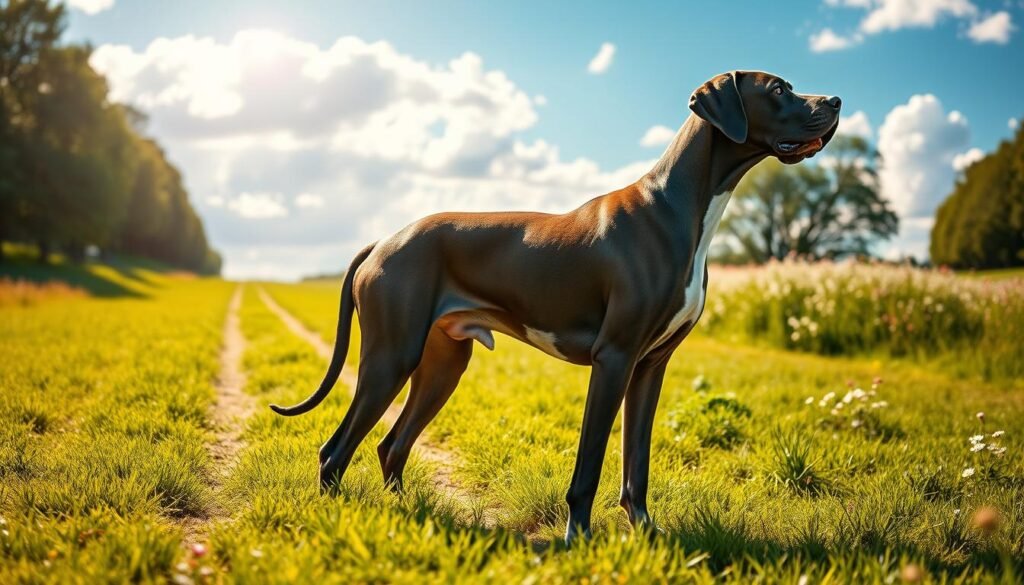
Most owners want to know how long they can expect their furry friend to be by their side. On average, a healthy Great Dane lives between 7 and 10 years. While this is shorter than many smaller dog breeds, you can significantly improve their quality of life through consistent care and attention.
Common Health Issues
Because of their rapid growth and giant stature, these dogs are prone to a few specific medical conditions. Being aware of these risks allows you to spot warning signs early and consult your veterinarian immediately.
The most critical concern for owners is a condition called bloat, or gastric torsion. This happens when the stomach twists, which can be life-threatening. Many owners choose a preventive procedure known as gastropexy to secure the stomach and reduce this risk.
Other common health challenges include:
- Hip Dysplasia: A joint condition that can cause discomfort as your dog ages.
- Heart Conditions: Issues like dilated cardiomyopathy require regular monitoring by a professional.
- Bone Growth Issues: Proper nutrition during puppyhood is essential to support their massive frame.
You can support your pet by scheduling regular veterinary check-ups and maintaining a balanced diet. Providing a stable environment and keeping your dog at a healthy weight are two of the best ways to ensure they live a happy, comfortable life. Remember, proactive care is the hallmark of a responsible owner among all dog breeds.
Temperament and Personality
These dogs are known as gentle giants. Their size is impressive, but it’s their sweet nature that wins hearts. Getting to know a Great Dane is key to a lifelong bond.
General Behavior Traits
Great Danes are patient and tolerant. They make great family pets because they’re not aggressive. They prefer calm over chaos and are rarely hostile.
They have a natural protective instinct but are not usually aggressive. Once they sense no threat, they warm up to strangers. This makes them reliable canine companions.
They are laid-back and confident. This confidence shows in their steady, even-tempered nature. Learning about these traits helps create a happy environment for them.
Interaction with People
Great Danes are loyal family pets who bond deeply with their owners. They love to be near their humans, even though they’re big. For more on their needs and health, check out this guide on the Great Dane.
They are affectionate and make great canine companions. They love attention and will follow you everywhere. With love and socialization, they remain affectionate and devoted family members.
Energy Level and Exercise Needs
It might surprise you to know that Great Danes don’t need lots of intense exercise. Despite their big size, they are calm and like moving at a steady pace. They don’t enjoy running a lot.
But, it’s very important to keep them moving. This helps keep their muscles strong and keeps them healthy. It’s all about finding the right balance to protect their growing joints.
Daily Exercise Requirements
To keep your Great Dane fit, aim for two long walks a day. These walks give them the exercise they need without hurting their bones.
Make sure to avoid making them run or jump too much, at least when they’re young. Consistency is better than trying to do too much too fast.
Fun Activities for Great Danes
Low-impact activities are great for your dog’s mind and body. Obedience training is a good choice because it keeps them focused and mentally challenged.
Playing in a safe, fenced yard is also good for a Great Dane. Just watch them to make sure they don’t get too tired or hurt themselves because of their size and strength.
| Life Stage | Recommended Activity | Duration |
|---|---|---|
| Puppy | Short, frequent walks | 10-15 minutes |
| Adult | Leisurely daily walks | 30-45 minutes |
| Senior | Gentle, slow-paced strolls | 15-20 minutes |
Family Compatibility
Great Danes are known as gentle giants. But how do they act around kids and other pets? These dogs are loyal family pets that love being around people. They are calm and fit well into many homes.
Are They Good with Children?
The Great Dane is usually patient and protective with kids. Their big size can accidentally knock over little ones. So, always watch them closely during play.
Teach your kids how to play nicely with such a big dog. This keeps everyone safe.
Living with Other Pets
Great Danes are social and not aggressive. They get along with other dogs and cats if introduced right. Here’s how to make sure they all live together well:
- Introduce your pets in a neutral place to avoid territorial fights.
- Keep first meetings short and watch their body language.
- Give each pet their own space for quiet time.
By following these tips, you can create a loving home. Your loyal family pets will bond well. With the right steps, your Great Dane will become a beloved family member.
Apartment Living and Space Requirements
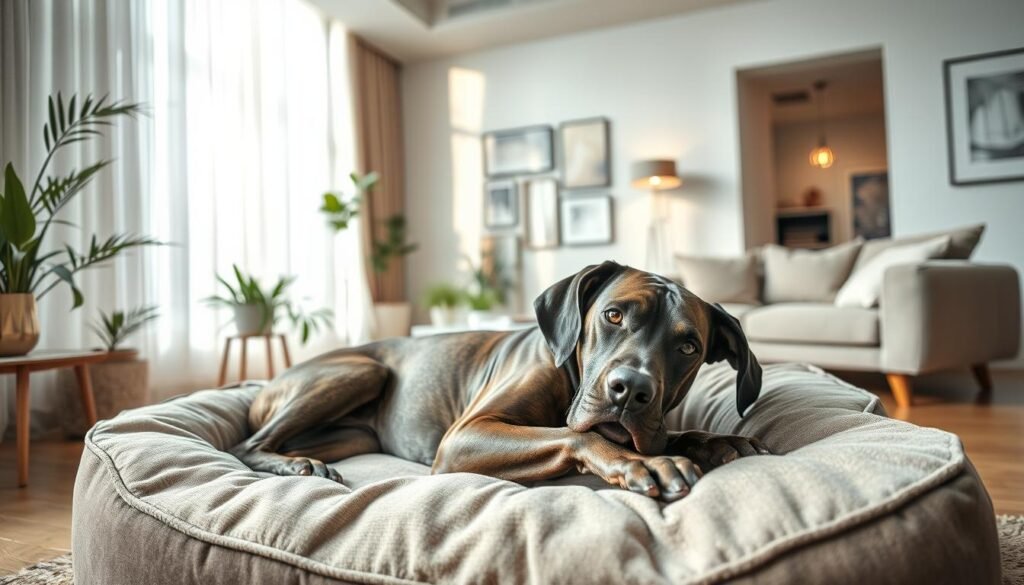
You might be surprised to find out that a Great Dane can do well in an apartment. These dogs are known for their size, but they are also known as “gentle giants” because they are calm indoors. Success in a small home depends more on your commitment to their daily routine than on the size of your living room.
Pros and Cons of Apartment Living
Living with a large breed in a small space has its own advantages and disadvantages. It’s key to think about these carefully before getting a Great Dane.
- Pros: They are generally calm indoors and like to relax on a comfy bed.
- Cons: Their size can cause them to knock over things or need more space for their crates.
- Considerations: Make sure your building has an elevator or easy access to outdoor areas for bathroom breaks.
To understand the space needs, consider the following comparison:
| Feature | Apartment Needs | House Needs |
|---|---|---|
| Exercise | Daily walks required | Yard play possible |
| Furniture | Minimalist layout | More flexibility |
| Accessibility | Elevator access | Ground floor ease |
Social Needs in Smaller Spaces
A Great Dane needs constant human interaction. They are social animals that don’t like being alone for long, even in a small apartment.
If you work long hours, you need to keep your Great Dane busy. Use puzzle toys or hire a dog walker to prevent boredom and anxiety. A happy dog is one that feels part of the family, no matter the size of your home.
Grooming and Maintenance
The Great Dane may be huge, but they’re easy to groom. Starting a grooming routine early helps them stay calm and cooperative. This is essential for a smooth grooming experience.
Grooming Needs
Brushing regularly is key. It spreads natural oils and checks for skin problems, ticks, or parasites. Their short fur makes it easy to miss these issues.
Don’t forget about their paws and ears. Nail trimming keeps them comfortable, and ear cleaning prevents infections. Start these habits early to avoid problems later.
Bathing and Shedding
Great Danes have a short, smooth coat that sheds a bit. A weekly brush can cut down on hair around the house.
Bathing them is a big job. Use gentle, quality shampoo to keep their skin healthy. Make sure the tub has a non-slip mat for their safety and balance.
Training and Socialization
Managing powerful dogs like the Great Dane needs patience, consistency, and clear communication. Their large size makes teaching them manners essential. Being a calm leader through positive reinforcement builds a strong bond based on respect, not fear.
Training Difficulty
The Great Dane is an intelligent dog breed that learns quickly with rewards. But, their strength means basic obedience is key for safety. Teach them commands like “sit,” “stay,” and “heel” early.
Consistency is key with this breed. Avoid harsh punishment, as they respond better to praise and treats. Short, engaging training sessions keep them focused and eager to learn.
Social Behavior with Other Pets
Early socialization is vital for a well-adjusted Great Dane. Introduce them to various environments, people, and animals early. This helps them become confident in new situations and prevents anxiety.
While they are generally gentle, their size can be intimidating. Supervised playdates teach them to interact safely with others. Prioritizing these experiences helps them stay friendly and calm for life.
| Training Focus | Primary Goal | Recommended Method |
|---|---|---|
| Basic Obedience | Safety and Control | Positive Reinforcement |
| Leash Manners | Prevent Pulling | Consistent Guidance |
| Socialization | Confidence Building | Controlled Exposure |
| Recall Skills | Reliable Response | Reward-Based Practice |
Pros and Cons of Owning a Great Dane
Having a gentle giant as a pet is a special experience. It brings lots of love but also comes with big responsibilities. Before getting a dog, it’s key to understand what owning a Great Dane means. Knowing the good and the bad will help you create a lifelong friendship.
Advantages of Great Danes
Great Danes are known for their affectionate and calm nature. They are called heart-dogs because they bond deeply with their families. As canine companions, they are patient and gentle, making them great for many homes.
They also bring a sense of safety and comfort. Their size might surprise you, but they have a low-key energy level indoors. They love to relax by your side after a walk, making them perfect for a calm lifestyle.
Disadvantages to Consider
While they offer lots of love, their care comes with a big price tag. They eat a lot of food, and vet bills are higher than for smaller dogs. Make sure you can afford their needs for their whole life.
Also, think about how they’ll fit into your home. They need space to move and can accidentally knock things over. Plus, they live shorter lives than smaller dogs, which is hard to accept.
| Feature | Benefit | Challenge |
|---|---|---|
| Temperament | Deeply affectionate | Requires consistent training |
| Maintenance | Low grooming needs | High food and medical costs |
| Lifestyle | Great for relaxed homes | Needs adequate physical space |
Deciding to have a Great Dane as a pet is a big choice. It needs careful thought and preparation. If you can offer the right home, the experience is incredibly rewarding. Take time to think if you can give a stable, loving home to these gentle giants.
Conclusion and Next Steps
Bringing a Great Dane into your home is a big step. It brings deep affection and loyalty. This gentle giant needs careful health and daily care for a long, happy life. You can help your pet by focusing on preventive care and regular routines.
Keeping your pet healthy is key. You should book an appointment today to talk about your Great Dane’s needs. Regular vet visits help catch health issues early, like heart problems or joint stress.
Consider Other Large Breed Dogs
Great Danes are special, but you might also like other large breed dogs. Looking at different traits helps you choose the right one for your family. Start by looking into local rescues or reputable breeders.
Resources for Informed Decisions
There are many good resources for learning about dog breeds. Veterinary clinics and breed groups offer advice on food, exercise, and safety. Learning as much as you can helps you give your dog the best life.
# Great Dane Dog Breed Info Pros Cons and Care Tips
## Introduction to the Great Dane
### What Is a Great Dane?
The Great Dane is a majestic and gentle giant. They are known for their elegance and strength. Despite their size, they are calm and affectionate, making them great companions.
### Who Is This Breed Suitable For?
Great Danes are perfect for families and individuals who want a loyal companion. They need a lot of space, so they’re best for those who can provide it.
## Origin of the Great Dane
### Historical Background
Despite their name, Great Danes come from Germany, not Denmark. They were bred to hunt boars, showing their courage and strength. By the 19th century, they became the elegant dogs we know today.
### Cultural Significance
As they moved from the outdoors to nobility’s estates, their temperament was refined. They became symbols of status and protection for the German elite. This history helps us understand their protective nature and calm demeanor.
## Size and Weight
### Growth Stages
Great Dane puppies grow fast, similar to a human child in fourteen years. It’s important to monitor their growth to avoid skeletal issues.
### Typical Measurements
Adult Great Danes are impressive. Males can be 30 to 32 inches tall, and females slightly smaller. They weigh between 110 to 175 pounds. Proper nutrition is key for their health and mobility.
## Lifespan and Health
### Average Lifespan
Great Danes live between 7 to 10 years. Providing a stable environment and regular vet visits can help them live longer.
### Common Health Issues
They are prone to hip dysplasia and heart conditions like dilated cardiomyopathy. Bloat is a serious risk. Regular vet visits are essential.
## Temperament and Personality
### General Behavior Traits
Great Danes are patient and tolerant. They are happy to lounge around after exercise. They are intelligent and affectionate with their owners.
### Interaction with People
They form strong bonds and can be protective. Despite their size, they are usually welcoming to strangers once they see you’re comfortable.
## Energy Level and Exercise Needs
### Daily Exercise Requirements
Great Danes need regular physical activity. Aim for two long walks a day. Avoid strenuous exercise before or after meals to prevent digestive issues.
### Fun Activities for Great Danes
Engage them in obedience training or let them run in a fenced yard. They enjoy puzzle toys and scent work, keeping their minds sharp without straining their joints.
## Family Compatibility
### Are They Good with Children?
Great Danes are loyal family pets and patient with children. Supervise playtime to ensure safety for both the dog and the children.
### Living with Other Pets
They usually get along with other dogs and cats, even if raised together. Their protective nature means they watch over their pack more than start conflicts.
## Apartment Living and Space Requirements
### Pros and Cons of Apartment Living
Great Danes can adapt to apartments with enough outdoor exercise. They spend a lot of time sleeping indoors. Their size means one wag can clear a coffee table!
### Social Needs in Smaller Spaces
These dogs crave human interaction. They shouldn’t be left alone for long, as they can develop separation anxiety. Owners of smaller spaces must commit to regular social interaction and exercise.
## Grooming and Maintenance
### Grooming Needs
Grooming a Great Dane is low-maintenance due to their short coat. Weekly brushing helps manage shedding and keeps their skin healthy.
### Bathing and Shedding
They don’t need frequent baths but bathing is a big task due to their size. Introduce them to baths or professional groomers early. Regular nail trimming is also important.
## Training and Socialization
### Training Difficulty
Training is essential for Great Danes. They are powerful and need early and consistent training. Positive reinforcement works well with their eager-to-please nature.
### Social Behavior with Other Pets
Early socialization is key. Enroll them in puppy classes to help them interact politely with other breeds and people.
## Pros and Cons of Owning a Great Dane
### Advantages of Great Danes
They have an incredible temperament, being loyal and calm. They are easy to care for despite their size.
### Disadvantages to Consider
The main challenges are the financial commitment and shorter lifespan. They require more food and vet visits. Be prepared for their size and drooling.
## Conclusion and Next Steps
### Explore Similar Breeds
If you love giant companions, consider the Mastiff, Irish Wolfhound, or Newfoundland. Each has a unique personality and care needs.
### Resources for More Information
Visit the Great Dane Club of America or Petfinder for reputable breeders and rescues. Researching ensures you’re ready for the rewarding journey of owning a Great Dane.
## FAQ
### Q: Are Great Danes considered intelligent dog breeds?
A: Yes, they are very intelligent. They learn quickly with positive reinforcement and consistent training.
### Q: Do these gentle giants shed a lot?
A: They are moderate shedders. Regular brushing helps manage shedding and keeps their coat healthy.
### Q: Are they suitable as loyal family pets for first-time owners?
A: They can be, if the owner is prepared for the physical and financial demands. Their patient nature makes them great for families, but they need early and consistent training.
### Q: How much exercise do these powerful dogs actually need?
A: They have moderate energy levels. Two 30-to-45-minute walks daily are enough. Avoid over-exercising them when they are puppies to protect their joints.
### Q: Why are Great Danes often called popular pet breeds for apartment dwellers?
A: They are calm indoors. As long as they have a large enough bed and get their daily walks, they are content to lounge around, making them adaptable to smaller spaces.
### Q: What should I know about the health of these large breed dogs?
A: They are prone to bloat, hip dysplasia, and heart issues. Working with a reputable breeder and regular vet visits are essential for their health.



💬 Leave a Comment