
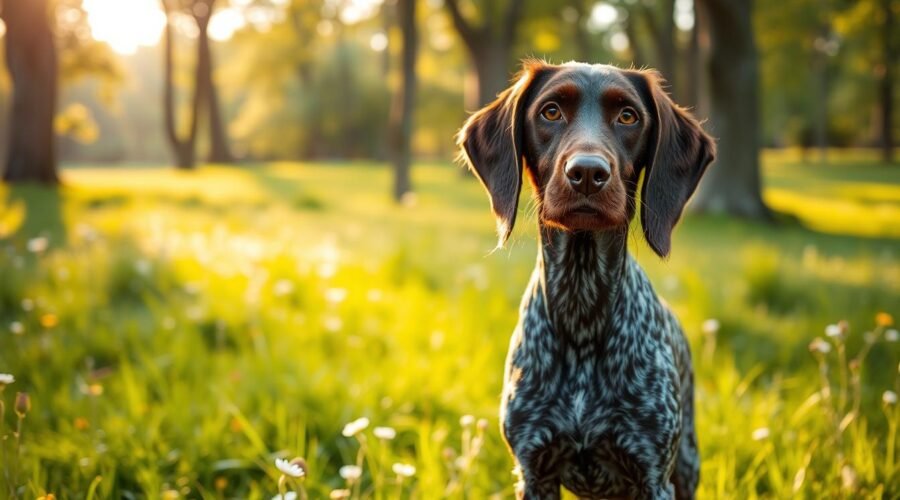
Are you looking for a rugged, intelligent, and versatile friend for your outdoor adventures? The German Wirehaired Pointer is a top-notch sporting dog. It’s known for its endurance and sharp mind. This breed loves to stay active and engaged, whether you’re hiking or at the lake.
Choosing the right pet is a big decision. We offer key dog breed information to see if this hardworking dog is right for you. Knowing their needs is the first step to a happy, lasting relationship.
This guide is here to help you make a smart choice. If you love the outdoors and have lots of energy, the German Wirehaired Pointer could be a great fit for your home.
Key Takeaways
- This breed is highly intelligent and excels in various sporting activities.
- They are best suited for active families who enjoy spending time outdoors.
- Consistent training and mental stimulation are vital for their well-being.
- Their rugged coat requires regular grooming to stay healthy and clean.
- Always assess your lifestyle before committing to this high-energy companion.
Introduction to the German Wirehaired Pointer
Looking for a dog that’s tough yet friendly? The German Wirehaired Pointer might be what you need. They’re great for outdoor lovers because they can handle almost any environment.
Before getting a German Wirehaired Pointer, it’s important to know their traits. This helps you decide if they’re right for your home. Their physical look and personality will shape your life together.
Overview of the Breed
The German Wirehaired Pointer is a sturdy dog, medium to large in size. They usually grow to be 22 to 26 inches tall. This reflects their role as a versatile hunting dog.
These dogs are smart and full of energy. They live for 12 to 14 years with the right care and exercise. Their unique, wiry coat keeps them warm in cold weather.
Who is the Breed Suitable For?
This breed is perfect for active families who can keep them busy. They love to work and need lots of space to run.
Great for those who love the outdoors, the German Wirehaired Pointer is a fantastic companion. But, they’re not for sedentary lifestyles or small homes without yards. Consistency and engagement are key to their happiness.
Origin and History of the Breed
The German Wirehaired Pointer’s story starts in 19th-century Germany. Breeders wanted a versatile hunting dog for different places. They aimed for a dog that could handle forests, fields, and water well.
Development in Germany
In the late 19th and early 20th centuries, breeders focused on a dog with unmatched stamina and a great sense of smell. They chose to breed for function over looks. This led to a tough hunting companion that could track and retrieve in any weather.
These early breeders were very careful in their selection. They tested their dogs in real-world hunting to see if they had the needed grit. This hard work is why the GWP is loved by outdoor fans today.
Influence of Other Breeds
To get the right traits, breeders mixed different breeds. They combined the best of pointers and rough-coated dogs. The following breeds were key in making the modern GWP:
- German Shorthaired Pointer: Gave the breed its pointing and tracking skills.
- Griffon: Added the wire-haired coat, protecting against harsh conditions.
- Pudelpointer: Brought intelligence and a love for working with humans.
By mixing these breeds, the creators made a versatile hunting dog ready for any challenge. This mix explains the breed’s enduring work ethic and toughness. You can see these traits in how the dog tackles tasks with focus and determination.
Physical Characteristics
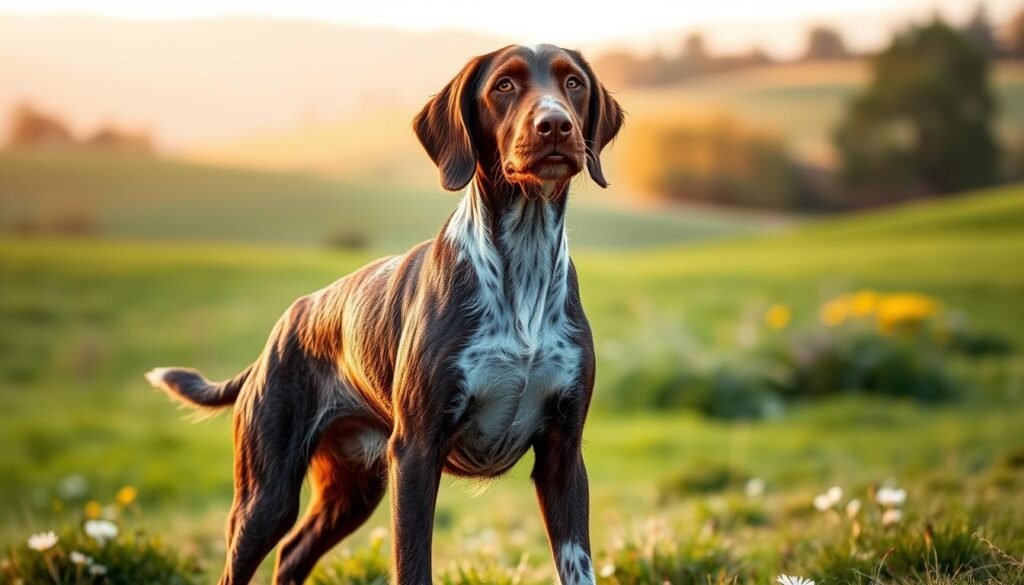
The GWP characteristics make this breed a hit with active families. They have a muscular, athletic frame built for endurance. Their sturdy build keeps them energetic all day, perfect for those who love the outdoors.
Size and Weight
The German Wirehaired Pointer is a medium-to-large breed with a strong look. Males are 24 to 26 inches tall, while females are 22 to 24 inches. They weigh between 50 and 70 pounds, depending on their size and activity.
Their solid build supports their agility and speed. Their bodies are a bit longer than they are tall, which helps them move easily over rough terrain. Keeping them at a healthy weight is important for their joints as they get older.
Lifespan
Getting a German Wirehaired Pointer means committing to a loyal friend for many years. With the right care, they live between 12 to 14 years. This gives you lots of time for adventures and companionship together.
Keeping them healthy is key to a long life. Regular vet visits and catching health issues early are important. Knowing these GWP characteristics helps you prepare for the joy of raising a lively and loyal dog.
| Feature | Male Specifications | Female Specifications |
|---|---|---|
| Height | 24 – 26 inches | 22 – 24 inches |
| Weight | 60 – 70 pounds | 50 – 60 pounds |
| Average Lifespan | 12 – 14 years | 12 – 14 years |
Temperament and Personality Traits
This breed’s personality is a mix of high energy and deep devotion. When you bring one home, you’ll see their temperament is sharp intelligence and love for their pack.
Energetic and Playful
These dogs are full of life and energy. They make everyone laugh with their comical behaviors during play.
They love to stay active and play games. Their GWP characteristics include:
- A love for outdoor adventures.
- A playful spirit that lasts into adulthood.
- A quick learning of new tricks or games.
Intelligent and Loyal
These dogs are not only playful but also very smart. They learn commands and routines fast, making them fun to train.
They love to be part of family activities and don’t like to be alone. This strong bond makes them loving companions. They always want to be with you, whether at home or outdoors.
Suitability for Families and Homes
Knowing the temperament of this breed is key for anyone wanting a loyal family pet. These dogs are very devoted to their people, bonding well with everyone. But, they need lots of activity, making them perfect for families who love the outdoors.
Compatibility with Children
With early socialization, these pointers are great with kids. They’re fun for older kids who can keep up with their energy. Always remember to watch kids and dogs together to keep everyone safe.
They might accidentally bump into smaller kids while playing. Teaching kids how to play nicely with the dog is important. For more tips, check out living with a German Wirehaired Pointer.
Ideal Living Conditions
They don’t do well in apartments or small places. They need a big yard to run around in. If you have a big yard or easy access to trails, they’ll be happy.
First-time owners need to be ready for the work of keeping them happy. Without enough to do, they might get bored or destructive. A structured home is best for keeping them calm and loyal family pets.
| Feature | Requirement | Suitability |
|---|---|---|
| Living Space | Large yard or acreage | High |
| Activity Level | Very high energy | Active families |
| Socialization | Early and consistent | Essential |
| Family Type | Active households | Excellent |
Pros and Cons of the German Wirehaired Pointer
Choosing the right companion means looking beyond the surface to see what daily life really entails. When you consider the GWP, you are looking at a dog that thrives on engagement and activity. Evaluating both the benefits and the hurdles ensures you are fully prepared for a long-term commitment.
Advantages of Owning One
The primary appeal of this breed lies in its incredible versatility and deep bond with its owners. You will find that a loyal family pet is exactly what you get when you invest time in training and bonding. Their intelligence makes them quick learners, which is a major benefit for those who enjoy teaching new tricks or advanced commands.
Beyond their smarts, these dogs are exceptionally capable in outdoor settings. Whether you enjoy hiking, running, or field sports, their high energy levels make them the perfect partner for an active lifestyle. Their unwavering loyalty creates a strong sense of security and companionship within the home.
Potential Challenges
While their energy is a strength, it can also present a challenge if not managed correctly. These dogs require significant mental stimulation to stay happy and well-behaved. Without a job to do or consistent training, they may become bored and find their own ways to stay entertained, which is rarely ideal for your furniture.
Another factor to keep in mind is their strong prey drive. Because they were bred for hunting, they may be naturally inclined to chase smaller animals like squirrels or cats. If you have other small pets, you must be prepared to manage these instincts carefully. Being a loyal family pet does not automatically mean they will ignore their natural hunting urges, so early socialization is essential for a harmonious household.
Grooming Needs
Getting a German Wirehaired Pointer means you’ll find their grooming requirements easy to handle. They look rugged but don’t need lots of daily grooming to stay neat.
Having a regular grooming routine is key to keeping your dog looking and feeling great. For tips on grooming your German Wirehair Pointer, check out this resource. It helps you pick the right tools for their coat.
Coat Care
Their wiry coat protects them but needs your care. Weekly brushing is enough to remove loose hair and dirt from their adventures.
Brushing regularly stops painful mats from forming. Also, don’t forget to clean their ears and trim their nails. This keeps them comfortable and healthy.
Shedding and Allergies
These dogs don’t shed as much as others, but they’re not hypoallergenic. Shedding is moderate, with a bit more during seasonal changes.
If allergies are a concern, regular grooming requirements can help. By keeping up with grooming, you can keep your home clean. And your dog will stay happy and well-groomed.
Exercise Requirements
These dogs need daily exercise, which is non-negotiable. You must commit to keeping them active. They have a lot of stamina that needs a regular outlet.
If you don’t meet their exercise needs, it can be tough for both you and your dog. Without the right outlet, they might get bored and act out. This can lead to destructive behaviors.
Daily Activity Needs
Plan for at least one hour of intense activity every day. A simple walk is not enough for them.
These dogs love to run, explore, and work. Being consistent is key to keeping them physically and mentally healthy for their whole life.
Suitable Activities
To keep your dog happy, mix up your activities. This keeps their mind sharp and ensures they get the exercise they need.
Here are some ideas to burn off their energy:
- Hiking: Their endurance makes them great for long hikes on rough trails.
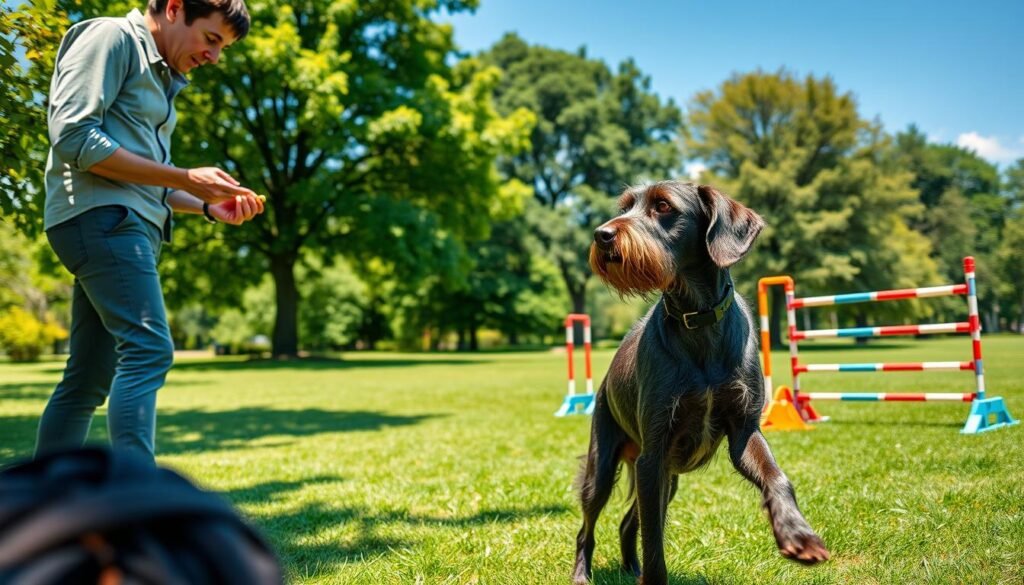
- Agility Training: This sport challenges their intelligence and physical skills at the same time.
- Retrieving Games: Playing fetch in a big, safe area lets them run and release energy.
- Swimming: Many of these pointers love water, making it a great way to exercise without putting too much strain on their joints.
By giving them structured activities, you keep your dog happy and well-adjusted. Spending time on their exercise needs today can prevent many behavioral problems later on.
Basic Care and Maintenance
You play a key role in keeping your dog fit. Giving them consistent care helps them stay happy and healthy. Focus on a few important areas to keep your dog in top shape.
Nutrition and Diet
A high-quality, protein-rich diet is key for this breed. They need food that supports their high energy levels. Always choose formulas that list real meat as the first ingredient.
It’s also important to control their food portions. This prevents obesity, which is common as they get older. Check their weight often and adjust their meals based on their activity. Talk to your vet to find out how many calories they need.
Regular Veterinary Check-ups
Regular vet visits are essential for a long, healthy life. Annual or bi-annual exams help your vet check on your dog’s health. These visits help catch health issues early.
At these visits, tell your vet about any changes in your dog’s behavior or appetite. This keeps your hunting companion ready for outdoor fun. Don’t forget about preventative care like vaccinations and parasite control.
Training and Social Behavior
Training a German Wirehaired Pointer is rewarding. They are intelligent and independent. They learn fast but have their own way of thinking. Success comes from respect and clear communication.
Here are some training tips to help you: be consistent, use positive reinforcement, and keep sessions short. If you’re clear, they’ll want to please you.
Training Difficulty Level
German Wirehaired Pointers are very smart. They can learn complex tasks. But, they might test you if training seems dull. Be firm but gentle to keep them focused.
Make your routine varied. Active dogs need both physical and mental challenges. Consistency is key to avoid stubbornness in young dogs.
Interaction with Other Pets
Understanding their hunting instincts is key to managing their social behavior. They have a strong prey drive. Early socialization is essential for them to interact well with other pets.
Always supervise when introducing them to new animals. Use commands like “leave it” or “stay” to control their excitement. With the right guidance, they can be great companions in a multi-pet home.
| Behavioral Trait | Training Approach | Expected Outcome |
|---|---|---|
| High Intelligence | Use mental stimulation | Quick learning |
| Independent Streak | Maintain firm consistency | Respect for boundaries |
| Strong Prey Drive | Early socialization | Safe social interaction |
Health Considerations
Knowing your dog’s health needs is key to a great relationship. This breed is usually strong and lively. But, knowing common health issues helps you care for them better. Knowledge is your greatest tool for your dog’s health.
Common Health Issues
This breed might face some genetic health problems. Hip dysplasia and elbow dysplasia are common. These issues affect the joints and can cause pain as your dog gets older. Early detection and lifestyle changes can help manage these conditions.
Eye health is also important. Regular vet visits can catch eye problems early. Even breeds like the American Pit Bull Terrier have their health concerns. But, always watch your dog closely.
Preventive Care Tips
Keeping your dog healthy is easy with simple habits. Maintaining a healthy weight is very important. It reduces joint stress and prevents problems. A diet that matches your dog’s activity level keeps them fit.
Regular vet visits are vital for early detection and care. Talking to your vet about your dog’s health and behavior helps catch small issues early. Consistency is key for a long, happy life for your dog.
| Health Focus Area | Primary Action | Frequency |
|---|---|---|
| Joint Health | Weight Management | Daily |
| Eye Wellness | Professional Screening | Annually |
| General Vitality | Veterinary Check-up | Bi-annually |
Comparing the German Wirehaired Pointer with Similar Breeds
Understanding the differences between various sporting dogs helps you find the perfect match for your active lifestyle. When you evaluate different breeds, you gain a clearer picture of what to expect in terms of temperament, energy, and daily care. This process ensures that your final choice aligns perfectly with your home environment.
Alternatives to Consider
If you are drawn to the GWP, you might also find yourself looking at the Italian Spinone. While both are excellent sporting dogs, they offer distinct experiences for their owners. The Italian Spinone is often described as having a more laid-back approach compared to the high-intensity drive of the German breed.
The build of these dogs also differs significantly. The Spinone is generally heavier and more robust, whereas the versatile hunting dog from Germany is built for speed and endurance in varied terrain. Choosing between them often comes down to whether you prefer a steady, methodical worker or a fast-paced, energetic partner.
Similar Traits in Other Breeds
Many breeds share the core characteristics that make a versatile hunting dog so effective in the field. Intelligence, loyalty, and a strong desire to work alongside their human companions are common threads among these types of dogs. Whether you choose a GWP or another pointer variety, you are likely to find a partner that thrives on engagement and physical activity.
| Breed | Primary Trait | Energy Level |
|---|---|---|
| GWP | High Endurance | Very High |
| Italian Spinone | Methodical | Moderate |
| German Shorthaired Pointer | Agility | High |
Ultimately, the best way to decide is to observe these dogs in action. By comparing the GWP to other breeds, you can feel confident in your decision. Take your time to research each option, as finding the right companion is a rewarding journey that leads to a lifelong bond.
Conclusion: Next Steps for Prospective Owners
You now know a lot about the German Wirehaired Pointer. Bringing one home needs careful planning and a long-term commitment. You must match their needs with your lifestyle and daily routine.
Good dog breed information is key when deciding. Think about if you can meet their exercise and grooming needs. A good partnership starts with knowing your time and resources.
Researching Similar Breeds
It’s a good idea to compare this breed with others. Look at the Wirehaired Pointing Griffon or the Cesky Fousek. These comparisons help you see if the German Wirehaired Pointer is right for you.
Deepening Your Knowledge
Look for local breed clubs or reputable breeders for hands-on experience. Talking to experienced owners gives you valuable insights. Also, find professional training tips to prepare for your new dog. A strong start ensures a happy and healthy life for your dog.




💬 Leave a Comment