
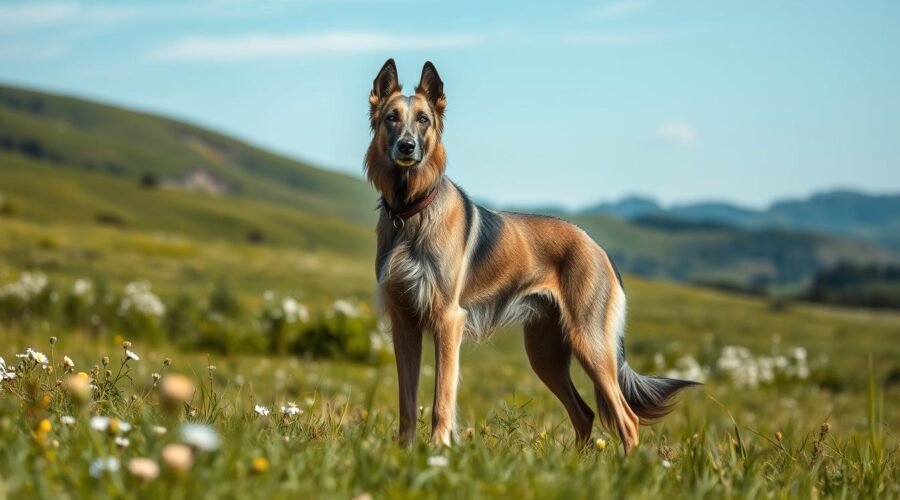
The giant dog breed is known for its tall height and calm nature. It has a rich history as a brave hunting dog. Now, it’s a gentle giant that’s great as a family pet. If you have enough space, they can be a wonderful addition to your home.
It’s important to understand the temperament and needs of these dogs. They are among the best dog breeds for those who want a quiet, loyal friend. But, they need a lot of attention. This guide will help you decide if they’re right for you.
Key Takeaways
- These dogs are famous for their massive physical presence and calm, friendly nature.
- They require significant indoor space and are not ideal for small apartment living.
- Proper nutrition and joint support are critical aspects of their daily care.
- The typical lifespan is shorter compared to smaller canine companions.
- Their historical background as hunters influences their need for regular, gentle exercise.
What Is an Irish Wolfhound?
The Irish Wolfhound has a rich history and a kind personality. They are known for their tall height and wire-haired coat. Despite their size, they are calm and gentle, making them great companions.
Key Characteristics
The Irish Wolfhound is a mix of strength and gentleness. They have a muscular body but move with grace. Their Irish Wolfhound temperament is patient, making them perfect for families.
These dogs are not just big; they are also very sensitive. They love being around people and are quiet indoors. Taking care of them means paying attention to their joints and comfort.
Breed History
The Irish Wolfhound comes from ancient Ireland. They were known for their hunting skills and guarding homes. They were even given to royalty as a symbol of status.
Over time, they became beloved family pets. They kept their noble spirit and connect us to Ireland’s past.
Who Is This Breed Suitable For?
Choosing an Irish Wolfhound means considering your living space. They need a lot of room to move. They don’t need a huge yard but need a safe area to roam.
They are great for active people who enjoy long walks. They need a long-term commitment for their care and health. Here’s a comparison to see if they fit your lifestyle:
| Feature | Requirement | Owner Profile |
|---|---|---|
| Space | Large indoor area | Homeowner with room |
| Activity | Moderate daily walks | Patient, active person |
| Social Needs | High human interaction | Present, loving family |
| Grooming | Regular brushing | Dedicated to maintenance |
This breed is ideal for those who want a loyal and calm friend. If you have the space and love to give, you’ll get a lifelong companion.
Size and Weight of Irish Wolfhounds
Meeting an Irish Wolfhound for the first time is awe-inspiring. They are a giant dog breed that commands attention. Yet, they are known as gentle giants. Knowing their size is key for any future owner, as it affects their needs and living space.
For proper Irish Wolfhound care, you need a spacious home. Before getting one, make sure you have enough room. This Irish Wolfhound information helps you understand their size.
Typical Height
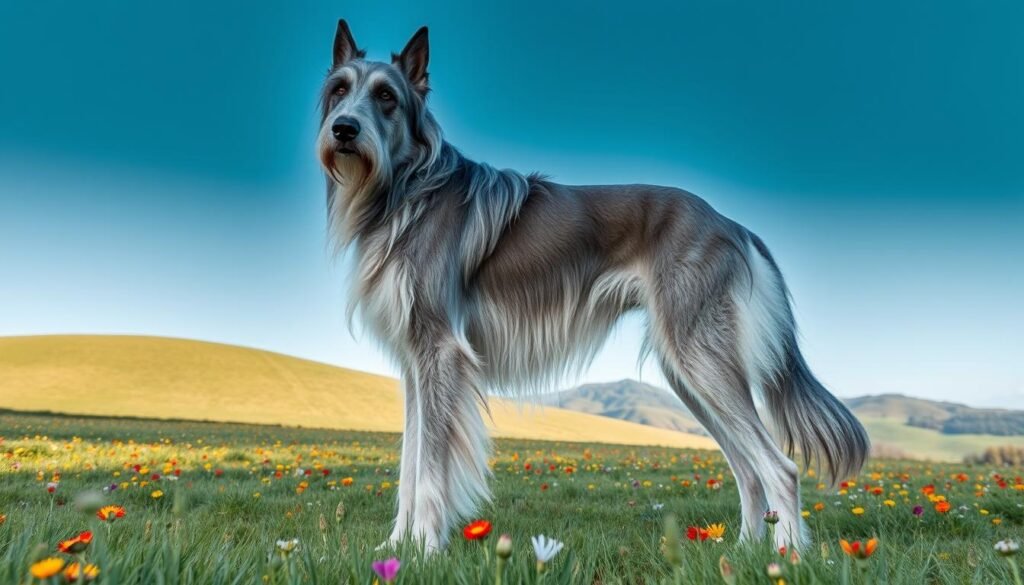
The Irish Wolfhound is one of the tallest dog breeds. Males are at least 32 inches tall, sometimes reaching 35 inches. Females are slightly shorter, at least 30 inches.
These dogs can easily reach counters or tables. They can look you in the eye while standing. Their height makes them unique among dogs.
Average Weight
Irish Wolfhounds are not just tall, but also heavy. A healthy male weighs at least 120 pounds. Females weigh around 105 pounds or more.
Remember, these are minimum weights. Many can weigh up to 150 pounds or more. Keeping them at a healthy weight is important for their health and joints.
Size Comparison to Similar Breeds
Comparing the Irish Wolfhound to other large breeds is helpful. They are similar in height to Great Danes but have different builds and coats. Here’s how they compare to other large breeds.
| Breed | Average Height | Average Weight |
|---|---|---|
| Irish Wolfhound | 30–35+ inches | 105–150+ lbs |
| Great Dane | 28–32 inches | 110–175 lbs |
| Saint Bernard | 26–30 inches | 120–180 lbs |
Irish Wolfhounds are known for their lean, muscular build. They are taller but more agile than other giants. Their height and grace make them a special addition to any family with enough space.
Lifespan and Health Considerations
Welcoming a giant dog breed into your home comes with health challenges. These dogs are known for being gentle. But their size requires extra care and attention.
Average Lifespan
The Irish Wolfhound lifespan is shorter than smaller dogs. They usually live between 6 and 8 years.
Irish Wolfhounds grow fast and are big. This means their bodies work harder. Knowing this is key before you decide to own one.
Common Health Issues
Irish Wolfhounds face health problems common in large breeds. Bloat is a serious issue that needs quick vet help.
They can also get heart problems like dilated cardiomyopathy. Their size can lead to joint issues like hip dysplasia, affecting their movement as they get older.
“The bond we share with our dogs is profound, and providing them with proactive healthcare is the greatest gift we can offer in return for their unwavering loyalty.”
Preventative Care Tips
Good Irish Wolfhound care means catching problems early and managing them well. Regular vet visits are key to check their heart and joints.
It’s also important to watch their diet to avoid obesity. This helps their joints. Paying attention to their Irish Wolfhound characteristics and energy can help spot issues early.
Even though they’re calm, their health needs are big. With the right food, exercise, and care, they can live a happy life.
Temperament and Personality Traits
Underneath the tough look of an Irish Wolfhound is a heart that’s very gentle and loving. Their big size might look scary at first, but they are known for being kind and calm. If you want to learn about Irish Wolfhound temperament, they are truly the gentle giants of dogs.
General Behavior
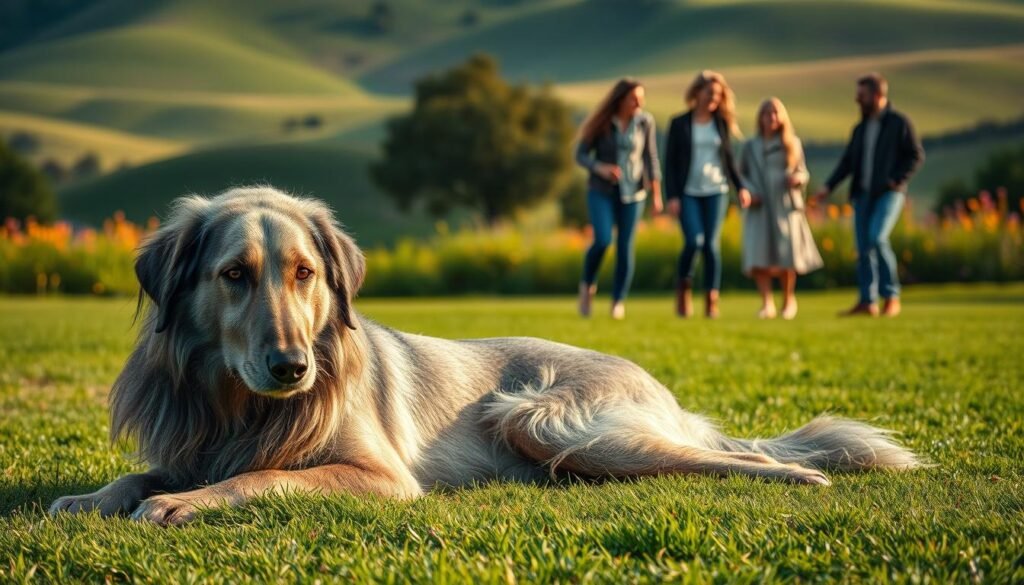
The Irish Wolfhound is very loyal to its family. They are not usually aggressive and prefer peace over noise. They love to follow their owners around, just to be near them.
Energy Level
Despite being a giant dog breed, they don’t need a lot of exercise. They are often called “couch potatoes” because they love to relax. But, they do need regular walks to stay healthy and happy.
Remember, as Irish Wolfhound characteristics, they are sighthounds. This means they might chase small animals if they see them moving fast. Always keep them on a leash in open areas for their safety and the safety of wildlife.
Interaction with Children
These dogs are very patient and gentle with kids. They are great for families with children, as long as adults watch them. Because of their size, they might accidentally knock over little kids during play.
- Always supervise play between young children and your dog.
- Teach children how to respect the dog’s personal space.
- Ensure the dog has a quiet place to retreat when they need a break.
By taking good care of your Irish Wolfhound, you can build a strong bond with them. Even though they live shorter lives than smaller dogs, their friendship is truly special. Getting reliable Irish Wolfhound information is the first step to a fulfilling life with these amazing animals.
Suitability for Families and Children
Thinking of adding a gentle giant to your family? You might wonder if they fit into your daily life. The Irish Wolfhound is known for being calm and patient. Knowing their needs is key to a happy home.
Ideal Living Conditions
Despite their large size, Irish Wolfhounds adapt well to indoor living. They love to relax after a short walk. But, they need enough space to stretch out fully, making small apartments less suitable.
A securely fenced yard is great for them. It lets them move around freely without needing intense exercise. A quiet, stable home helps keep their Irish Wolfhound temperament balanced.
Family Compatibility
Giant dog breeds like the Irish Wolfhound are gentle and protective with children. They are patient, but their size means kids need to be supervised. Teaching children how to interact with them safely is important.
They love being part of family activities. They shouldn’t be left alone for long. If you want a loyal companion, they’re a great choice.
First-Time Owner Suitability
First-time owners should prepare carefully for an Irish Wolfhound. They are easy-going but need a confident handler. They require consistent training and socialization to stay well-behaved.
It’s also important to learn about their health and diet. Their shorter Irish Wolfhound lifespan means they need extra care. With the right commitment, a first-time owner can enjoy a special bond with this breed.
Pros of Owning an Irish Wolfhound
The Irish Wolfhound is known for being one of the most peaceful giants in the dog world. They have a rare mix of big size and a soft heart. Knowing the Irish Wolfhound characteristics helps understand why many families love them.
Gentle Disposition
Despite their big Irish Wolfhound size, these dogs are calm and patient. They rarely get aggressive and approach new things quietly. This gentle disposition makes them great companions for those who want a relaxed home.
Loyalty and Affection
If you want a deep bond with your pet, the Irish Wolfhound temperament is rewarding. They are deeply devoted to their families and are always there for you. Proper Irish Wolfhound care helps their affectionate nature grow throughout their life.
Good with Other Pets
Many people look for Irish Wolfhound information on how they get along with other animals. They are usually laid-back and get along well with dogs and cats. Their calm nature makes them easy to fit into homes with other pets.
| Positive Trait | Benefit to Owner | Impact on Lifestyle |
|---|---|---|
| Gentle Nature | Reduced stress | Calm home environment |
| Deep Loyalty | Strong emotional bond | Reliable companionship |
| Social Tolerance | Easy multi-pet living | Harmonious household |
| Adaptability | Flexible routine | Fits various schedules |
Choosing an Irish Wolfhound means getting a big friend who is kind. While thinking about their Irish Wolfhound lifespan and needs is important, their joy is unmatched by many owners.
Cons of Owning an Irish Wolfhound
Knowing the downsides of this giant dog breed helps you decide if they’re right for you. These dogs are known for being gentle, but they’re not for every home. Understanding the commitment needed ensures a happy life for both you and your pet.
Size and Space Requirements
Their physical scale is huge. Irish Wolfhounds need lots of space to move and stretch. If your home is small or has narrow hallways, they might be too much.
More than just space, you need to think about how to manage their size. They need big beds and feeding stations. Also, getting them to your car might need a large SUV or van.
Health Issues
Irish Wolfhounds have a shorter Irish Wolfhound lifespan than smaller dogs. They face health problems like bloat and heart issues. This means regular vet visits and can be stressful and expensive.
Dealing with these health risks is key to Irish Wolfhound care. You’ll need to schedule regular vet visits and be ready for emergencies. Despite being great companions, their health needs require a lot of dedication from owners.
Grooming and Maintenance
Keeping their coat clean is a big job. Their wiry hair needs regular brushing to avoid mats and keep their skin healthy. Without a routine, you’ll deal with a lot of shedding and a messy home.
The table below shows the main challenges of owning an Irish Wolfhound:
| Challenge Category | Primary Concern | Impact Level |
|---|---|---|
| Physical Space | Large footprint in home | High |
| Health Management | Shortened lifespan/medical costs | Very High |
| Grooming Effort | Frequent brushing required | Moderate |
| Daily Logistics | Transportation and equipment | Moderate |
By considering these Irish Wolfhound characteristics and your own situation, you can make a smart choice. Their Irish Wolfhound temperament is noble and calm. But, remember the practical challenges of their size and health needs.
Grooming Needs
Keeping your Irish Wolfhound looking great is simple with a few habits. This giant dog breed has a wiry coat that’s easy to care for. Grooming is key to their health and comfort.
Coat Care
The wiry coat needs regular care to avoid mats and tangles. Remove dead hair to let new hair grow. Many owners prefer hand-stripping to keep the coat natural.
Shedding
Irish Wolfhounds shed moderately all year. They don’t shed much, but more during seasonal changes. Regular grooming helps manage loose fur.
Bathing and Brushing
Brush your dog weekly to remove debris and spread oils. Bathe them only when needed to avoid oil loss. Use gentle dog shampoo for their skin.
- Brushing: Use a sturdy slicker brush or a metal comb to reach the undercoat.
- Bathing: Only bathe when necessary, typically every few months or if they get very dirty.
- Nails and Ears: Check their ears for cleanliness and trim their nails regularly to prevent discomfort.
Consistent grooming helps your dog’s health and Irish Wolfhound lifespan. It’s also a great way to bond with your pet. Grooming is rewarding for active families with these best dog breeds.
Exercise Requirements
Knowing what a giant dog breed needs to move is key for owners. These dogs are known for being calm but they’re not lazy. They need the right amount of exercise to stay healthy and live a long life.
Daily Activity Levels
Try for moderate daily activity to keep your dog fit. Their big Irish Wolfhound size means they shouldn’t do high-impact exercises. A steady walk is best to keep them in shape without hurting their joints.
Being consistent with your dog’s routine is important. Short walks are better than one long walk. This helps you keep an eye on their energy and stops them from getting too fat.
Recommended Exercise Types
Leashed walks in a quiet park or a safe yard are perfect. Make sure the area is secure to stop them from running off. Following Irish Wolfhound care means keeping them safe and comfortable.
Watch for signs of tiredness, more in young or old dogs. If they start to lag or pant too much, it’s time to go home. Keeping their exercise low-impact is good for their happiness and health.
Fun Activities for Irish Wolfhounds
Mental games are as important as physical ones for the Irish Wolfhound temperament. Try scent games or light training on walks. These activities help you bond and respect their limits.
Here are some ideas to keep your dog engaged:
- Scent work: Hide treats in the grass for them to find.
- Gentle fetch: Use a soft toy in a flat, grassy area.
- Social strolls: Visit new places for sensory fun.
By focusing on these activities, you learn how to tailor your routine. Every dog is different, so watch their behavior and adjust your plans to fit their needs.
Training and Social Behavior
When you bring home an Irish Wolfhound, it’s key to understand their unique learning style. This giant dog breed may look big, but they are very sensitive and loving to their families. They do best with clear, gentle guidance.
Training Difficulty
Training an Irish Wolfhound can be a rewarding experience. They are eager to please but sometimes think for themselves. It’s important to avoid harsh training methods because they can hurt the trust you build.
Consistency is key in training this breed. Keep training sessions short and fun to keep your dog focused and eager to learn. Patience is essential when working with such a large and smart companion.
Socialization with Other Pets
Early socialization is critical for your dog to get along with other animals. They may have a natural prey drive that needs careful handling. Introduce them to other pets early and in a positive setting to teach them boundaries.
By exposing them to different environments and animals early, you help them grow into well-adjusted dogs. With proper supervision, they can live peacefully with smaller dogs and cats. Always watch their interactions to make sure everyone feels safe and comfortable.
Tips for Effective Training
Use positive reinforcement like treats, praise, and play to train your Irish Wolfhound. This method fits their temperament, which responds well to kindness. Here are some important tips:
- Start early: Begin basic obedience training as soon as your puppy arrives home.
- Be consistent: Use the same commands and rules to avoid confusing your pet.
- Keep it fun: Incorporate play into your training sessions to keep your dog interested.
- Build a bond: Use training as a way to strengthen your relationship and mutual respect.
By following these tips, managing your dog’s size and energy becomes easier and more enjoyable. Proper training and socialization are essential for your Irish Wolfhound’s happiness and well-being in your family.
Conclusion: Is the Irish Wolfhound Right for You?
Bringing a giant dog breed into your home is a big decision. You now have the key Irish Wolfhound information to see if it’s right for you. Knowing the Irish Wolfhound’s temperament and care needs prepares you for a fulfilling experience.
Taking the Next Steps
If you’re ready, start by reaching out to good breeders or local rescues. They offer great support for new owners. A vet visit will help you understand the Irish Wolfhound’s lifespan and health before bringing it home.
Exploring Similar Breeds
Consider comparing the Irish Wolfhound with other top dog breeds. Looking into the Scottish Deerhound or Greyhound can give you a good comparison. This helps you find the best fit for your family.
Finding Additional Resources
Joining breed clubs gives you ongoing advice as your puppy grows. These groups share valuable insights into the Irish Wolfhound’s traits and training. Talking to experienced owners keeps you informed and supported.




💬 Leave a Comment