

Are you looking for a loyal and spirited companion to join your family? The Irish Terrier is a medium-sized breed known for its bold personality and striking looks. It has a distinctive wire coat in vibrant red, wheaten, or yellow-red shades, making it as beautiful as it is brave.
This breed is perfectly suited for active families and individuals who love spending time outdoors. They have high energy and are very affectionate. This means they need lots of engagement and exercise to thrive.
Whether you live in a house with a yard or are always on the move, an Irish Terrier could be a great fit. We’re here to help you see if this charming breed is right for you and your lifestyle.
Key Takeaways
- The breed is a medium-sized dog with a durable, wire-textured coat.
- Coat colors range from deep red to wheaten and yellow-red tones.
- These dogs are highly spirited, affectionate, and deeply loyal to their owners.
- They are excellent companions for active families and energetic individuals.
- Consistent exercise and mental stimulation are essential for their overall well-being.
Introduction to the Irish Terrier
The Irish Terrier stands out with its fiery coat and lively personality. It’s truly unique, combining elegance with rugged charm. This makes it perfect for active people.
What Is an Irish Terrier?
The Irish Terrier is a medium-sized dog with a distinctive wiry coat. They come in beautiful shades of red, wheaten, or yellow-red. This gives them a warm and lively look.
Being a classic Terrier breed, they have a sturdy build and brave heart. Their balanced structure makes them agile and ready for outdoor fun anytime.
Who Is This Breed Suitable For?
This breed is ideal for experienced owners who can train them consistently and keep them active. They are smart and strong-willed, doing best with clear guidance and tasks.
If you’re patient and dedicated, you’ll find this dog loyal and loving. They need a lifestyle that keeps them mentally and physically active. This ensures they stay happy and well-behaved.
| Feature | Description | Requirement |
|---|---|---|
| Size | Medium | Active lifestyle |
| Coat | Wiry | Regular grooming |
| Temperament | Bold/Intelligent | Consistent training |
| Best For | Experienced owners | Daily engagement |
Choosing this Terrier breed is a big commitment that offers unmatched loyalty. Before getting an Irish Terrier, make sure you’re ready for their high energy and need for structure.
Origin of the Irish Terrier
To truly understand the spirit of this breed, one must look back at its humble beginnings in rural Ireland. This Irish dog has a history that is as rugged and resilient as the animal itself, stretching back to the 1700s.
Historical Background
For centuries, the Irish Terrier served as a versatile companion for farmers across the Irish countryside. These dogs were prized for their ability to guard property, hunt vermin, and provide loyal companionship during long days in the fields.
Their reputation as a fearless worker earned them the nickname “Daredevil.” This Terrier breed was not just a pet; it was a vital part of the agricultural lifestyle, known for its sharp intelligence and unwavering courage.
Development of the Breed
As the 19th century progressed, the breed began to gain recognition in formal dog shows. Breeders worked to refine the appearance of the dog while carefully preserving the bold personality that made it so special.
The true test of their character arrived during the First World War. Because of their bravery and ability to navigate difficult terrain, they were used as messengers on the front lines.
- 1700s: Emergence as a versatile farm dog in Ireland.
- 1870s: Formal recognition and standardization of the breed.
- 1914-1918: Served with distinction as messengers in World War I.
Today, the Irish Terrier remains a testament to its past. Whether you are looking for a spirited companion or a loyal guardian, this Terrier breed continues to bring the same grit and charm that defined its ancestors as a classic Irish dog.
Size and Weight of the Irish Terrier
The Red Terrier is a medium-sized dog with a balanced and athletic build. Knowing these physical traits helps you care for your dog as it grows from a puppy to an adult.
This breed is sturdy and compact, fitting well in many homes. Whether you live in a house with a yard or a big apartment, understanding their size is essential for planning.
Typical Size Range
The Irish Terrier has a slight size difference between males and females. Males are about 48cm tall at the shoulder, while females are slightly smaller, at 46cm.
This height makes them agile and able to keep up with active families. Their lean and muscular frame makes them a graceful yet powerful companion.
Average Weight
Keeping your Irish Terrier at a healthy weight is important. They usually weigh between 11kg and 12kg when fully grown.
Watching their weight ensures they stay in top shape. If you notice big changes, talk to your vet to keep your pet happy and healthy.
| Measurement | Male | Female |
|---|---|---|
| Average Height | 48 cm | 46 cm |
| Average Weight | 11-12 kg | 11-12 kg |
| Build Type | Athletic | Athletic |
Lifespan of the Irish Terrier
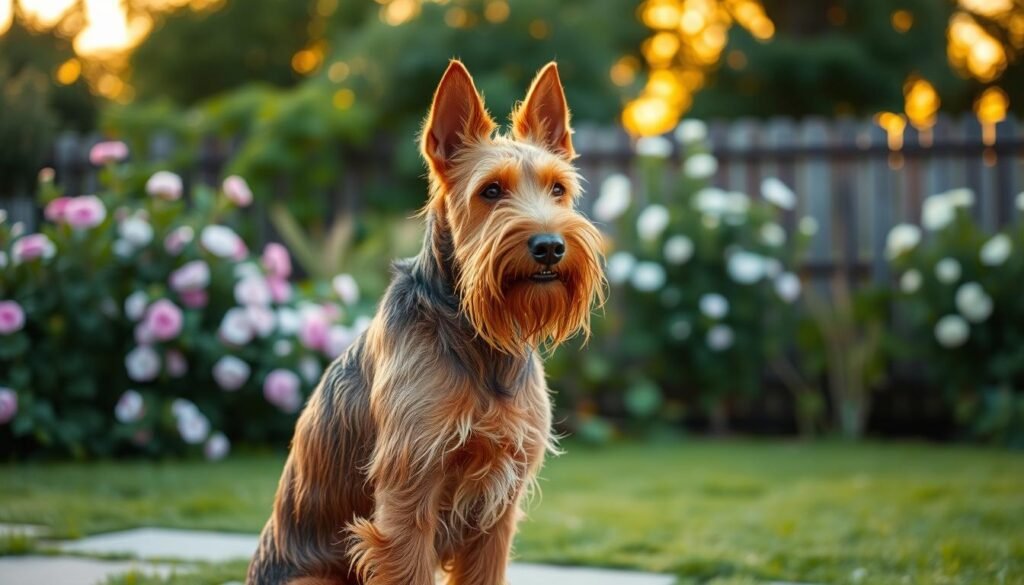
Bringing a new dog home is exciting, and you wonder how long you’ll share life together. The Irish Terrier is known for being strong and lively. They often bring happiness to families for many years.
Life Expectancy
This breed is generally healthy and tough. An Irish Terrier can live for 13 to 15 years on average.
This long life shows the breed’s strong build. With the right care, many stay active and fun well into old age.
Factors Influencing Longevity
Genetics matter, but your daily choices affect your dog’s health a lot. Giving them a balanced diet is key to their health.
Regular exercise is also vital for an Irish Terrier. It keeps them at a healthy weight and heart strong. Exercise prevents obesity, which can cause health problems later.
Don’t forget the importance of regular vet visits. Annual check-ups help catch health issues early. This ensures your Irish Terrier gets the best care for a long, joyful life.
Temperament and Personality Traits
The Irish Terrier has a heart full of fire and loyalty. This breed is known for its spirited nature and loyalty to its humans. Knowing these Terrier characteristics is key for anyone thinking of getting one.
Key Characteristics
This breed is often called the “red daredevil” for its bold spirit. They are very intelligent, which makes them quick learners but also independent. Training them requires confidence and consistency.
They are full of energy but also very affectionate. They love to be part of your daily life. Their playful attitude makes every day exciting with them around.
Behavior With Children and Families
The Irish Terrier is very devoted to families. They protect their home and bond deeply with everyone. They are great playmates for active kids who love playing outside.
But, they need to be watched around very young kids because of their spirited nature. They are sturdy but like respectful play. Early socialization makes them loyal and joyful companions.
| Trait | Description | Level |
|---|---|---|
| Affection | Deeply loyal to family | High |
| Independence | Strong-willed and smart | High |
| Playfulness | Energetic and fun-loving | Very High |
| Protectiveness | Watchful of the home | Moderate |
Energy Level and Activity Requirements
Getting an Irish Terrier means living an active life. This energetic breed needs lots of movement and a clear purpose. Knowing their needs helps you build a strong bond with them.
Exercise Needs
Your dog needs one to two hours of exercise daily. It’s not just a short walk. They love brisk walks, jogging, and interactive games.
Without enough activity, an Irish Terrier might get restless or develop bad habits. Consistency is key to managing their energy. Try new games and routes to keep their minds sharp.
“The greatness of a nation and its moral progress can be judged by the way its animals are treated.”
Ideal Living Situations
They need a big, secure garden. A fenced area lets them run freely and safely. This helps them burn off energy.
If you live in a small space, spend more time in parks or open fields. Safety is key. Make sure your outdoor area is enclosed to keep them from wandering off. Matching your routine to their needs ensures a happy life for your pet.
Family Suitability: Is It a Good Fit?
Thinking about getting an Irish Terrier? They’re bold and loyal, making them great family pets. But, they have special needs you should know about before deciding.
Great for Families?
The Irish Terrier is perfect for active families who love the outdoors. They need lots of exercise and mental stimulation. If you live in a small place, be ready to give them lots of daily activity.
First-time owners need a solid plan for training and socializing. They’re very loving but also independent. With the right guidance, they’ll become loyal family members.
Interactions with Kids
Irish Terriers are great with kids. They’re playful and protective. Always supervise when they play with children to keep everyone safe.
The Irish Terrier is a dog of great character, possessing a blend of courage and affection that makes them a unique addition to any family that respects their need for activity and engagement.
Thinking about getting an Irish Terrier? Here’s a quick guide to help you decide:
| Suitability Factor | Rating | Notes |
|---|---|---|
| Active Families | Excellent | Thrives with outdoor play. |
| Apartment Living | Moderate | Requires daily long walks. |
| First-Time Owners | Challenging | Needs consistent training. |
| Interaction with Kids | Good | Supervision is required. |
Getting an Irish Terrier as a family pet works if you meet their needs. Focus on training and play to build a lasting bond.
Pros and Cons of Owning an Irish Terrier
Thinking about getting an Irish Terrier? It’s good to know their good points and tough spots. Knowing their Terrier characteristics helps you see if they fit your life and what you want.
Advantages
The Irish Terrier is known for being very loyal and dedicated. They stick with their family and protect them fiercely. They love to be close to you.
They’re also fearless, making them great watchdogs. They’ll let you know if something’s off, keeping your home safe. The main pluses are:
- They’re always there for their family.
- They’re bold and brave.
- They’re smart and learn fast.
- They’re great for active homes.
Disadvantages
Though they’re spirited, Irish Terriers come with some tough spots. Their prey drive means they might chase small animals if not watched. This can be a problem.
They can also be assertive or even aggressive with other dogs. It’s key to socialize them early to keep them safe around other pets. Keep in mind these challenges:
- They have a strong urge to chase small animals.
- They might react badly to other dogs.
- They need clear, consistent rules.
- They need lots of activity and your time.
Knowing both the good and the bad helps you decide. With the right training, their bold nature can be a joy. It’s all about finding the right balance.
Grooming Needs and Maintenance
Thinking about getting a Red Terrier? It’s key to know their grooming needs. Their wiry coat protects them from the weather. Even though they shed less, they need a lot of care to look and feel good.
Coat Care Requirements
The Irish Terrier coat is special and needs special care. Unlike some dogs, they don’t just need a quick cut. They need hand-stripping to keep their coat healthy.
Many owners take their dogs to a pro groomer twice a year. Remember, no dog is completely hypoallergenic. But regular grooming helps keep dander down, making life easier for those with allergies.
Bathing and Brushing Routine
Sticking to a grooming routine is important. Brush your Irish Terrier every other day to avoid tangles. Use a slicker brush or metal comb to get to the undercoat.
Only bathe them when really needed to keep their skin healthy. Too much shampoo can dry out their skin. Here’s a quick guide to keep your dog looking great.
| Task | Frequency | Purpose |
|---|---|---|
| Brushing | Every other day | Remove loose hair and prevent mats |
| Hand-Stripping | Twice a year | Maintain coat texture and health |
| Bathing | As needed | Cleanliness without drying skin |
| Nail Trimming | Monthly | Ensure comfort and mobility |
Training Needs and Social Behavior
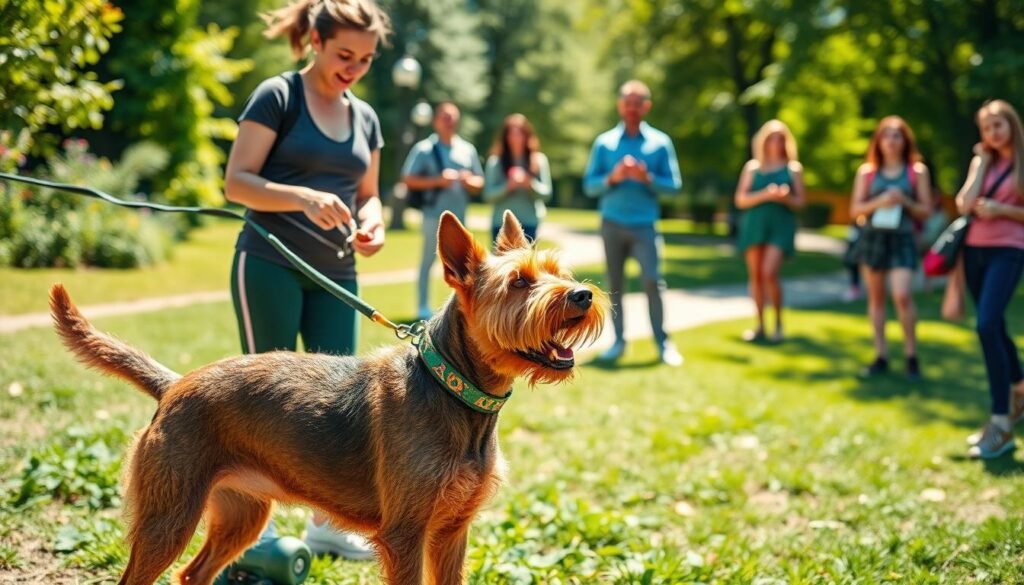
The Irish Terrier is an energetic breed that needs a lot of effort in training. They are smart but also very stubborn. Setting clear rules early on is key to a strong bond.
Training Difficulty Level
Training an Irish Terrier requires patience and consistency. They do well with positive rewards, not harsh words. Short, fun training sessions keep their minds sharp.
Being consistent is the key to success with this lively dog. Predictable commands help them learn faster. They love having a task or puzzle to solve every day.
Behavior With Other Pets
It’s important to socialize your dog early to prevent chasing smaller pets. They have a strong prey drive. Introduce them to different animals and places when they’re young.
Always watch your Irish Terrier when they’re with small pets. They can learn to live with them, but their hunting instinct may show. Give them lots of exercise and mental games to keep them happy and well-behaved.
Health Considerations for Irish Terriers
The Irish Terrier is a strong and healthy breed. But, knowing about health issues is key for owners. This knowledge helps you care for your dog well. Proactive monitoring is the key to a happy life with your pet.
Common Health Issues
The Irish Terrier may face some health problems due to its breed. Spotting these early can greatly improve your dog’s life.
Some health issues to watch out for include:
- Hip Dysplasia: A problem where the hip joint doesn’t fit right, leading to arthritis.
- Cataracts: Cloudiness in the eye lens that can affect vision as your dog ages.
- Bladder Stones: Mineral deposits that can cause pain and need diet changes or vet help.
- Hypothyroidism: A hormonal imbalance that can affect energy and coat health.
Preventive Care Tips
Being a dedicated caregiver means following simple habits for your Irish Terrier. Prevention is better than treatment for long-term health.
Here are some steps to keep your Irish Terrier healthy:
- Regular Vet Visits: Get annual or bi-annual checkups to catch issues early.
- Weight Management: Keep your Irish Terrier at a healthy weight to reduce joint and organ stress.
- Balanced Nutrition: Feed high-quality food that matches their life stage to boost vitality.
- Consistent Exercise: Daily activity keeps muscles toned and metabolism healthy for your Irish Terrier.
By being observant and working with your vet, your Irish Terrier can live a long, active life.
Comparisons With Similar Breeds
Choosing the right dog can be tough. Looking at the Irish Terrier alongside other breeds can help. Each dog has its own unique personality. Knowing this can guide you in picking the best fit for your home.
By comparing the energetic Irish Terrier to its relatives, you can picture your life together. This helps ensure your choice matches your lifestyle and home.
Similar Terriers
The Terrier breed group includes several spirited dogs. The Airedale Terrier is bigger and stronger. The Lakeland Terrier is smaller but just as lively.
These dogs are all smart and full of energy. But the Irish Terrier is special. It’s known for its loyalty and bold spirit. If you like the look of a wire-haired dog, these breeds are great to compare.
Alternative Options
Maybe you want an Irish dog but with different traits. A Miniature Schnauzer has a similar look but a different personality.
If you prefer a calmer dog, look at breeds that are more relaxed. It’s important to think about these options to find the perfect pet for you.
| Breed | Energy Level | Grooming Needs | Best For |
|---|---|---|---|
| Irish Terrier | High | Moderate | Active Families |
| Airedale Terrier | High | Moderate | Large Yards |
| Lakeland Terrier | Moderate | High | Apartment Living |
| Miniature Schnauzer | Moderate | High | Companionship |
Conclusion: Your Next Steps
Getting a dog is a big decision that needs a lot of thought. You now know the Irish Terrier’s lively nature and care needs. This breed is smart and loyal, making it a great choice if you’re willing to put in the effort.
If you think the Irish Terrier fits your lifestyle, you can learn more about them. Talking to a vet or a good breeder can help you decide if they’re right for you.
Comparing Other Breeds
It’s a good idea to look at other terrier breeds too. This way, you can see how they compare in energy and personality. Choosing the right breed means a happier life for you and your pet.
Finding the Right Fit
Finding the perfect pet is about matching your life with the dog’s needs. Active homes often do well with Irish Terriers, as long as they get regular training. Trust your research and get ready to welcome a new family member.




💬 Leave a Comment