

Are you looking for a pet that’s both elegant and playful? The Japanese Chin is a small, refined dog with a unique, cat-like personality. It’s known for its affectionate nature, making it a great addition to many homes.
People often fall in love with this dog because of its calm and loyal heart. It can adapt well to any living situation, whether it’s a cozy apartment or a big house. Choosing the right pet is a big decision, and knowing these traits will help you feel sure about your choice.
This guide will give you all the details you need to decide if this charming dog is right for your family. We’ll look at its history and care needs, showing why it’s a special companion.
Key Takeaways
- This breed is highly regarded for its gentle and affectionate temperament.
- Its cat-like personality makes it an ideal choice for indoor living.
- These dogs are well-suited for apartment dwellers due to their moderate energy levels.
- Consistent, positive training helps this intelligent breed thrive in any home.
- Prospective owners should prioritize regular grooming to maintain their beautiful, silky coats.
Introduction to the Japanese Chin
Welcoming a Japanese Chin into your home means getting a refined companion animal with a cat-like grace. This elegant dog is known for its sophisticated look and love to sit on sofas or chairs. It likes to watch the room from there.
What is the Japanese Chin?
The Japanese Chin is a unique toy dog breed that wins hearts with its special looks and personality. Its silky, flowing coat, broad head, and large, wide-set eyes make it look always surprised and cute.
These dogs are calm, observant, and very loving. They have a compact, square body and a plumed tail that curls over their back. They are a beautiful mix of beauty and smarts.
Who is this breed suitable for?
If you love a quiet, steady life, this companion animal is perfect for you. They love being around people and need lots of attention during the day.
This toy dog breed is great for apartment dwellers or those with small spaces. They don’t need a big yard to be happy. They love to be by your side. If you want a loyal friend who loves gentle company, the Japanese Chin is a great pick.
Origin and History of the Breed
Many think this breed comes from Japan, but it actually has ancient Chinese roots. Known as the Japanese Chin, it traveled from the East’s imperial courts to homes in the United States.
Historical background
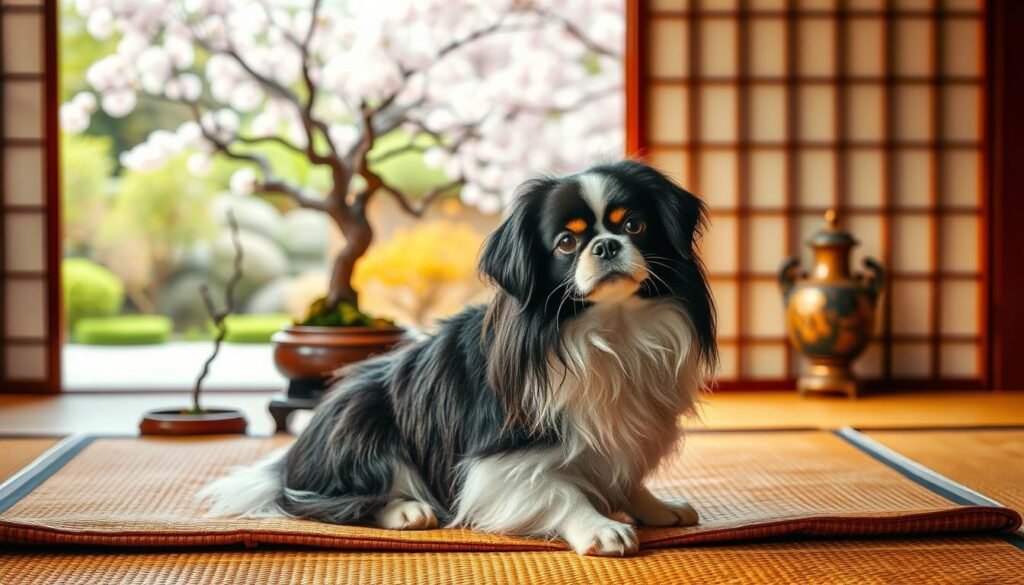
These dogs were likely given to Japanese royalty by Chinese or Korean rulers long ago. Over time, Japanese nobles refined them. They valued their distinctive appearance and calm nature. They were often called the Japanese Spaniel, showing their refined and gentle side.
As the breed’s popularity grew, it traveled to Western countries. By the 19th century, they arrived in Europe and North America. They quickly won the hearts of aristocrats and pet lovers. Key moments in their history include:
- Ancient Origins: Early development within the imperial palaces of China.
- Royal Refinement: Selective breeding by Japanese elites to enhance their unique features.
- Global Expansion: Introduction to Europe and North America during the mid-1800s.
Cultural significance
The Japanese Chin was highly valued throughout its history. In Japan’s palaces, they were seen as prized companions, not just working animals. Their presence showed wealth and prestige, often kept in small cages or carried in robes.
Today, the breed carries a regal grace from its noble past. Whether called a Japanese Spaniel or Japanese Chin, it stands as a symbol of companionship. Knowing its history helps you see the independent spirit and quiet confidence they bring to your home.
Size and Weight of the Japanese Chin
Thinking about getting a new dog? Knowing their size is key to being a good owner. The Japanese Chin is a lovely friend with a unique look. They’re part of the Toy Group and made to be great lap dogs.
Average size
This small breed is usually 8 to 11 inches tall. They fit well in small homes or city apartments. Their size is perfect for a regal look without taking up too much space.
Weight range
These dogs are light and easy to hold. They weigh 7 to 11 pounds, with some being a bit bigger or smaller. Keeping them at a healthy weight is very important for their health and happiness.
Being in the Toy Group, they don’t need a lot of room. They’re great for city living because they don’t need a big yard. Their size is one reason they’re loved by many in the U.S.
Lifespan and Health Considerations
Proactive care is key to a long, happy life for your Japanese Chin. Knowing their specific needs helps create a supportive environment. This way, you can work with your vet to catch health issues early.
Expected lifespan
A healthy Japanese Chin can live 10 to 12 years. Proper nutrition, exercise, and vet visits are essential. Consistency in your care routine is vital for a long life.
Common health issues
The Japanese Chin faces specific health issues. Their flat face can lead to breathing problems in hot or humid weather. Keeping them cool helps a lot.
Joint health is also a concern. They might get luxating patellas, where the kneecap moves out of place. Keeping them at a healthy weight and avoiding high jumps helps. Being observant of their movements can help catch any issues early.
Temperament and Personality Traits
Welcoming a Japanese Chin into your home is exciting. They have a calm yet joyful personality. Getting to know their temperament helps you bond with them.
Friendly nature
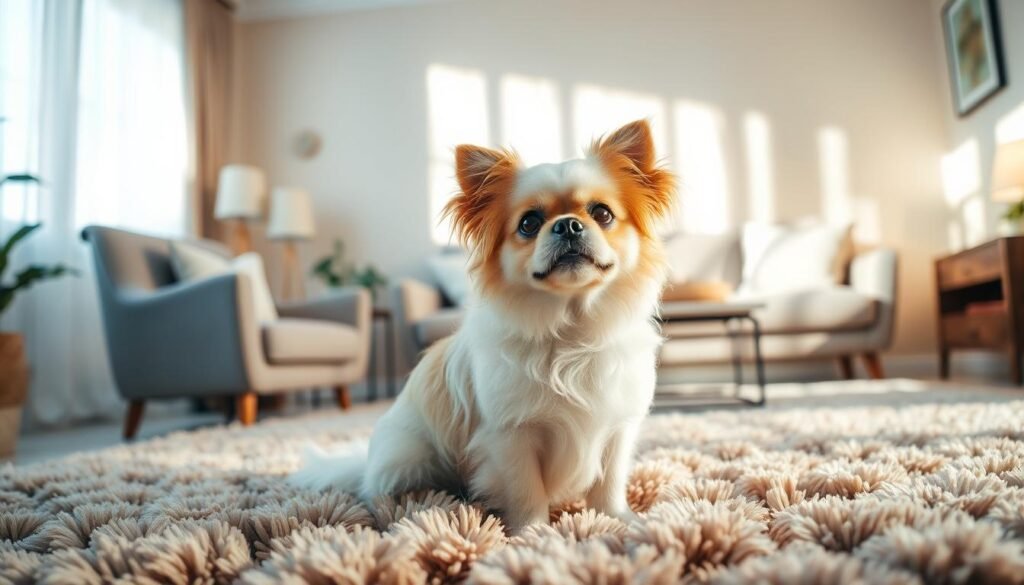
These dogs love their family deeply. They enjoy being close to their owners. For more on their behavior, check out the Japanese Chin temperament guide.
They are loving but also independent. They prefer quiet companionship. This makes them great for those who want a gentle Japanese Chin.
Playful spirit
These dogs are playful and fun. They act like cats, which is entertaining. They might:
- Climb to high places to see what’s going on.
- Play chase or pounce on toys with agility.
- Walk with a “prancing” gait when excited.
They know when to play and when to relax. This balance makes them charming housemates.
Energy Level and Exercise Requirements
The Japanese Chin is known for being calm and regal. Yet, it needs regular movement to stay healthy and happy. You don’t need to worry about intense training sessions. This breed prefers a balanced lifestyle that mixes light activity with plenty of relaxation.
Daily activity needs
To keep your pet in top shape, aim for about 30 minutes of daily exercise. This amount helps prevent weight gain and keeps your dog mentally sharp. Consistency is key, so break these sessions into shorter, manageable intervals throughout the day.
This small breed doesn’t need a big backyard to burn off energy. A simple walk around the neighborhood or a short indoor play session is enough. Always watch your dog closely, as their flat faces can make them prone to overheating, more so in warm or humid weather.
Recommended exercises
Low-impact activities are best for keeping your dog safe and active. These habits can easily be added to your daily routine. They provide both physical and mental enrichment for your Japanese Chin.
- Leisurely walks: A gentle stroll on a leash lets your dog explore at their own pace.
- Indoor fetch: Use soft toys for games in a cool, climate-controlled room.
- Puzzle toys: These are great for keeping your dog sharp and entertained when you’re busy.
| Activity Type | Primary Benefit | Intensity Level |
|---|---|---|
| Morning Walk | Physical Fitness | Low |
| Indoor Play | Mental Stimulation | Moderate |
| Puzzle Games | Cognitive Health | Low |
| Social Outing | Behavioral Growth | Moderate |
By providing these simple outlets, you ensure your Japanese Chin stays fit without the risk of overexertion. Your goal is to support their well-being through gentle, consistent care that fits your lifestyle.
Grooming Needs for the Japanese Chin
The Japanese Chin has a luxurious coat, but its grooming needs are simpler than many think. Many worry that such a beautiful dog needs hours of grooming each day. But, with a regular routine, your dog can stay elegant and comfortable all year.
Coat care and maintenance
The breed has a silky, single-layer coat that resists matting well. You should brush your dog once or twice a week to remove loose hair and prevent tangles. A soft-bristle brush or metal comb will keep the fur shiny and healthy.
Focus on the feathering on the ears, tail, and legs, as they can collect debris. Regular brushing also lets you check for skin irritations or parasites. Consistency is the secret to keeping that signature look without feeling overwhelmed.
Bathing frequency
Japanese Chins don’t hold onto dirt well, so they don’t need to be bathed often. A bath every few weeks is usually enough to keep them smelling fresh. Always use a mild, high-quality dog shampoo to protect their sensitive skin and keep their hair natural.
But, your Japanese Chin needs more than just coat care. Gently wipe their eyes with a soft, damp cloth to prevent staining. Also, check their ears regularly for any signs of redness or buildup to keep them healthy and comfortable.
Training Difficulty and Social Behavior
Training a Japanese Chin needs a special touch. They are smart but like to do things their way. This means they might not always listen to commands.
Training challenges
This breed loves positive reinforcement over harsh words. They are sensitive, so keep training fun and rewarding. Short, enjoyable sessions are key to success.
Forcing them into boring drills won’t work. They might just ignore you. Here’s how to keep them interested:
- Use high-value treats to reward quick responses.
- Keep sessions under ten minutes to maintain their interest.
- Incorporate play to make learning feel like a game.
“The secret to training a small, intelligent dog is to make them believe that doing what you want is actually their own brilliant idea.”
Interaction with other pets
Socialization is key for a happy Japanese Chin. They usually get along with other pets, like cats and dogs.
They are excellent companions in homes with other animals. But, watch them closely when they meet for the first time. This ensures everyone feels safe.
Introduce your Japanese Chin to new animals slowly and positively. This helps them stay friendly and polite. Gentle guidance keeps them a joy to be around.
Family Suitability and Living Conditions
Thinking about getting a pet that fits your lifestyle? The Japanese Chin is a great choice. They are quiet, loving, and adapt well to many homes.
Good for families and children?
Japanese Chins are very loving, but they need care because of their delicate frame. They’re best for families with older kids who know how to be gentle.
Always watch them during play to keep everyone safe. With kindness, they become loyal friends to your whole family.
Ideal for apartments and first-time owners
They’re perfect for apartments because they don’t need a big yard. They love indoor play and short walks.
First-time owners will find them easy to care for. They love being with people and enjoy spending time with you. Consistency and patience are key to a strong bond with your pet.
| Living Factor | Requirement Level | Best For |
|---|---|---|
| Space Needs | Low | Apartments & Condos |
| Social Interaction | High | Active Households |
| Supervision | Moderate | Families with Older Kids |
| Training Effort | Low to Moderate | First-Time Owners |
Pros and Cons of the Japanese Chin
Thinking about getting a Japanese Chin? It’s key to know the good and the not-so-good parts. This way, you and your new pet can have a great time together for a long while.
Advantages of owning a Japanese Chin
One great thing about these dogs is how affectionate they are. They love being close to you and act like they’re always there for you.
They’re also very quiet, which is perfect for a peaceful home. Plus, they get along great in small places like apartments because they don’t need a big yard.
Disadvantages to consider
Even though they’re great pets, there are some things to think about. Japanese Chins don’t do well in very hot or cold weather. They need extra care when it’s extreme outside.
They also need regular grooming because of their beautiful coat. And, they might get upset if left alone for too long because they love being with people.
| Feature | Benefit | Challenge |
|---|---|---|
| Temperament | Affectionate and calm | Can be shy with strangers |
| Living Style | Perfect for apartments | Needs consistent companionship |
| Health | Generally sturdy | Sensitive to temperature |
In the end, the Japanese Chin is a wonderful choice for the right person. Knowing the good and the bad helps you decide if this charming dog is right for you.
Conclusion: Is the Japanese Chin Right for You?
Choosing a new dog is a big decision. It’s important to think about your lifestyle and home. This guide helps you decide if a Japanese Chin is right for your family.
Taking the Next Steps
If you think a Japanese Chin is a good fit, start looking for reputable breeders or local rescues. Joining breed clubs can give you insights into the health and personality of Japanese Chins.
Exploring Similar Breeds
Maybe you’re not sure yet. Look at breeds like the Pekingese or the Cavalier King Charles Spaniel. See which one fits your home best. Finding the right dog is a journey that starts with careful thought.



💬 Leave a Comment