
Rhodesian Ridgebacks, also known as African Lion Hounds, have a long history. They were bred over 300 years ago to hunt lions in Zimbabwe and South Africa. These dogs are easy to spot because of their unique ridge of hair along their spine.
They can grow up to 27 inches tall and weigh up to 85 pounds. This mix of size and grace makes them stand out. Their past as big-game hunters has shaped their bold and independent nature.
As a breed, they are loyal to their families but can be reserved around strangers. They have a lot of energy and need daily exercise to stay happy and avoid bad habits. Their intelligence means they need consistent training to use their instincts wisely.
Key Takeaways
- Rhodesian Ridgebacks originated in Zimbabwe and South Africa as lion-hunting companions.
- Their iconic ridge is a genetic mutation central to their breed identity.
- They need 30–60 minutes of daily exercise to stay calm and well-behaved.
- These dogs are loyal to families but may challenge authority without firm training.
- Potential health concerns like hip dysplasia require proactive veterinary care.
The Fascinating History of the Rhodesian Ridgeback
The Rhodesian Ridgeback’s story starts thousands of years ago. Archaeologists found evidence of ridge-backed dogs in Egyptian tombs from 3500–4000 BC. These dogs were vital to South Africa’s Khoikhoi people. They impressed Dutch traders with their bravery.
By the 1600s, Boer farmers bred them to face lions. They became known as the “African Lion Hound”
African Origins and Development
Early Khoikhoi hunters used these dogs for tracking and guarding. European settlers like Cornelis van Rooyen improved them. They mixed with Mastiffs, Greyhounds, and Bulldogs for speed and strength.
This mix created a dog that could corner lions and herd livestock. They thrived in Africa’s harsh veldt.
From African Lion Hound to Modern Companion
Once called the “Lion Dog,” their role changed over time. By the 1900s, they became family guardians. Today, they are loved for their courage, loyalty, and playfulness.
Recognition as an Official Breed
A formal standard emerged in 1922 for the “Rhodesian Lion Dog.” Its name changed to Rhodesian Ridgeback in 1927 after joining the South African Kennel Union. Full global recognition came when the AKC acknowledged the breed in 1955.
Every ridge on a Rhodesian Ridgeback tells a story. From ancient tombs to modern homes. Their history shows adaptability is key to their lasting legacy.
Understanding the Distinctive Ridge: A Trademark Feature
The distinctive ridge of hair on a Rhodesian Ridgeback is more than a unique look. It’s a genetic marker. This fur grows backward along the spine, thanks to a dominant gene passed down through generations. Every rhodesian ridgeback is born with this ridge, forming two symmetrical whorls behind the shoulders and tapering towards the hips.
Breed standards are strict. The ridge must start right behind the shoulders and reach the hips, with only two crowns. The lower edges of these crowns should not go beyond one-third of the ridge’s length. A well-formed ridge can earn 20 points in competitions, showing its key role.
- Must have two symmetrical crowns positioned opposite each other
- Should taper smoothly from shoulders to hips
- Width averages up to 2 inches (5 centimeters)
African hunters once believed dogs with ridges were better trackers and protectors. Though this claim is unproven, the ridge became a breed hallmark. Yet, this trait also brings health risks. Dermoid sinus, a skin defect linked to ridge formation, can occur in some dogs. Responsible breeders focus on genetic health checks to lower these risks.
When adopting, ensure the ridge meets breed standards. A proper ridge adds to both the dog’s beauty and health. This unique feature makes the Rhodesian Ridgeback easily identifiable among hound breeds.
Physical Characteristics of the Rhodesian Ridgeback
When you first see a Rhodesian Ridgeback, their physique speaks volumes. They are muscular and athletic, blending power with elegance. Every detail, from their height to their coat, tells a story of strength and purpose.
Size, Weight, and Proportions
Males reach 25–27 inches at the shoulder, while females measure 24–26 inches. Males weigh 80–100 pounds, and females 60–80 pounds. This creates a balanced frame that’s slightly longer than tall. This balance ensures they are agile and can endure long tasks like tracking or guarding.
Color Variations and Coat Patterns
They have a short, dense coat in shades from light wheaten to deep red. A black mask or small white patches on paws or chest are allowed. Their signature trait is a ridge of hair along the spine with two whorls, growing opposite the main coat direction.
Muscular and Athletic Build
Look closer and you’ll see a deep chest, broad shoulders, and powerful hindquarters. These features give them explosive speed and stamina—key traits of athletic dogs. Their long, tapered tail and streamlined gait highlight their readiness for movement. Every muscle tells a story of a breed built to thrive outdoors.
Temperament and Personality Traits
Rhodesian Ridgebacks are known for their loyalty and strong protective instincts, making them excellent guard dogs. They are intelligent dog breed with independent minds but also form deep emotional bonds. This mix creates a endearing personality that is both courageous and affectionate, yet cautious around outsiders.
Loyalty and Protectiveness
These dogs are naturally protective, alert to danger, and ready to defend their family. Their protective instincts are innate, not learned, and they assess threats carefully. They may seem aloof to strangers but are fiercely loyal and vigilant without being overly aggressive. Proper socialization helps prevent them from becoming too protective. Their wariness makes them excellent guardians, only barking when necessary.
Intelligence and Independence
Rhodesian Ridgebacks are among the most intelligent dog breed, often challenging commands to test boundaries. Their independence comes from their history of making decisions during hunts. Positive reinforcement training is best, as harsh methods can be counterproductive. They excel in problem-solving during obedience exercises but can be stubborn, requiring patient guidance. Their intelligence also drives their need for mental stimulation.
Sensitivity and Affection
Despite their tough exterior, Rhodesian Ridgebacks have an endearing personality. They love to be part of the family, often sticking close to their owners. Their sensitivity means they can pick up on moods and may withdraw if ignored. Gentle, consistent affection builds trust, making them devoted companions. Early socialization helps them balance their protective nature with gentle family interactions.
Training Your Rhodesian Ridgeback: Tips for Success
Rhodesian Ridgebacks are an intelligent dog breed that do well with patient, positive training. They are sensitive to training and harsh corrections can harm them. So, use treats and praise to reward them.
Begin training early, between 8 to 16 weeks. This helps them learn social skills like “sit” and “come”.
- Keep sessions short (5–10 minutes) to match their attention span.
- Pair commands with actions, like guiding them into a sit while saying “sit”.
- Use small treats to motivate without overfeeding.
- Practice in quiet spaces first, then slowly add distractions.
| Technique | How It Works |
|---|---|
| Positive Reinforcement | Bonds trust and encourages good behavior. |
| Consistent Commands | Avoid confusion with clear, firm instructions. |
| Mix of Mental/Physical Exercise | Reduces boredom and improves focus. |
End every session with a reward to reinforce positive associations. Their independence requires creativity. Try agility or scent games to channel their energy. Pair training with daily exercise for the best results. With patience, you’ll unlock their full, well-mannered companion’s promise.
Exercise Requirements for This Energetic Breed
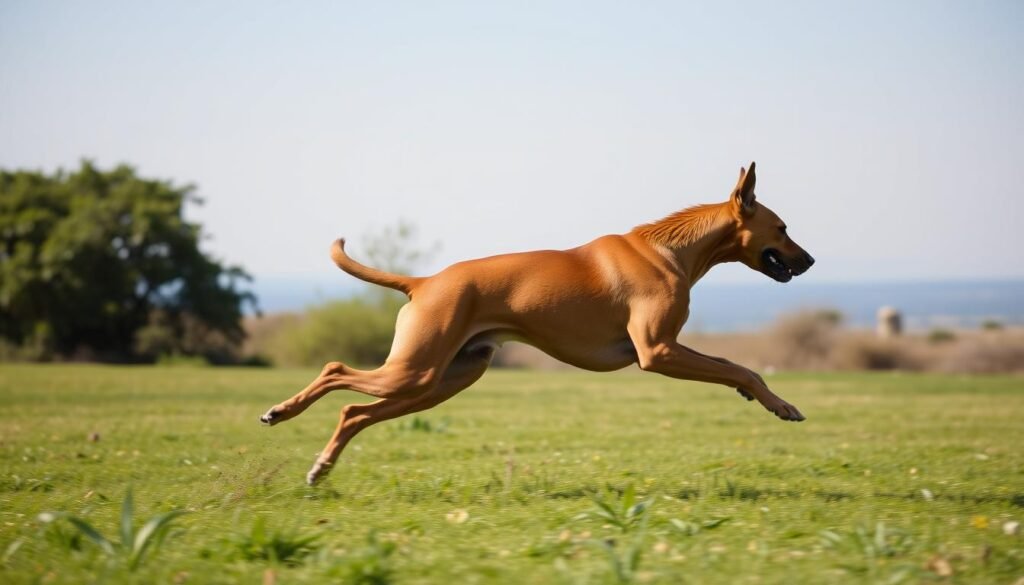
Rhodesian Ridgebacks are built for endurance. They need daily exercise to stay happy and well-behaved. Without enough activity, they might get too energetic indoors or start to chew things they shouldn’t.
Daily Exercise Needs
Your Rhodesian Ridgeback needs at least 30 minutes of brisk exercise every day. But, 60 minutes is even better. They can handle long runs or hikes, up to 10 miles, because of their endurance. Puppies need shorter, more frequent walks, while older dogs do better with gentle, regular activities. Always adjust their exercise for extreme weather, focusing on cooler times of the day.
Activities Your Ridgeback Will Love
- Long hikes or jogs to burn energy
- Agility training or lure coursing to engage their speed
- Swimming for low-impact fun
- Secure fenced areas for safe off-leash play
Mental Stimulation Importance
These smart dogs need mental challenges. Puzzle toys, hide-and-seek games, or obedience training keep their minds sharp. Without mental stimulation, they might get bored and start chewing or barking. Make sure to mix physical and brain games for a balanced routine.
Rhodesian Ridgebacks as Family Dogs
Rhodesian Ridgebacks can be family-friendly pets with the right training and socialization. They have a lovable personality that shows loyalty and patience. But, their size and energy need careful handling
“The Rhodesian Ridgeback is dignified and even-tempered, making them suitable for family life.” — American Kennel Club
Compatibility with Children
These dogs do well in homes where kids are active and taught to respect them. It’s important to watch them closely, as their play can accidentally hurt toddlers. Early socialization helps them be gentle and loving with older kids. Some lines may be more patient with children. Never leave small kids alone with Ridgebacks during play.
Interactions with Other Pets
Ridgebacks get along best with pets they’ve known from puppyhood. Having a fenced yard is essential to keep them from chasing. Here’s how they interact with other pets:
| Pet Type | Notes |
|---|---|
| Cats | Raised together? Possible. Prey drive may trigger chasing |
| Small animals | Risk of pursuit; secure enclosures needed |
| Same-sex dogs | Early socialization reduces dominance issues |
Training them consistently builds trust. Their smarts and love for family create strong bonds when rules are followed.
Health Considerations and Common Issues
Rhodesian Ridgebacks are strong and active dogs. But, their busy lives mean owners must watch their health closely. Regular vet visits are important to catch problems early.
“Proactive care extends their lifespan, which averages 10-12 years with proper management,” says the American Kennel Club.
Here are some common health issues:
- Hip and elbow dysplasia: Joint problems common in big dogs like the Rhodesian Ridgeback. They can cause pain and make it hard to walk. Keeping them at a healthy weight and following the vet’s advice can help.
- Dermoid sinus: A birth defect that needs surgery if it gets infected.
- Eye conditions: Problems like entropion, cataracts, and more might need surgery or medicine.
- Thyroid disorders and hypothyroidism require lifelong hormone treatments.
- Cancer and heart disease are big worries for these dogs. They need quick vet care.
Here are some ways to prevent problems:
- Take them for yearly vet checks for genetic issues
- Genetic tests for breeders to lower hereditary risks
- Watch for signs of bloat (swollen belly, retching) and get emergency help
It’s important to pick a good breeder who checks for hip, eye, and thyroid health. Early detection and care help owners deal with these issues well.
Grooming and Care: Managing the Low Maintenance Coat
Rhodesian Ridgebacks love being around people and have a low maintenance coat. This makes it simple for owners who are always busy. Their short, dense coat doesn’t mat and only needs weekly brushing to keep it clean and shiny.
A rubber curry brush or hound glove is the best for their coat’s health and shine.
Bathing should be done every 2–3 months or when they get dirty. Use mild dog shampoo to keep their coat clean without causing irritation. During spring and fall, when they shed more, brush them biweekly with a deshedding tool.
- Nails: Trim monthly to prevent overgrowth. Short nails reduce the risk of splitting.
- Ears: Weekly checks with a vet-approved cleaner to avoid infections in their floppy ears.
- Teeth: Brush 3–4 times weekly and use dental chews to fight plaque and bad breath.
Regular grooming sessions are great for bonding. Even though their low maintenance coat needs little work, sticking to these routines is key. Brushing them and feeding them vet-recommended diets rich in omega-3s can help reduce shedding. Stress or a poor diet can make their coat worse, so watch their overall health too.
The Rhodesian Ridgeback as a Guard Dog

The Rhodesian Ridgeback is an excellent guard dog because of its natural instincts. It has a calm demeanor but is alert to dangers. This makes it a great protector.
Its muscular build and confident posture can scare off intruders. At the same time, its intelligence helps it assess threats wisely.
These dogs are loyal and can tell who is a friend and who is not. They are watchful and can signal danger. But, they also have an endearing personality that makes them loving companions.
Training is key to making them good guardians without being too aggressive. It’s important to teach them without pushing them too hard.
Start socializing them early. Introduce them to different people, animals, and places. This helps them stay calm and confident.
- Introduce puppies to new experiences daily
- Positive reinforcement for calm responses to visitors
- Consistent training to reinforce commands like “sit” or “come”
It’s important not to encourage aggression. Too much stimulation can make them fearful. Instead, engage them in activities like obedience classes or scent work.
With the right training, a Rhodesian Ridgeback becomes a loyal protector and a loving family member. They are perfect for those who want both security and affection from one dog.
Feeding Your African Lion Hound: Nutrition Basics
Keeping your African Lion Hound healthy starts with good nutrition. They need high-quality protein like chicken or beef as their main food. This protein helps them stay muscular. Omega-3 and Omega-6 fatty acids are also important for their skin and coat.
Complex carbs like brown rice give them energy. Vitamins and minerals are key for their body to function well.
- Feed 2.5–4 cups of dry food daily for adults, split into 2 meals to prevent bloat
- Puppies need calorie-dense food for growth, while seniors may require fewer calories but high protein
- Wet food can boost hydration, but dry food aids dental health
| Life Stage | Daily Calories | Key Needs |
|---|---|---|
| Puppy | 2,000–2,500 | High protein for growth |
| Adult | 1,700–2,200 | Maintain muscle mass |
| Senior | 1,500–1,800 | Joint support nutrients |
Watch your Rhodesian Ridgeback’s weight closely. Overfeeding can cause obesity. Avoid table scraps and harmful foods like chocolate or xylitol. Always introduce new foods slowly over 7–10 days to avoid stomach problems.
They might try to steal food or guard it. Keep food out of reach and teach them to stay calm during meals. If they have health issues, like heart problems, talk to a vet before changing their diet.
Living Arrangements: Space Needs for This Muscular Breed
Rhodesian Ridgebacks do best in environments that match their muscular and athletic dogs build. They need both indoor and outdoor spaces to be happy. 90% of owners say large homes with secure yards are perfect.
Indoor Living Considerations
Even though they can live in small places with enough exercise, they love open areas. They can get along with apartments if they get to go outside every day. They prefer to be near family and don’t like to be alone. Soft bedding in busy rooms helps them feel calm.
Yard Requirements and Fencing
- Install 6-foot fences—Ridgebacks can leap over lower barriers.
- Add shaded zones to protect their short coats from extreme heat.
- Use sturdy gates to contain their speed and prey drive during play.
40% of owners in suburban/rural areas say these dogs love open land. Don’t use electronic fences; they can ignore them.
Urban vs. Rural Environment
In cities, make sure they get daily walks or visits to the park. Rural homes need strong fencing to keep out wildlife. Both places require:
- Regular walks to burn excess energy.
- Leashed outings to control interactions with other animals.
- Quiet zones for downtime after exercise.
No matter where you live, make sure they get to spend time with family. Their excellent guard dog nature makes them watchful, but too little space can make them restless.
Choosing a Rhodesian Ridgeback Puppy
Choosing a Rhodesian Ridgeback puppy is a big decision that lasts a decade. Start by looking for breeders who check for hip dysplasia and heart issues. Make sure they are part of groups like the Rhodesian Ridgeback Club of the United States.
- Verify OFA certifications for the puppy’s parents
- Ask to visit the breeding facility to observe parent dogs
- Request a health guarantee covering congenital issues
Look at each puppy’s distinctive ridge of hair on their back. A healthy ridge has hairs that go the opposite way of the main coat. Puppies without this ridge can’t be bred but are great pets.
| Key Selection Factors | Red Flags |
|---|---|
| Temperament evaluations | Puppies sold before 8 weeks |
| Written contracts outlining return policies | Breeders refusing health documentation |
| Access to parental health records | Price significantly below $1,500 |
Breeders like Kiswahili Ridgeback give health and temperament checks. Always ask about socialization with kids and other animals. Males need more exercise, while females might do well in apartments. Before you decide, ask for references from other buyers to hear their stories.
Cost of Owning a Rhodesian Ridgeback
Getting a rhodesian ridgeback as a family-friendly pet means you need to plan your budget. This part will show you the main costs to get ready for this loyal friend’s life-long care.
Initial Purchase or Adoption Fees
Puppies from good breeders cost $1,700–$2,500. Adoption fees are $75–$250. You’ll also need to buy things like crates and food bowls, which can cost $950–$2,080.
Ongoing Expenses
Every month, you’ll spend on:
- Premium dog food: $80–$100 per month
- Vet care: $25–$75 for routine checkups
- Grooming: $10–$20 for basic maintenance
- Pet insurance: $10–$100 monthly premiums
- Entertainment and training: $20–$30 for toys and classes
Overall, monthly costs are $170–$395.
Healthcare Costs Throughout Life
Annual vet bills start at $500 and can go up with age. Some breeds might need expensive treatments for health issues. X-rays can cost $150–$400 or $1,100 for more detailed tests. Spaying/neutering costs $100–$300.
| Expense Type | Cost Range | Notes |
|---|---|---|
| Initial Setup | $950–$2,080 | Supplies and equipment |
| Annual Healthcare | $500–$1,000 | Vaccinations and checkups |
Planning for the long term is important. Pet insurance can help, but save for unexpected costs. Many people find the love and loyalty of these family-friendly pets are worth the cost.
Common Misconceptions About the Breed
Rhodesian Ridgebacks are often misunderstood. People think they’re aggressive, but they’re actually excellent guard dogs. They’re sensitive to training and do best with patience.
“Consistent socialization prevents aggression,” experts note, highlighting their loyalty over hostility.
| Myth | Fact |
|---|---|
| Aggressive toward strangers | They’re calm and protective when trained. |
| Untrainable due to independence | An intelligent dog breed, they learn best with positive reinforcement. |
| Require constant exercise | 1-2 hours daily meets their needs. |
| Unsuitable for families | They bond deeply with families when socialized. |
Myths about their temperament often ignore their sensitive to training side. Proper care shows their loyalty and adaptability.
Conclusion: Is the Rhodesian Ridgeback Right for You?
Rhodesian Ridgebacks are great family-friendly pets for those willing to meet their needs. They have a lovable personality that mixes loyalty with independence. This makes them devoted friends who connect deeply with their families. They need daily exercise, mental games, and regular routines to be happy.
They do best with positive training and different teaching methods, not the same old thing over and over.
If you have an active home with lots of space for play, a Ridgeback might be perfect. They are great with older kids who know how to treat them gently. But, they can be too big and too energetic for new owners or those who can’t spend time training and exercising them. They also need to be careful around small pets because of their strong hunting instinct.
Rhodesian Ridgebacks are loyal and loving if you socialize and challenge them mentally. They are calm with kids if raised right, but always watch them for safety. If you’re ready to meet their needs, they’ll be your loyal friend for many years. Look for a Ridgeback that fits your life by researching rescues and good breeders. This breed’s mix of strength and sensitivity needs a careful match.