
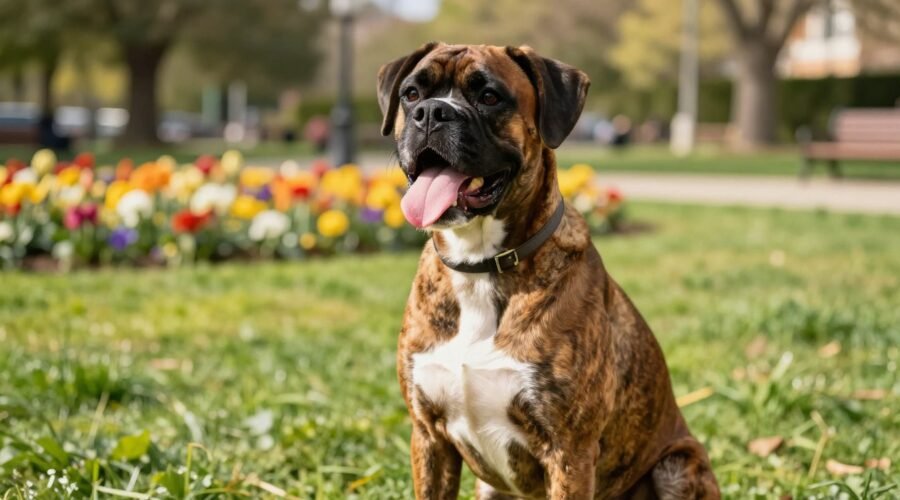
Ever thought about having a pet that’s as playful as it is protective? If you love being active and want a loyal friend, the Boxer could be ideal. These dogs are known for their endless energy and loving nature.
Males usually grow to 23 to 25 inches tall, while females are a bit smaller. Boxers are famous for their striking looks and unwavering loyalty to their families. They’re great for singles who want a workout buddy or families looking for a gentle playmate.
Key Takeaways
- These pets are medium to large in size, making them sturdy and athletic.
- They are well-known for their high energy levels and need for daily exercise.
- The breed is exceptionally loyal and forms deep bonds with family members.
- Their friendly temperament makes them suitable for both active singles and families.
- Proper training and socialization help them thrive in various living environments.
Introduction to Boxer Dogs
Learning about Boxer dog information is key for those thinking about getting one. These dogs are known for their joyful spirit and loyalty to their families.
What is a Boxer Dog?
The Boxer is a medium to large breed with a robust, muscular build. They have a unique face that shows curiosity or deep thought. These dogs weigh 60 to 70 pounds, making them great for outdoor activities.
Boxers are incredibly social animals. They love being part of family activities. Whether it’s a hike or just hanging out at home, they want to be with you.
Who Should Consider a Boxer?
Boxers are perfect for active people. They need regular exercise to stay happy and healthy. Owners who can give them lots of attention and playtime will find them very rewarding.
Boxers are great for families who want a dog that’s both protective and loving. They don’t do well when left alone for too long. Here are some quick facts to help you decide if a Boxer is right for you:
| Characteristic | Details | Requirement |
|---|---|---|
| Average Weight | 60 – 70 lbs | Moderate to High |
| Energy Level | Very High | Daily Exercise |
| Social Needs | High | Constant Interaction |
| Temperament | Playful & Loyal | Consistent Training |
Having the right Boxer dog information prepares you for the commitment of owning one. By matching their energy with your daily life, you can create a strong and meaningful bond with your new friend.
Origin and History of the Boxer Breed
Did you know the friendly dog in your home comes from a line of powerful hunters? The story of the Boxer breed is a fascinating journey. It shows how these dogs became the loyal friends we love today.
Historical Background
The Boxer breed comes from a long line of serious working dogs called the Bullenbeisser. These dogs were used to hunt big game like wild boar and bear in Europe.
They needed to be strong and fearless. Over time, these traits were passed down. This created the Boxer breed we know today for its courage and endurance.
Development and Recognition
In the late 19th century, German breeders worked to make these dogs more agile and trainable. They wanted to balance their power with agility. This effort turned the working dog into a more versatile companion.
The breed became famous during World War I. They were used as messengers and guards. Their smarts and loyalty during this time solidified their reputation as reliable partners.
Now, the Boxer breed is a beloved family pet. Their journey from rugged working dog to family friend is marked by important milestones:
- Ancient Roots: They come from the powerful Bullenbeisser hunting dogs.
- Refinement: German breeders made them more agile and trainable.
- Wartime Service: They proved their worth as reliable messengers and guards in the early 20th century.
- Modern Era: They evolved into the affectionate and playful family pets we see today.
Knowing their history helps us see the intelligence and versatility of the Boxer breed. Their ability to move from high-stakes work to family life is amazing.
Size and Weight of Boxer Dogs
The Boxer dog has an athletic build that stands out. They are strong and muscular, needing lots of room to play. Knowing their size is key to getting your home ready for them.
Boxers have a balanced, square look that shows their strength. This sturdy build is a beloved trait among owners for many years.
Average Height
Males grow to be 23 to 25 inches tall at the shoulder. Females are a bit smaller, ranging from 21.5 to 23.5 inches.
They have a commanding presence but are not too big. Their graceful movement is surprising, given their solid build.
Typical Weight Range
Healthy adult males weigh 65 to 80 pounds. Females usually weigh 50 to 65 pounds.
Keeping a healthy weight is important for their joints and overall health. Their high activity helps them stay lean and fit.
“A dog is the only thing on earth that loves you more than he loves himself.”
Thinking of getting a Boxer DOG? Remember these sizes to make sure your home is big enough. Giving them enough space keeps them happy and healthy for years.
Lifespan and Health Considerations
Welcoming a new dog into your home means learning about their long-term health. Knowing the right Boxer dog information helps create a caring environment. This way, your pet can thrive for many years.
Average Lifespan
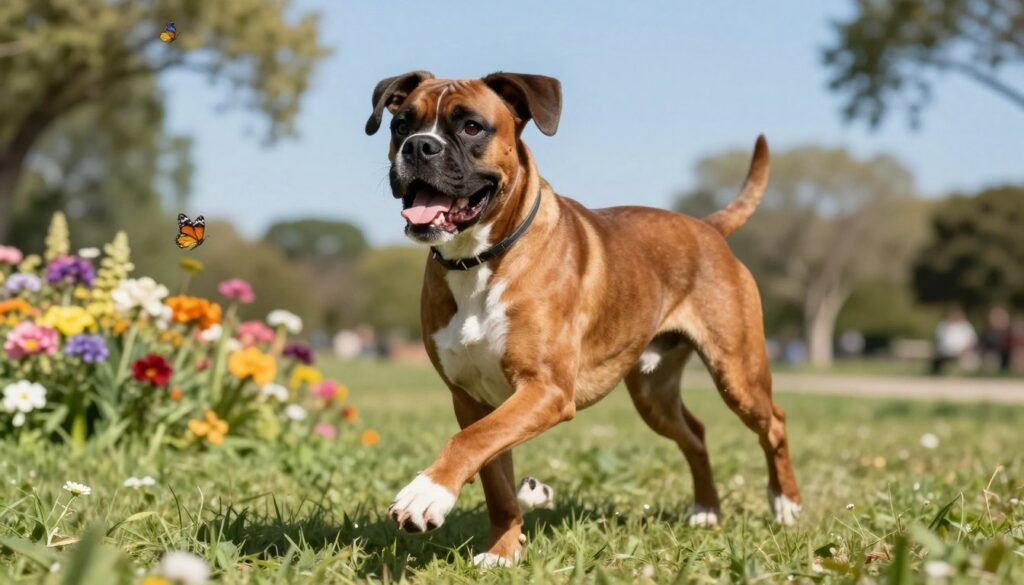
These energetic dogs bring joy to your daily life. Expect your Boxer to live for 10 to 12 years. Cherishing every moment with your loyal friend is key to celebrating this journey.
Common Health Issues
Like many purebred dogs, Boxers may face certain health issues. Heart disease and hip dysplasia are common concerns. Regular vet visits are vital for early detection and Boxer dog care.
Keeping your dog healthy is key. Balanced nutrition, regular exercise, and screenings help. Staying proactive ensures your pet stays comfortable and happy for life.
Temperament and Energy Level
Boxers are loved for their lively nature, making them perfect for active homes. When you look into the Boxer dog temperament, you’ll find a mix of loyalty and a playful, goofy spirit.
Personality Traits
Boxers are known for their love and need to be close to their owners. They act like puppies forever, bringing joy with their antics and faces.
They love people and don’t like being alone. Their protective instincts are matched with a kind heart. This makes them great friends who love to play or cuddle.
Activity Requirements
Boxers need lots of exercise to stay happy. They are energetic and need daily activities to keep them active and sharp.
Plan for long walks, fetch games, or secure yard time. Without enough activity, they might get bored or restless. Training their minds is as important as physical exercise for a well-adjusted Boxer.
Here’s a table to help manage their energy:
| Activity Type | Frequency | Benefit |
|---|---|---|
| Brisk Walking | Twice Daily | Cardiovascular health |
| Interactive Play | 30-60 Minutes | Mental stimulation |
| Obedience Training | Short Sessions | Focus and bonding |
| Socializing | Weekly | Emotional well-being |
Meeting these needs helps your dog live a balanced life. Regular routines are key to bringing out the best in your dog.
Suitability for Families and Children
Looking for a pet that’s both playful and gentle? This breed might be perfect. Many people want a pet that’s safe and happy for their family. Boxers are great for busy homes.
Family-Friendly Qualities
The Boxer dog temperament is special. They are patient and loving. They also have protective instincts, making them good watchdogs.
Boxers love to be part of the family. They enjoy being active and don’t like to be alone. This makes them a reliable and loving family member.
Interaction with Kids
Boxers are gentle with kids. They have lots of energy for playing and running around. They make great playmates for kids.
It’s important to watch kids and dogs together. Teaching kids to respect dogs helps everyone get along. Here’s why Boxers are great for families.
| Trait | Benefit for Families | Level |
|---|---|---|
| Patience | Handles active play well | High |
| Affection | Forms strong family bonds | Very High |
| Energy | Great for outdoor games | High |
| Watchfulness | Provides home security | Moderate |
Knowing the Boxer dog temperament prepares you for a fun life together. With training and love, they become a key part of your family. Their playful spirit keeps your home lively.
Apartment Living and Space Requirements
Are you wondering if your apartment is good for a lively Boxer dog? These dogs are known for their boundless energy. But, they need your daily care to thrive in smaller homes. They don’t do well in quiet or lonely places.
Ideal Living Conditions
A Boxer needs a space to move around easily. They don’t need a huge house, but a safe area for play is key. Regular exercise is vital for their happiness, no matter the size of your home.
Boxers love being with their people. They don’t like being alone for long. A home with lots of attention and play is more important than its size.
Adaptability to Smaller Spaces
Living in an apartment with a Boxer is possible if you focus on their exercise. You’ll need to take them on frequent, vigorous walks and play with them outside. Without this, they might get frustrated or destructive.
Remember, Boxers are social dogs that need interaction. If you’re away from home a lot, an apartment might not be the best. But, with enough mental and physical activity, they can adapt to smaller spaces.
Boxer Dogs and First-Time Owners
The Boxer breed is full of energy and fun, but it can also be a challenge for beginners. If you’re thinking about getting your first dog, know that Boxers need lots of time and activity. They love people, but they also need an owner who loves to stay active.
Challenges for New Owners
One big challenge is their stubborn streak. Boxers think for themselves, which means they might not listen right away. They need a patient and consistent owner to help them learn.
They also need lots of exercise every day. Without it, they can get restless or destructive. You’ll need to give them a lot of structure to keep them happy and healthy.
Suitability for Beginners
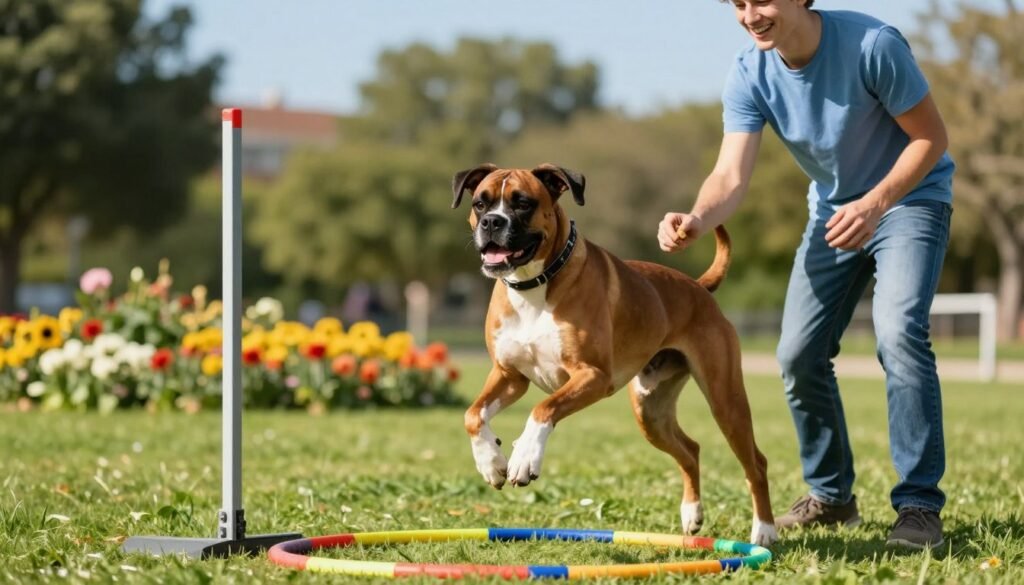
Despite the challenges, Boxers can be a great choice for beginners. They are smart and love to please, making Boxer dog training successful. Positive reinforcement works well with them.
Start with Boxer puppies early to help them grow into good adults. Early socialization makes them comfortable with new things. With the right care, they become truly loyal and affectionate friends for first-time owners.
Grooming Needs and Basic Care
Keeping your pet looking good is easier than you think. Whether you have Boxer puppies or an adult, they are easy to care for. They don’t need as much grooming as dogs with long hair.
Coat Care and Maintenance
Boxers have a short, smooth coat that hugs their body. They don’t need a lot of grooming or fancy styles.
A simple weekly brushing with a soft brush or rubber mitt is enough. It removes loose hair and spreads natural oils. This keeps their coat shiny and healthy and reduces fur on your furniture.
Overall Care Requirements
Boxer dog care is more than just brushing. Their short fur and lack of undercoat make them sensitive to extreme weather.
In cold weather, give them a warm sweater or coat. In hot weather, make sure they have shade and water to avoid overheating.
Good hygiene is also key for their health. Regular nail trimming, ear cleaning, and dental care keep them active and pain-free.
| Grooming Task | Frequency | Primary Benefit |
|---|---|---|
| Brushing | Weekly | Reduces shedding |
| Nail Trimming | Monthly | Prevents discomfort |
| Ear Cleaning | Bi-weekly | Prevents infections |
| Dental Care | Weekly | Promotes oral health |
Training and Social Behavior
Understanding the Boxer dog temperament is key to a happy life together. These dogs are smart and love to please, making them a joy to train. Early training sets the stage for good manners and respect.
Training Difficulty
Boxer dog training is rewarding because of their high intelligence. They do best with positive methods like treats, praise, and play. Consistency is your best tool for teaching new things.
Boxers need regular mental challenges to stay happy. Activities like obedience drills or agility courses are great. They keep the dog’s mind sharp and prevent boredom.
Interactions with Other Pets
Early socialization is vital for your dog’s comfort around new animals. Introducing them to other pets in a positive setting helps them learn social skills. This early exposure teaches them to read body language and interact safely.
Boxers are usually friendly and playful. With the right guidance, they can be great friends for other pets. Patience is essential during these first meetings, helping your dog feel secure and relaxed.
Pros and Cons of Owning a Boxer
Thinking about getting a Boxer? It’s smart to weigh the good against the bad. Knowing what daily life with a Boxer is like helps you prepare for the big commitment of pet parenthood.
Advantages
Many people love Boxers for their lively personality. They are highly affectionate and love being around people. This makes them great friends for families who like to stay active.
- Intelligence: They pick up things fast and enjoy learning new things.
- Protective Instincts: They naturally watch out for their family, making you feel safe.
- Playful Nature: Their fun attitude brings joy to your home.
Looking at Boxer dog characteristics, their loyalty is a standout trait. They love to be part of your family’s life.
Disadvantages
Boxers are wonderful pets, but there are things to keep in mind. They need lots of exercise to stay happy and well-behaved.
It’s also important to think about Boxer dog health. They can get some health issues, so regular vet visits are key.
Other things to consider include:
- Drooling: They can be a bit messy, like after drinking water.
- Training Needs: Their energy can lead to jumping or being too boisterous if not trained early and consistently.
- Sensitivity: They don’t do well in extreme temperatures, so you need to manage the climate for them.
If you’re not sure yet, you might want to look at the American Pit Bull Terrier. Seeing how different breeds compare can help you choose the best fit for your lifestyle.
Comparing Boxer Dogs to Similar Breeds
Looking at other breeds can help you choose the right dog. By comparing energy and temperament, you get Boxer dog information that fits your home.
Similar Breeds to Consider
Boxers are loyal and spirited. You might like breeds like the Bulldog, Doberman Pinscher, or German Shepherd. Each has unique traits that match different lifestyles.
“The best dog for you is one that mirrors your energy and complements your daily rhythm.”
The Doberman Pinscher has high energy and is protective, like a Boxer. Bulldogs are more laid-back. German Shepherds are highly intelligent and great for active families.
Alternative Options for Diverse Lifestyles
Think about your lifestyle and Boxer dog health needs when choosing. Some dogs need lots of mental stimulation. Others prefer quieter homes.
| Breed | Energy Level | Best For |
|---|---|---|
| Boxer | High | Active Families |
| Doberman | Very High | Experienced Owners |
| Bulldog | Low | Relaxed Households |
Your choice should match your lifestyle. Whether you want a playful friend or a calm companion, knowing the differences is key. Always check Boxer dog health needs to be ready for pet care.
Conclusion and Next Steps
Bringing a dog into your home is a big decision. It needs careful thought and preparation. The Boxer breed is loyal and playful, perfect for active homes.
Think about your daily routine. Can you give these dogs the exercise and attention they need? Success with a new pet depends on your commitment to training and daily interaction.
Making an Informed Decision
Consider your living space and if you can handle a high-energy dog. Boxer dog care is more than food and shelter. It needs a dedicated owner who knows the breed’s temperament.
Visit local shelters or reputable breeders to meet Boxer puppies. Seeing their behavior helps you decide if they fit your lifestyle.
Next Steps for Future Owners
Look into breed-specific clubs or talk to experienced owners. The American Kennel Club has resources on breed standards and health certifications.
Your journey to pet ownership is exciting. We hope this guide helps you make a confident choice. It will bring joy to your home for years.




💬 Leave a Comment