
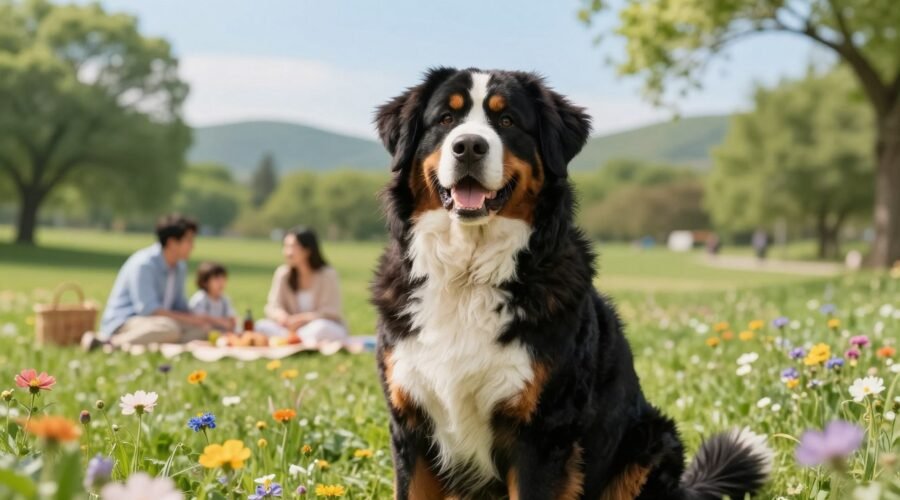
Have you ever dreamed of finding a pet that combines majestic beauty with a heart of pure gold? If you are searching for a furry friend that offers unwavering devotion, the Bernese Mountain Dog might be your perfect match.
This striking breed is famous for its beautiful tri-colored coat and calm, affectionate nature. They are widely recognized as wonderful companions for families, individuals, and anyone seeking a truly loyal friend.
Because of their high intelligence and gentle demeanor, these animals are highly approachable for beginners. Whether you live in a spacious home or are simply looking for a steady presence, this breed remains a top choice for owners across the globe. You will find that their patient personality makes them an ideal addition to almost any household.
Key Takeaways
- The breed is celebrated for its striking tri-colored coat and large, majestic appearance.
- They are known for being exceptionally gentle and affectionate with family members.
- Their high intelligence and calm temperament make them suitable for first-time owners.
- These pets thrive on human companionship and are deeply loyal to their households.
- They are considered a versatile and popular choice for prospective owners worldwide.
Introduction to the Bernese Mountain Dog
Known for their striking appearance and gentle hearts, these dogs have become a favorite for families across the United States. The Bernese Mountain Dog is a breed that balances strength with a remarkably sweet disposition, making them a standout choice for many households.
What is a Bernese Mountain Dog?
This breed is a large, sturdy working dog that originated in the Swiss Alps. They are highly recognizable by their thick, tri-colored coat and friendly, intelligent eyes. A typical Bernese Mountain Dog possesses a calm temperament, though they maintain a moderate energy level that requires regular daily activity.
When considering their physical traits, you will find they are substantial in size and weight, often reaching maturity between two and three years of age. Their lifespan is generally shorter than smaller breeds, typically ranging from seven to ten years. Despite this, the deep bond they form with their owners makes every moment spent with them truly special.
Ideal Owners and Families
If you are looking for a devoted companion, you might be interested in Bernese Mountain Dog puppies. These dogs thrive in environments where they receive consistent attention and plenty of social interaction. They are not suited for long periods of isolation, as they are happiest when they are part of the family’s daily activities.
The ideal owner is someone who can provide a stable home and a patient approach to training. Because of their gentle nature, they are excellent with children and often get along well with other pets. If you can offer a loving space and regular exercise, a Bernese Mountain Dog will reward you with unwavering loyalty and affection for years to come.
Origin of the Bernese Mountain Dog
The story of the Bernese Mountain Dog begins high in the rugged terrain of the Swiss Alps. These dogs were not originally bred for show, but for their incredible utility and strength in harsh environments.
Historical Background
Centuries ago, the ancestors of this breed served as vital partners for farmers living in isolated mountain regions. It is believed that Roman mastiff-type dogs were brought to the area and crossed with local working dogs.
This unique combination created a resilient, sturdy, and highly intelligent animal. These early dogs were prized for their ability to perform a variety of tasks, which helped families survive in the challenging alpine climate.
Development in Switzerland
As the breed evolved, the Bernese Mountain Dog became a staple of Swiss farm life. They were known for their versatility, acting as guardians, draft dogs, and loyal companions to the entire family.
Their development was shaped by the specific needs of the Swiss people. To thrive in this role, the dogs needed to possess several key characteristics:
- Exceptional strength for pulling small carts of milk or cheese.
- A calm and steady temperament for working closely with livestock.
- A thick, weather-resistant coat to withstand cold mountain winters.
Over time, the Bernese Mountain Dog transitioned from a hardworking farmhand to a beloved household pet. Today, their heritage as a reliable and devoted partner remains a central part of their personality. When you welcome a Bernese Mountain Dog into your home, you are bringing in a piece of history defined by loyalty and strength.
Size and Weight of Bernese Mountain Dogs
Before you welcome a new dog into your home, it is essential to grasp the scale of the Bernese Mountain Dog. These animals are known for their sturdy, powerful frames, which require adequate space for comfortable movement. Understanding these physical traits helps you prepare your living environment and budget for the needs of a large breed.
Average Height and Weight
The Bernese Mountain Dog is a classic giant breed, characterized by a heavy bone structure and a muscular build. Males are typically larger than females, standing taller and carrying more weight. You should expect a significant presence in your home, as these dogs are built for strength and endurance.
| Gender | Height (at shoulder) | Weight Range |
|---|---|---|
| Male | 25–28 inches | 80–115 lbs |
| Female | 23–26 inches | 70–95 lbs |
Growth Stages
Watching a Bernese Mountain Dog grow is a fascinating experience, though it happens quite rapidly. During the first year, these puppies undergo intense development, often gaining weight quickly as their bones and muscles mature. It is crucial to monitor their nutrition during this phase to support healthy skeletal growth.
Most of these dogs reach their full height by their first birthday, but they continue to fill out and gain muscle mass until they are about two or three years old. Because they grow so fast, you must ensure they have enough room to stretch and play safely. Providing a stable environment during these formative years helps your Bernese Mountain Dog develop into a confident and healthy adult.
Lifespan and Health Considerations

Providing the best life for your companion starts with understanding their specific health needs. Being a responsible owner means looking at the full picture of your pet’s well-being, from their daily diet to their long-term medical requirements. When you are informed about the Bernese Mountain Dog, you can take proactive steps to ensure they stay happy and comfortable for as long as possible.
Typical Lifespan
Like many large breeds, these dogs have a shorter life expectancy compared to smaller companions. On average, a healthy Bernese Mountain Dog will live between 7 and 10 years. While this time may seem short, you can maximize their quality of life through consistent care and attention.
“The bond we share with our dogs is measured not in years, but in the depth of the love and care we provide every single day.”
Common Health Issues
Being aware of potential Bernese Mountain Dog health issues is a vital part of your journey as an owner. This breed is sometimes prone to specific conditions, such as joint problems or certain types of cancer. Early detection is often the key to managing these challenges effectively.
Regular veterinary check-ups are essential for catching any concerns before they become serious. By working closely with your veterinarian, you can create a wellness plan that includes proper nutrition and exercise. Staying vigilant about Bernese Mountain Dog health issues allows you to provide the supportive environment your loyal friend deserves.
Temperament and Personality Traits
When you bring a Bernese Mountain Dog into your home, you are gaining more than just a pet; you are welcoming a devoted family member. These dogs are widely celebrated for their steady and affectionate behavior, which makes them a perfect fit for many households. You can explore more about their unique personalities to see how they might fit into your daily life.
Loyal Companions
The Bernese Mountain Dog temperament is defined by an unwavering devotion to their owners. They often follow their family members from room to room, simply wanting to be part of the action. This loyalty is not aggressive; instead, it is a quiet, watchful presence that makes you feel safe and loved.
Because they are so people-oriented, they thrive when they are included in family activities. You will find that their protective instinct is expressed through their constant companionship rather than through barking or guarding. They are truly dedicated to the happiness of their human pack.
Gentle Nature
Often referred to as “gentle giants,” these dogs possess a calm and patient demeanor that is rare in such a large breed. They are remarkably tolerant, which makes them excellent companions for children and other pets. Even when faced with chaotic environments, they tend to remain composed and steady.
Their patience is a hallmark of the breed, allowing them to handle the excitement of a busy home with grace. You will rarely see them lose their cool, as they prefer to observe the world with a soft, kind expression. This nurturing spirit is exactly why so many families choose this breed as their lifelong partner.
| Trait | Description | Impact on Family |
|---|---|---|
| Loyalty | Deeply attached to owners | Provides constant emotional support |
| Patience | Highly tolerant of others | Great for homes with children |
| Calmness | Steady and composed | Reduces stress in the household |
Understanding the Bernese Mountain Dog personality helps you prepare for the rewarding journey ahead. By focusing on their need for connection, you can build a strong, lasting bond. Their gentle nature ensures that your home remains a peaceful and loving environment for years to come.
Energy Level and Exercise Requirements
While they are known for their calm demeanor, these dogs still require regular movement to thrive. A Bernese Mountain Dog is not typically hyperactive, but they certainly enjoy being part of your daily adventures. Providing consistent physical activity is the best way to keep your companion healthy and happy.
Without enough stimulation, even the most relaxed dog can become restless or develop unwanted habits. You should aim for a balanced routine that keeps both their body and mind engaged throughout the day.
Activity Needs
These dogs are sturdy working animals that appreciate moderate exercise. A brisk daily walk or a steady trot around the neighborhood is usually sufficient to maintain their physical condition. Consistency is key to ensuring they remain fit and avoid unnecessary weight gain.
Beyond physical movement, mental engagement is equally important for a Bernese Mountain Dog. You can incorporate training exercises or puzzle toys into their routine to keep them sharp. This combination of movement and mental work helps prevent boredom and promotes a calm environment at home.
Fun Activities for Your Dog
Finding ways to bond through movement makes exercise feel like a reward rather than a chore. Because they are intelligent and eager to please, many of these dogs excel in various outdoor settings. Here are a few ways to keep your Bernese Mountain Dog active and entertained:
- Hiking: They love exploring nature trails and cooler climates, making them excellent companions for light hiking.
- Agility Training: While they are large, many enjoy the challenge of navigating simple obstacle courses.
- Fetch and Retrieval: A game of fetch in a secure, grassy area is a great way to burn off extra energy.
- Social Walks: Visiting dog-friendly parks allows them to get exercise while practicing their social skills.
Always remember to monitor your dog’s comfort level, especially during warmer weather. Taking it slow and providing plenty of water will ensure that your time together remains safe and enjoyable for everyone involved.
Grooming Needs for a Bernese Mountain Dog
Proper grooming is essential for keeping your large, furry friend comfortable and healthy year-round. While their thick, double coat is undeniably beautiful, it requires a dedicated approach to stay in top condition. Consistent Bernese Mountain Dog grooming helps prevent painful matting and keeps their skin healthy.
Coat Care
The breed features a long, silky outer coat and a soft, woolly undercoat. To manage this density, you should aim to brush your dog at least two to three times per week. Using a slicker brush or a metal comb will help you reach the undercoat and remove loose hair before it settles into your home.
Regular brushing is a cornerstone of effective Bernese Mountain Dog care. It not only removes debris but also distributes natural oils across the fur for a healthy shine. If you find a stubborn tangle, use a detangling spray to gently work it out without causing discomfort to your pet.
Seasonal Grooming Tips
You will notice that your dog sheds more heavily during the spring and fall. This process, often called “blowing the coat,” is a natural way for the animal to adjust to changing temperatures. During these times, you may need to increase your brushing frequency to a daily routine to keep the shedding under control.
Beyond brushing, keep an eye on the hair between their paw pads, as this can trap dirt and ice. Trimming this area is a vital part of Bernese Mountain Dog care to ensure they remain comfortable on their daily walks. By staying proactive with these grooming habits, you ensure your companion stays happy, clean, and ready for any adventure.
Training Difficulty and Approaches
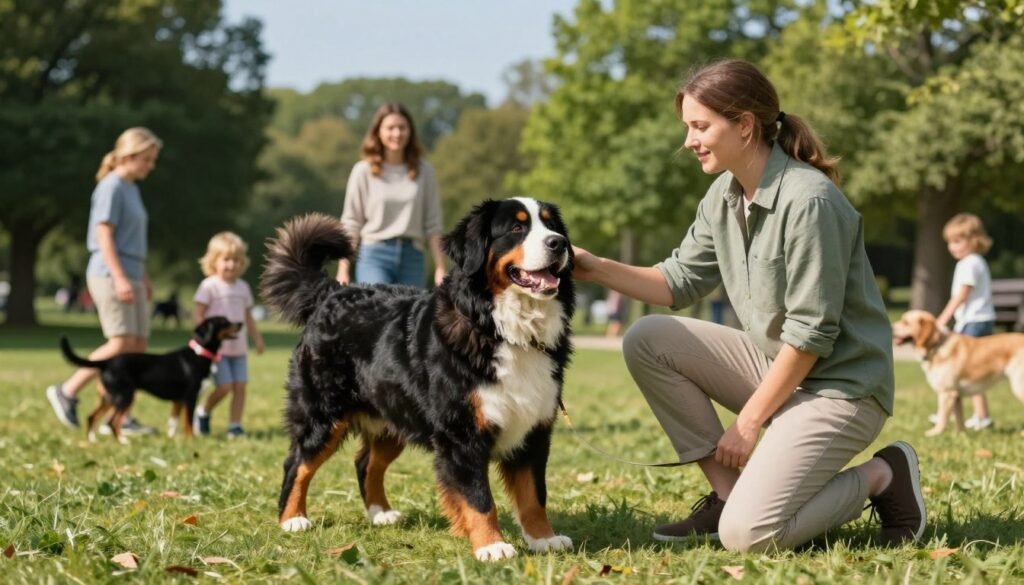
You will find that the Bernese Mountain Dog is a highly intelligent and eager-to-please companion. Because they are sensitive by nature, they respond best to guidance that focuses on encouragement rather than strict discipline. Building a strong foundation requires you to be consistent, patient, and calm during every session.
Basic Training Tips
Effective Bernese Mountain Dog training relies on positive reinforcement techniques. Using treats, praise, and play will motivate your dog to learn new commands quickly. Harsh methods are generally ineffective and can damage the trust you have worked hard to build with your pet.
Keep your training sessions short and engaging to maintain your dog’s interest. It is helpful to practice in a quiet environment before moving to areas with more distractions. Remember that these dogs want to please you, so clear communication is the most important tool in your kit.
Socialization with Other Pets
Early socialization is vital for helping your dog interact safely and happily with other animals. Introducing your pet to new environments, sounds, and other pets at a young age builds confidence. This process helps them remain calm and friendly when they encounter unfamiliar dogs or cats later in life.
When introducing your dog to other pets, always ensure the environment is controlled and safe. Supervised playdates allow your dog to learn appropriate social cues in a positive way. By setting clear expectations early on, you can ensure your companion grows into a well-mannered member of your household.
| Training Method | Effectiveness | Impact on Bond |
|---|---|---|
| Positive Reinforcement | High | Strengthens Trust |
| Harsh Correction | Low | Creates Anxiety |
| Consistent Routine | High | Builds Confidence |
Suitability for Families and Children
Many families discover that the Bernese Mountain Dog possesses a unique, calm spirit that fits perfectly with active kids. This breed is widely recognized for its gentle and patient nature, making it a wonderful addition to a busy household. You will find that their steady temperament allows them to handle the high energy of children with grace and ease.
How They Interact with Kids
The Bernese Mountain Dog is famous for being a devoted protector who remains incredibly soft-hearted. They often display a natural instinct to watch over younger family members, acting as a calm presence during playtime. Because of their large size, it is always important to supervise interactions to ensure that both the dog and the children remain safe and comfortable.
Their high level of patience means they are less likely to become overwhelmed by the noise or sudden movements of toddlers. You can expect your dog to be a loyal companion who enjoys being near the center of family activity. This breed truly thrives when they feel like a valued member of your “pack.”
Family Bonding Activities
Building a strong bond with your pet is a rewarding experience for everyone involved. Simple, supervised activities can help your children learn responsibility while strengthening their connection with the dog. Consider these engaging ways to spend time together:
- Taking gentle, leashed walks in the neighborhood.
- Teaching basic, positive reinforcement commands together.
- Enjoying quiet time in the backyard with a favorite toy.
- Grooming sessions that help the child learn to care for the dog’s coat.
By involving your children in the daily care of your Bernese Mountain Dog, you foster a sense of mutual respect and love. Always remember that consistency and positive reinforcement are the keys to a harmonious relationship. The following table highlights why this breed is a favorite for many households.
| Trait | Benefit for Families | Why It Matters |
|---|---|---|
| Temperament | Calm and Patient | Handles chaotic play well |
| Loyalty | Deeply Devoted | Provides emotional support |
| Trainability | Eager to Please | Easier for kids to interact |
| Size | Sturdy and Robust | Resilient during active play |
Apartment Living and Space Requirements
You might wonder if a giant breed can truly thrive in a compact apartment setting. While the Bernese Mountain Dog is famous for its gentle heart, its physical stature is a significant factor to consider before bringing one into a smaller home.
Can They Adapt to Smaller Spaces?
These dogs are generally calm and relaxed when they are indoors. Because they are not typically hyperactive, a Bernese Mountain Dog can technically live in an apartment if its needs are met. However, you must be prepared for their sheer size, which can make tight hallways and small rooms feel quite crowded.
Their low-energy nature inside the house helps them adjust to limited square footage. They often prefer to lounge near their owners rather than pacing around. Still, you should ensure your living area has enough floor space for them to stretch out comfortably without feeling cramped.
Tips for Apartment Dwellers
If you live in an apartment, you must prioritize daily outdoor exercise to keep your pet healthy. A Bernese Mountain Dog requires consistent walks to burn off energy and maintain muscle tone. Without regular movement, even the most patient dog may become restless in a confined space.
Consider these practical tips to make your home more accommodating:
- Create a dedicated resting zone where your dog can relax undisturbed.
- Maintain a strict schedule for bathroom breaks and outdoor play sessions.
- Keep your living area tidy to prevent accidents caused by their large tails or bulky frames.
Living with a Bernese Mountain Dog in an apartment is entirely possible with the right commitment. By focusing on their physical and mental well-being, you can create a harmonious environment for both you and your loyal companion.
Pros and Cons of Owning a Bernese Mountain Dog
Choosing the right companion for your household is a significant decision that shapes your daily life for years to come. When you consider the Bernese Mountain Dog, you are looking at a breed that brings immense warmth and loyalty to a home. However, understanding the full reality of this commitment is essential for a happy experience.
Advantages of This Breed
The most celebrated trait of this breed is their unwavering devotion to their human family. They are known for being incredibly gentle, making them excellent companions for children and other pets. Their calm demeanor often brings a sense of peace to a busy household.
Beyond their personality, these dogs are highly intelligent and eager to please. Proper Bernese Mountain Dog care ensures that their natural desire to work and stay close to their owners is nurtured. You will find that their presence is both comforting and grounding, providing a unique bond that is hard to replicate.
“The Bernese Mountain Dog is a heart wrapped in fur, offering a level of companionship that is as deep as it is enduring.”
Potential Challenges
While their size is often seen as a benefit, it can also present practical challenges in smaller living environments. You must be prepared for the reality of heavy shedding, which requires a consistent grooming routine to keep your home clean. Their thick coats are beautiful, but they do demand time and effort.
Health is another critical factor to keep in mind, as this breed is prone to specific genetic conditions. Investing in high-quality Bernese Mountain Dog care, including regular veterinary checkups, is vital for their long-term well-being. Being aware of these needs allows you to plan effectively for their future.
| Feature | Benefit | Consideration |
|---|---|---|
| Temperament | Extremely loyal and gentle | Requires social interaction |
| Maintenance | Predictable grooming needs | Heavy shedding year-round |
| Health | Robust and active | Needs proactive medical care |
Ultimately, the decision to welcome this breed into your life should be based on your ability to meet their physical and emotional needs. By weighing these factors, you can feel confident in your choice to provide a loving, stable home for your new companion.
Alternatives to Consider
While the Bernese Mountain Dog is a wonderful choice for many households, it is wise to consider other options before making a final decision. Exploring different breeds helps you find the perfect match for your unique lifestyle and long-term goals. By looking at the big picture, including grooming and exercise needs, you can ensure your new companion fits your home perfectly.
Similar Breeds
If you admire the sturdy build and calm demeanor of the Bernese Mountain Dog, you might enjoy learning about the Greater Swiss Mountain Dog. This breed shares a similar heritage and is known for being alert and loyal. Another option is the Saint Bernard, which offers a gentle, giant personality that many families find incredibly endearing.
These breeds often require similar space and exercise commitments. It is important to remember that while they share physical traits, each dog has a unique personality. Always spend time meeting individual dogs to see if their energy levels align with your daily routine.
Other Family-Friendly Options
For those seeking a highly social and intelligent companion, the Golden Retriever or Labrador Retriever are excellent alternatives. These breeds are famous for their eager-to-please nature and ability to bond quickly with children. They are often easier to train for first-time owners compared to some larger working breeds.
When comparing these options, consider the following table to help guide your decision-making process:
| Breed | Temperament | Grooming Needs | Best For |
|---|---|---|---|
| Bernese Mountain Dog | Gentle & Loyal | High | Active Families |
| Golden Retriever | Friendly & Playful | Moderate | Active Families |
| Greater Swiss Mountain Dog | Alert & Sturdy | Low | Large Homes |
| Labrador Retriever | Outgoing & Smart | Low | Active Households |
Conclusion and Next Steps
Choosing a Bernese Mountain Dog means welcoming a loyal and gentle soul into your family life. These dogs offer deep affection and steady companionship for those ready to provide the right environment. You now possess the knowledge to determine if this breed fits your specific lifestyle and home space.
Your next step involves connecting with reputable Bernese Mountain Dog breeders who prioritize health and temperament. You might explore local rescue organizations to find a dog in need of a loving home. Many families find great joy in adopting Bernese Mountain Dog puppies that grow into calm, devoted partners.
Take time to research local veterinary care and training resources in your area. Preparing your home with the right supplies ensures a smooth transition for your new pet. You are ready to start this rewarding journey toward finding your perfect furry friend.


💬 Leave a Comment